
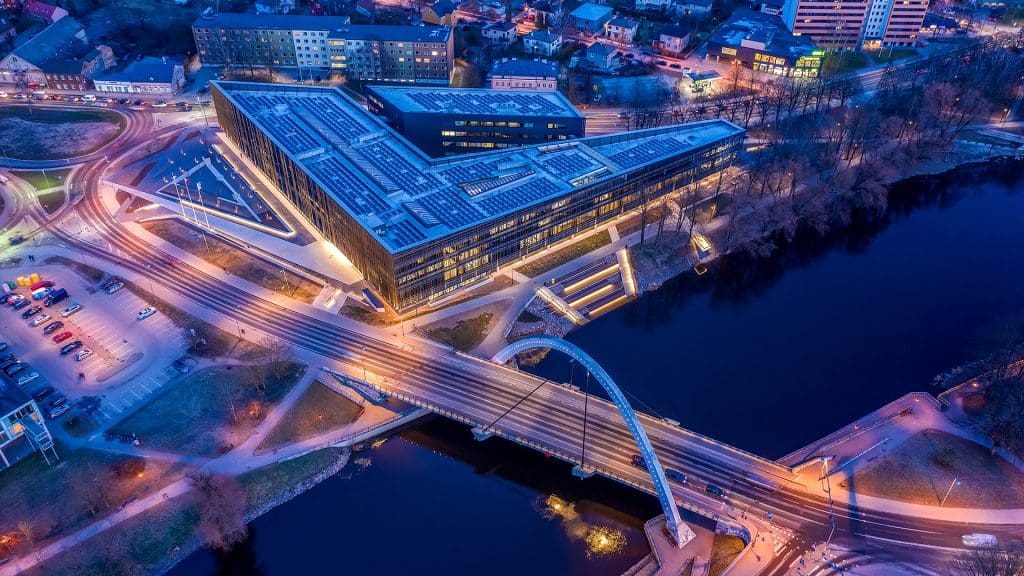
As an augmented workforce becomes increasingly common, several major service sectors are unable to process their data using conventional commercial large language models (LLMs). These include sensitive domains such as healthcare, defence, and citizen data. Developing an Estonian large language model that is both precise and effective would therefore be highly beneficial for Estonian society; however, due to the country’s small size, there is little commercial incentive for others to undertake such development. To preserve and protect the Estonian language in the context of the rapid advancement of artificial intelligence (AI), and to create practical applications for everyday use, the Institute of Computer Science at the University of Tartu is training an open-source language model to communicate more fluently in Estonian and to better understand Estonian culture. The model is trained using the computer cluster of the University of Tartu HPC Centre (UTHPC).
There is a broad range of innovative, research-based enterprises with heightened requirements for intellectual property protection and data security, which require absolute clarity regarding their legal and security environments.
Our solution is founded primarily on investment in knowledge
Today, it is evident that Estonia’s decision to build its economy on new technologies and education following the restoration of independence 35 years ago has yielded significant benefits.
UTHPC benefits from being part of the University of Tartu, which ranks among the top 1.2% of universities worldwide and provides a broad base of expertise, ranging from foundational disciplines to highly specialised fields, including artificial intelligence. This environment offers unique opportunities for collaboration with leading researchers and enables the delivery of highly practical training courses to University of Tartu students, taught by professionals directly involved in cutting-edge HPC and AI operations.
Based on our experience, AI agents can be highly effective, but only when users possess sufficient expertise to validate and correct their outputs. We therefore believe that, alongside technological advancement, the demand for highly skilled IT professionals will increase rather than diminish.
Secondly, our approach focuses on building our own systems
The University of Tartu High Performance Computing Centre (UTHPC) was formally established in 2008; however, scientific computing in Tartu dates back to 1959, when the University’s first scientific computing centre was founded. In 2008, the Centre deployed its first computing cluster, named Aurumasin (‘Steam Engine’), consisting of 42 Sun Fire nodes with eight cores each, 32 GB of RAM, and 10 TB of shared storage.
Since then, UTHPC has evolved from a provider of basic compute cycles into a comprehensive service supporting users across the entire research lifecycle, from efficient execution of analyses to secure data storage and full compliance with relevant regulatory requirements.
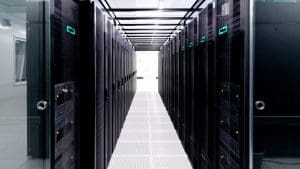
In February 2026, our local computing capacity increased by approximately an order of magnitude. We commissioned new GPU resources, including 12 NVIDIA H200, 24 NVIDIA B200, and 40 NVIDIA RTX Pro 6000 Blackwell Max-Q GPUs. In collaboration with the Ministry of Justice and Digital Affairs, this hardware was procured to accelerate the development of national and scientific AI solutions. As a result, our combined cloud, Kubernetes, and cluster infrastructure now comprises 164 GPUs, 21,520 CPU threads, and 118 TB of system memory, alongside more than 17 petabytes of usable storage and over 30 petabytes dedicated to archival purposes.
Equally important to this advanced hardware infrastructure is a team of more than 50 highly trained specialists. The team actively participates in cyber defence exercises and hackathons, contributing both to resilience against cyber threats and to the exploration of future AI-driven solutions.
To illustrate our growth, we present several key milestones below.
Formation of the Estonian Scientific Computing Landscape
As computational methods became an integral component of research across most scientific disciplines, the need for a nationwide consortium became increasingly evident. In response, the Estonian Scientific Computing Infrastructure (ETAIS) was established in 2011. The consortium is led by the University of Tartu, with partners including Tallinn University of Technology, the Institute of Chemical and Biological Physics, and the Ministry of Education and Research.
 © CSC
© CSC
ETAIS supports the competitiveness of Estonian science and industry by providing access to state-of-the-art computing resources. These services encompass high-performance computing capacity, secure data management, user support, and expert consultation. The primary user communities include bioinformatics, medicine, data mining, language technology, chemistry, materials science, climate research, and physics.
Today, ETAIS serves as the official infrastructure provider for the Estonian research and development sector and also delivers modern AI infrastructure services to the entire Estonian public sector. In addition, ETAIS connects Estonia’s national e-infrastructure with international partners, most notably the EuroHPC LUMI supercomputer and the LUMI AI Factory.
ETAIS represents Estonia within the Nordic e-Infrastructure Collaboration (NeIC) and develops the Puhuri service, a specialised resource management and portal system that is used in several countries, including within the LUMI supercomputing environment. Furthermore, ETAIS participates in projects focused on the development of quantum computing technologies and secure long-term archiving of personal data.
ETAIS has also been a founding member of the LUMI supercomputer consortium. Officially inaugurated on 13 June 2022 in Kajaani, Finland, LUMI provides researchers and entrepreneurs with access to world-class computational resources. This enables even the most demanding users – for example, those developing advanced AI models – to access the capabilities required for major scientific and technological breakthroughs. As of early 2026, LUMI continues to rank among the world’s top ten supercomputers.
Our team actively contributes to several work packages aimed at building and operating services on and around this exceptional computing platform.
Facilitating and securing Estonian genomic data
The Estonian Biobank has established a population-based biobank encompassing more than 200,000 individuals. Given that approximately 20% of Estonia’s adult population has enrolled in the programme, this resource represents a uniquely valuable dataset for the advancement of medical research both nationally and internationally. The data enable researchers to investigate differences in disease risk and variability in individual responses to medical treatments, thereby forming a foundation for the implementation of personalised medicine in Estonia.
Owing to the highly sensitive nature of this data, access is provided exclusively through the Secure Sensitive Data Private Research Environment (SAPU). SAPU is the most secure service operated by UTHPC, offering a fully isolated research environment with comprehensive, exception-free logging to ensure traceability and auditability when required.
Obtaining ISO/IEC 27001:2022 Certification
In 2025, UTHPC was awarded ISO/IEC 27001:2022 certification. This internationally recognised standard affirms the Centre’s commitment to maintaining the highest levels of data protection and security protocols. The certification covers all critical IT operations and services provided by UTHPC, ensuring compliance with globally recognised information security standards.
The certification process involved a comprehensive audit of UTHPC’s information security management system, encompassing all aspects of data handling, risk assessment, and implementation of security controls across a wide range of services. Achieving this certification demonstrates UTHPC’s dedication to safeguarding sensitive research data and maintaining operational excellence throughout all service domains.
 © CSC
© CSC
The Centre will sustain its certification through regular audits and continuous enhancement of security practices, ensuring that its information security management system remains robust against evolving threats in both academic and commercial contexts.
Managing the resources
Since 2016, part of our team has been involved in the development of the Waldur portal, which makes access to complex computing resources as straightforward as online banking. The portal enables organisations to provide their users with the tools they need, maintain budgetary control, and ensure that costly technology is utilised efficiently.
Waldur is a key component of the EuroHPC Federation Platform (EFP), a central portal designed to integrate Europe’s diverse supercomputing and quantum resources into a single, secure, and user-friendly ecosystem. Within the framework of the CASTIEL 2 and upcoming CASTIEL 3 project, we are responsible for developing a marketplace for the services offered by EuroHPC Competence Centres.
It all comes together through close collaboration
Our ministries deserve recognition for their bold and innovative initiatives, which inspire, enable, and support collaboration on projects that would be too ambitious for any single partner to undertake alone.
Thirty years ago, the Tiger Leap programme was launched, providing computers to all schools and laying the foundation for Estonia’s digital success story. Today, in response to the emerging challenges of uncontrolled AI use in education, a new programme, AI Leap, has been introduced. This initiative brings together thousands of teachers to rethink education in the age of AI, raise AI literacy across society, and advance educational practices through research-based development.
We believe that initiatives such as these, combined with the infrastructure, expertise, and collaborations described above, provide the connections and knowledge necessary to deliver a comprehensive range of services. These services enable the training of professionals and the provision of tools to use modern and future AI technologies independently, safely, and effectively.
Please Note: This is a Commercial Profile
Please note, this article will also appear in the 25th edition of our quarterly publication.