
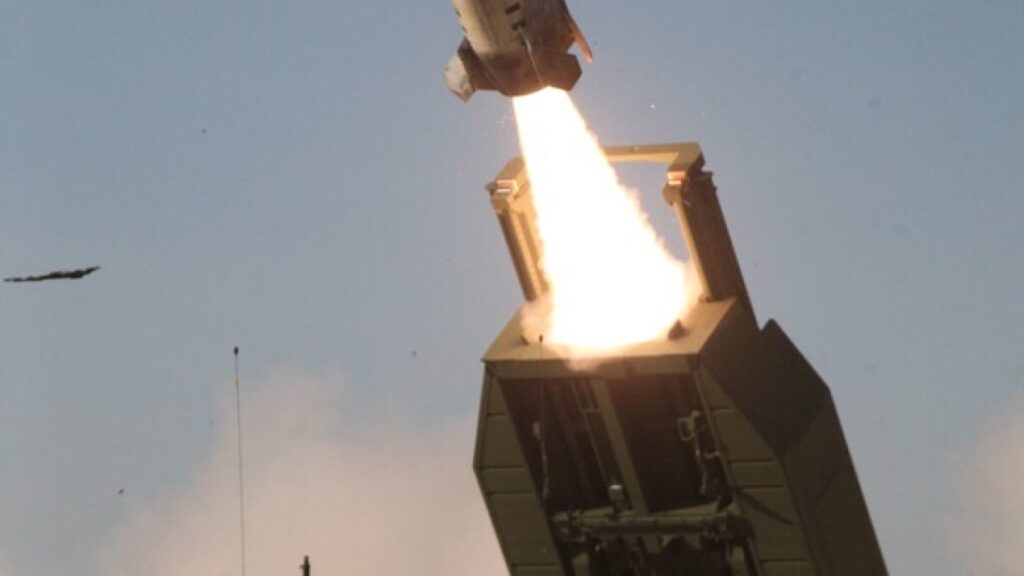
A ballistic missile launched from Iran and traveling toward Turkish airspace via Iraq and Syria was intercepted and destroyed by NATO air defense systems, Turkish officials said on Mar. 4. Turkey’s Defense Ministry stated that the missile was “engaged and neutralized by NATO air and missile defense assets deployed in the eastern Mediterranean.” No casualties were reported. Authorities said debris fell in the Dörtyol district in southern Turkey near the Syrian border.
A Turkish official, speaking on condition of anonymity, said the missile had been “aimed at a base in Greek Cyprus but veered off course.” The Defense Ministry did not confirm the intended target. Officials reported that fragments recovered in Dörtyol were identified as parts of the interceptor missile used to neutralize what the ministry described as “the threat in the air.”
The incident occurred amid escalating hostilities linked to ongoing US and Israeli military operations against Iran. NATO member Greece deployed the frigate Kimon off the coast of Limassol, Cyprus, on Mar. 4 as tensions increased in the eastern Mediterranean. Regional air defense systems have been placed on heightened alert following a series of missile launches attributed to Iran in recent days.
NATO issued a statement expressing support for Turkey. “NATO stands firmly with all allies, including Türkiye, as Iran continues its indiscriminate attacks across the region,” spokeswoman Allison Hart said, using Turkey’s official name. She added, “Our deterrence and defense posture remains strong across all domains, including when it comes to air and missile defense.”
US Secretary of State Marco Rubio spoke with Turkish Foreign Minister Hakan Fidan after the interception. According to US officials, Rubio conveyed Washington’s full support and said that attacks affecting Turkey’s sovereignty were “unacceptable.” The call followed earlier US statements reinforcing alliance commitments under NATO’s collective defense framework.
Turkey summoned the Iranian ambassador to Ankara to communicate what a diplomatic source described as “our reaction and concerns” regarding the missile launch. Fidan later spoke by phone with his Iranian counterpart. During that conversation, Fidan stated that “any steps that could lead to the spread of conflict should be avoided,” according to the source.
Turkey shares a 500-kilometer border with Iran and is a NATO member with longstanding security ties to the United States. President Recep Tayyip Erdoğan has criticized the US-Israeli strikes that triggered the current escalation, calling them “illegal,” while maintaining communication channels with Washington. The evolving conflict places Turkey in a position of balancing alliance obligations with regional diplomatic interests.
In a separate interview, Fidan criticized Iran’s retaliatory missile strikes across Gulf states, describing them as the “wrong strategy.” He said, “The underlying strategy seems to be: ‘If I am going to sink, I will take the region down with me.’” His remarks underscored Ankara’s concern that further escalation could destabilize neighboring states and disrupt regional trade routes.
Analysts said the interception demonstrates NATO’s operational readiness in the eastern Mediterranean but also increases the risk of broader confrontation. Hamish Kinnear of risk intelligence firm Verisk Maplecroft said Turkey would seek to avoid direct involvement in the conflict but may reconsider its position if missiles are clearly aimed at Turkish territory. “Turkey will not want to become embroiled in the US-Israel attack on Iran, which it has criticised, but if Iran launches more missiles clearly aimed at targets on Turkish territory, Ankara will consider its own direct retaliation,” he said.
Turkey’s Defense Ministry emphasized its readiness to respond if necessary. “Any steps necessary to defend our territory and airspace will be taken decisively and without hesitation,” the ministry said. It added, “We reiterate that we reserve the right to respond to any hostile actions directed at our country.”
While no direct damage was reported inside Turkey, the trajectory of the missile and its destruction near Turkish airspace mark a significant development in the expanding conflict. Diplomatic channels between Ankara and Tehran remain open, but officials have indicated that further launches could alter Turkey’s response posture. NATO allies continue to monitor developments as the regional security environment evolves.
US Launches Coordinated Strikes on Iran, Activates Missile Defenses After Retaliation
The United States employed a combination of sea-, land-, and air-launched systems in coordinated strikes on Iranian targets, according to a US official who spoke to Business Insider on condition of anonymity. US warships fired Tomahawk cruise missiles at designated sites, while ground forces deployed the High Mobility Artillery Rocket System, or HIMARS, to conduct precision strikes. The official said drones and other long-range weapons were also used, allowing US forces to engage targets from outside the reach of Iranian air defenses. The joint operations began Mar. 1 morning and involved assets positioned across the region.
The maritime component included guided-missile destroyers such as the USS Paul Ignatius, an Arleigh Burke-class vessel capable of launching both offensive cruise missiles and defensive interceptors. US forces executed the strikes in coordination with Israel as part of a broader campaign targeting Iranian military infrastructure. The official did not disclose specific targets or the total number of munitions used but said the operations were designed to degrade Iran’s ability to conduct further attacks. The strikes marked a continuation of US reliance on distributed firepower across multiple domains to maintain operational reach in contested environments.
In response, Iran launched waves of missiles toward targets across the Middle East, including US bases in Qatar, Bahrain, Kuwait and the United Arab Emirates. To counter the retaliation, US forces activated layered air and missile defense systems, including MIM-104 Patriot batteries and Terminal High Altitude Area Defense (THAAD). US Navy ships also launched Standard Missile interceptors to neutralize incoming threats.
The official said an unspecified number of Iranian missiles were intercepted and that there was no critical damage to US facilities and no American casualties. Bahrain reported that a major US naval base was struck, though the extent of the impact was not detailed.