
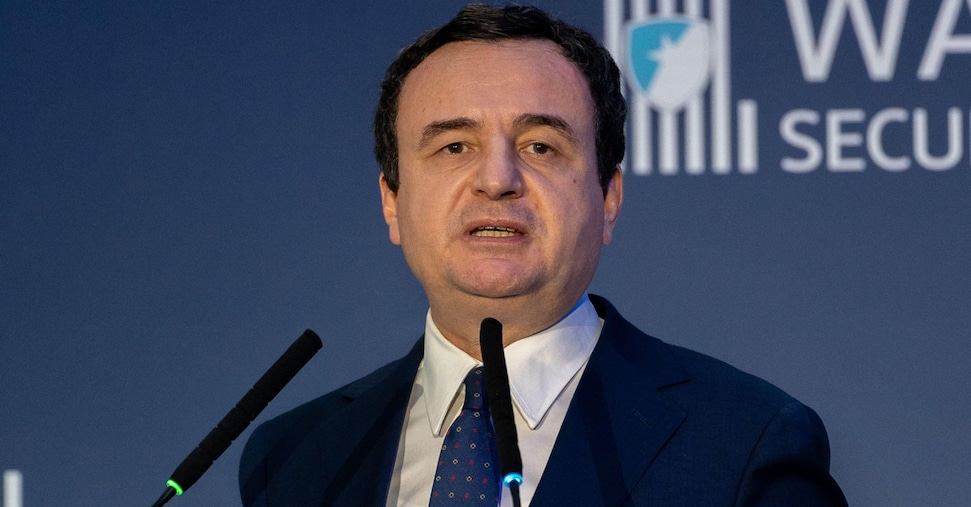
Kosovo will go back to the polls for the third time in just over a year. President Vjosa Osmani was forced to dissolve the National Assembly on Friday, 6 March, as her successor was not elected within the time limits set by the Constitution. The newly dissolved parliament had been elected less than three months ago, on 28 December, and had also succeeded in expressing a government majority that had confirmed Albin Kurti, leader of the left-wing nationalist party Vetëvendosje (Self-Determination), as the country’s leader by 66 votes to 49.
In order to elect the president, however, the quorum is at least 80 MPs, whereas the threshold of 66 MPs present, i.e. the majority MPs, has never been exceeded in the chamber. In this way, the conservative right-wing opposition parties managed to boycott the presidential election and the government in one fell swoop.
‘The Assembly has not fulfilled its constitutional duty,’ said President Osmani, ‘irresponsible people with dangerous intentions have brought the country to this point’. Osmani, whose Guxo party is an ally of Kurti, was obliged to dissolve the assembly. Article 82 of the Kosovo Constitution states that one of the cases in which the assembly can be dissolved is if, within 60 days of the start of the election procedure, the president of the republic is not elected. During the last flash vote, before the deadline expired, the president had also tried to push parliament to approve a constitutional amendment for the direct election of the president by popular vote, but was rejected.
The party of Prime Minister Albin Kurti therefore continues to not come out of the impasse into which it has fallen for more than a year. Particularly since February 2025, when it failed to form a new government despite an election victory. The political instability is now also likely to have serious repercussions on Kosovo’s economy, because without a government, Pristina risks not even collecting the first tranche of EUR 205 million in aid that the European Union had decided to release last December. The funds in question are part of the EUR 882 million allocated under the Growth Plan for the Western Balkans, which Brussels had initially decided not to send to Pristina because of the clashes in four Kosovo municipalities with a Serb majority population. Once the alarm in the territories on the border with Serbia had subsided, Brussels was ready to reopen the taps, but in order to allocate the funds, regulatory steps are required, which, in the absence of a legislating government and parliament, become difficult to bring home.