

Romania remains among the European Union countries with the widest gender employment gaps, according to new data published by Eurostat, highlighting persistent disparities in the labor market despite gradual improvements across the bloc.
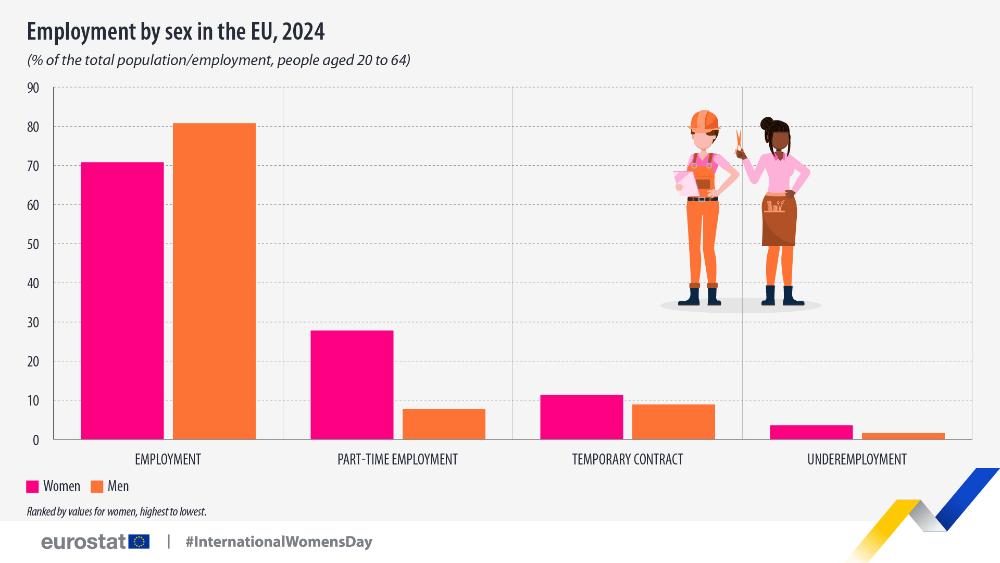
In 2024, the employment rate for men in the EU reached 80.8%, compared with 70.8% for women, resulting in a 10-percentage-point gender employment gap among people aged 20 to 64.
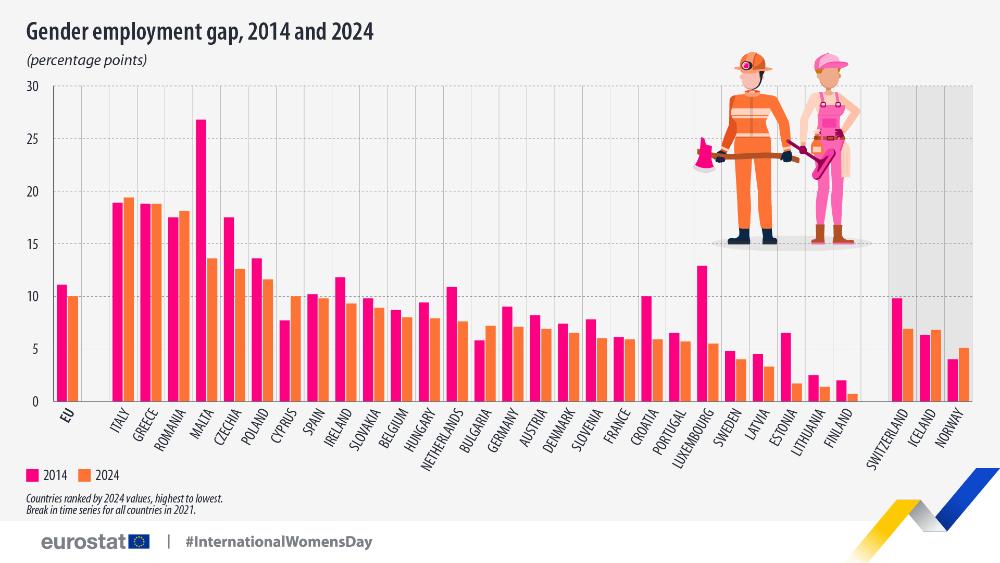
However, Romania stands significantly above this average. The gender employment gap in the country reached 18.1 percentage points, placing it among the three largest gaps in the European Union, behind only Italy (19.4 pp) and Greece (18.8 pp).

Women more likely to work part-time or in temporary roles
Eurostat’s data also reveals structural differences in the types of employment held by women compared with men.

Across the EU, 27.8% of employed women work part-time, compared with just 7.7% of men. Women are also slightly more likely to hold temporary contracts (11.3% vs. 8.9%) and experience underemployment, meaning they work fewer hours than they would prefer.
These patterns reflect broader labor market dynamics, where caregiving responsibilities, workplace flexibility, and sectoral concentration often shape women’s participation in employment.

Slow progress across Europe

Despite these disparities, the gender employment gap across the EU has gradually narrowed over the past decade.
Between 2014 and 2024, the EU average gap decreased by 1.1 percentage points, with 22 member states recording improvements during the period.
Malta registered the largest reduction, cutting its gap by 13.2 percentage points, while Luxembourg and Czechia also saw notable improvements.
However, several countries moved in the opposite direction. Eurostat data shows that the gender employment gap increased in Romania (+0.6 pp), Bulgaria (+1.4 pp), Cyprus (+2.3 pp), and Italy (+0.5 pp) over the same decade.
Nordic countries lead on equality
The data highlights strong differences between EU member states.
Countries such as Finland (0.7 pp), Lithuania (1.4 pp), and Estonia (1.7 pp) have nearly eliminated the gender employment gap, reflecting higher female labor participation and stronger support systems for working parents.
In contrast, Southern and Eastern European economies continue to face structural barriers, including lower childcare availability, traditional gender roles, and labor market segmentation.
A key challenge for economic growth
Closing the gender employment gap remains a priority across the EU, not only for social equality but also for economic performance. Higher female labor participation could significantly boost productivity and address workforce shortages, especially as European economies face demographic decline and aging populations.
Eurostat’s latest data was released as part of a series of publications marking International Women’s Day, focusing on gender equality across employment, leadership, and economic participation.