
Although we’ve turned the corner into meteorological spring, homeowners and renters across Massachusetts still must brace for the last vestige of winter — that dreaded utility bill.
That’s something people have paid close attention to over the past several months, since aside from a mortgage or rent, it’s likely the largest monthly expense they face.
Those concerns represent one of the main themes of a new poll commissioned by the Massachusetts Chambers Policy Network, an organization of state Chambers of Commerce.
The Suffolk University survey of 500 state residents, conducted Jan. 31-Feb. 5, took the pulse of consumers trying to cope with these budget-busting utility bills, which have increased dramatically in recent years.
So, it’s not surprising that the poll found that energy affordability has emerged as the leading household concern for Massachusetts residents.
Specifically, utility costs outrank health care, groceries, housing and transportation for survey respondents. Additionally, 77% of residents acknowledge their electric and/or gas bills have increased somewhat or considerably, while only 3% of respondents indicated their bills have decreased.
The survey also indicated there’s a close correlation between support for the state’s clean-energy goals and the cost involved in reaching them. Most polled expressed support for climate goals and clean energy initiatives, but only if they result in minimal increases to their utility bills.
Nearly three in 10 respondents won’t get behind climate goals if they lead to an increase in household energy costs, highlighting the priority of energy affordability for some respondents.
And concern over utility costs goes beyond high-usage households: Energy costs still weigh on customers actively managing their energy use, including those trying to reduce consumption.
When asked how Massachusetts should meet future energy needs, most residents favored an “all of the above” energy-mix approach. More than half support pursuing new energy resources across multiple fuel types, while fewer favor either clean-energy-only strategies or no new energy development.
Even climate-focused groups remain split on the issue.
Among Democrats, liberals and those who see climate change as mainly human-caused, opinions are nearly evenly divided between endorsing an “all of the above” energy strategy and favoring clean energy only, reflecting nuanced views within pro-climate groups.
Those surveyed lay most of the blame for high energy costs on energy suppliers and public policy decisions, rather than the lack of infrastructure investments or weather-related factors.
In summary, it’s clear that those polled prioritize current needs — like affordability and customer assistance — over the state’s aspirational climate goals.
Providing energy at the lowest possible cost and supporting financial assistance programs are most frequently cited as top priorities, while addressing climate goals ranks last.
While safety and reliability remain critically important to residents, they’re largely viewed as basic expectations rather than competing priorities.
While more than eight in 10 respondents (84%) say maintaining a safe and reliable energy system is very important, they’re not viewed as top priorities, suggesting residents assume reliability should be guaranteed as part of any energy strategy.
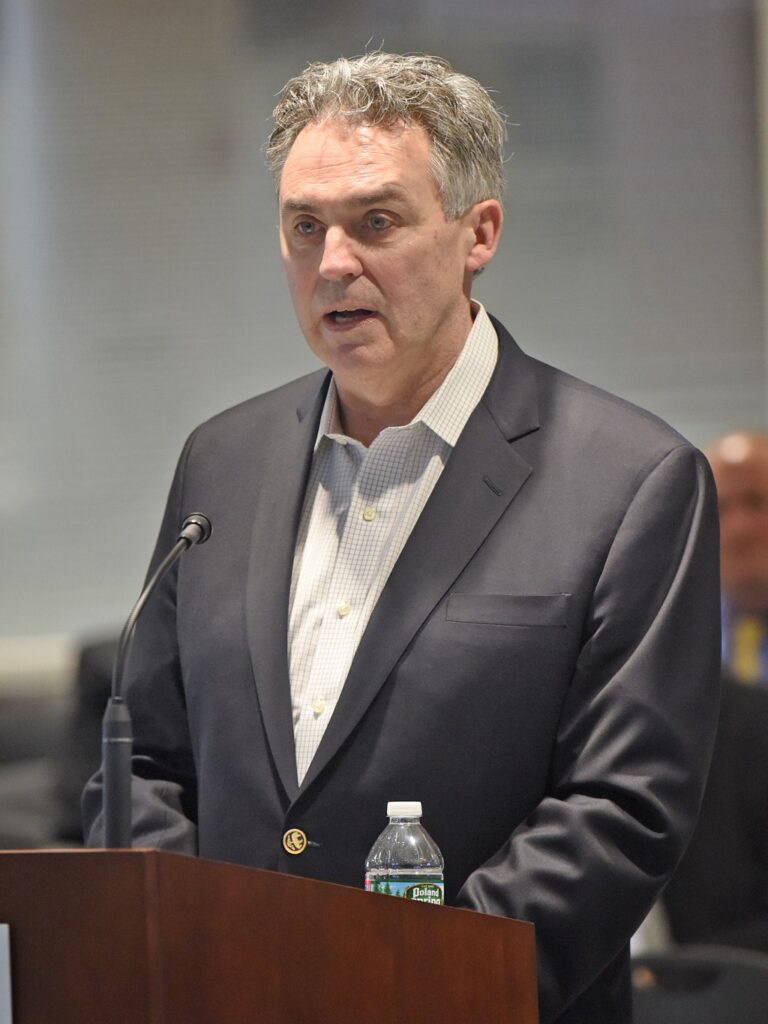
“With some of the highest energy rates in the nation, our policymakers must continue to prioritize reforms that stabilize prices, balance affordability with reliability and climate goals, and urgently embrace an “all of the above” energy strategy,” said James E. Rooney, president & CEO of Greater Boston Chamber of Commerce.
“Our region’s competitiveness and ability to attract and retain people and businesses depends on our willingness to grapple with policy issues, like energy costs, that push talent and jobs to other states,” added Rooney.
“Last week’s [Feb. 23] nor’easter reminded us that there are things we take for granted that we shouldn’t, including flipping a switch and expecting the lights to come on. A dependable energy system is foundational to our economy and our quality of life. That’s why Massachusetts needs a multipronged energy policy focused on safety, reliability and affordability — not just one of the three, but all of them,” said Greg Reibman, president and CEO of the Charles River Regional Chamber.
Getting the message
Belatedly, our executive and legislative branches of state government have gotten the message on burdensome energy costs.
In addition to previously disclosed long-term affordability policies, Gov. Maura Healey announced earlier this year that electricity rates will be reduced by 25% for residential utility customers for energy used from Feb. 1-March 31.
Gas rates also will be reduced — by 10% for residential utility customers.
These reductions apply to residential customers of the major investor-owned gas and electric utilities: National Grid, Eversource, Unitil, Liberty Gas and Berkshire Gas.
Late last month the House passed “An Act Relative to Energy Affordability, Clean Power, and Economic Competitiveness,” a major energy-affordability bill aimed at reducing utility costs by over $9 billion for ratepayers over the next decade.
The legislation focuses on diversifying energy sources, speeding up solar permitting, includes a one-time funding cut to the Mass Save energy efficiency program to lower bills, and ratepayer refunds of 70% of alternative compliance payments to ratepayers — penalties paid by retail electricity suppliers when they fail to meet state-mandated Renewable Portfolio Standard requirements.
It appears that the state’s beleaguered energy customers finally have a say in establishing a balance between reasonable rates and paying for a cleaner energy future.