
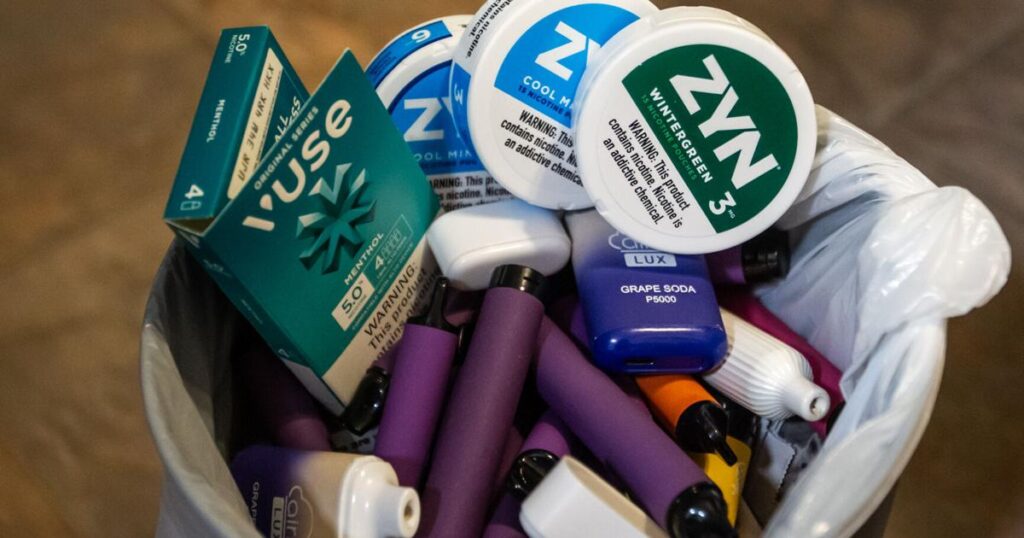
The Colorado Department of Public Health and Environment announced on Wednesday that adults interested in quitting tobacco and nicotine products could qualify for a $100 payment.
The new incentive will require that individuals complete five coaching phone calls through the Colorado QuitLine, a statewide resource that CDPHE said has been shown to quintuple the odds of a successful quit.
According to a CDPHE press release, program participants receive personalized coaching support and free nicotine replacement products, including patches, gums and lozenges.
“QuitLine coaches are trained, non-judgmental professionals who provide confidential help with understanding cravings, triggers and overcoming challenges and help create a personalized approach for quitting nicotine and tobacco,” the press release said.
The press release added that a 2024 survey found that less than 10% of Colorado adults reported smoking — the lowest in the state’s recorded history.
Still, CDPHE said the same survey found that vaping rates have “increased significantly” since 2017, primarily among 18 to 34-year-olds.
Coaching can take place over the phone or a web-based chat, but the press release said that only phone-based coaching calls count towards the incentive: $10 for the first call; $15 for the second call; and $25 each for the third, fourth and fifth phone calls.
To learn more or start chatting with a QuitLine coach, visit ColoradoQuits.com or call 1-800-QUIT-NOW.
Coloradans under the age of 18 are encouraged to instead consider the “My Life, My Quit” program, which is a confidential support line tailored to teenagers in Colorado. Sign up at MyLifeMyQuit.org. Individuals under the age of 18 do not qualify for the $100 incentive.
The Mesa County Women’s Network is hosting an educational workshop about hormone health on Tuesday, March 10.
According to a press release, the event will explore the role of hormones in a person’s health, discuss the potential benefits of the somewhat novel bioidentical hormones and provide “evidence-based insight into today’s often-confusing conversations around hormone replacement therapy.”
Karen Floyd, a pharmacist with the Western Colorado Compounding Pharmacy, will host the workshop.
Community members are encouraged to attend with “questions for an open, educational discussion,” but admission is only free for Mesa County Women’s Network members. Otherwise, participation will cost $35.
The workshop will run between 6-8 p.m., at the Summit Center, inside Abstract & Tile Company, 2464 Patterson Road.
As March Madness approaches and sports gambling continues to grow, the Colorado Department of Revenue’s Division of Gaming recently highlighted resources available for gambling addiction.
The state agency and Colorado Lottery discussed the resources at a state Capitol event spurred by March’s designation as “Problem Gambling Awareness Month.”
The event primarily highlighted resources available through BetSmart.Colorado.gov, including an array of support groups, specialized clinical care, a hotline and even resources on gambling debt.
Colorado’s self-exclusion list was a notable highlight, where residents who struggle with gambling can sign up for a statewide registry that bars them from accessing sports betting platforms and casinos.
The self-exclusion can be set for a one-, three- or five-year timeframe, but those in the registry will not be removed until they complete the set time and request their removal.
According to a press release, more than 1,146 Coloradans are currently signed up.
Last month, the Division of Gaming also awarded more than $3.7 million in annual grant funding for initiatives that “fight problem gambling and promote responsible gambling in Colorado.”
If you or someone you know struggles with gambling or sports betting, call or text 1-800-GAMBLER and visit BetSmart.Colorado.gov.
Health Headlines is a Sentinel feature compiled by Jace DiCola, health and wellness reporter. Email him at jace.dicola@gjsentinel.com. This series is not an endorsement of specific clinics, medical services or activities.