
Kosovo is headed to a snap parliamentary election — its third in just over a year — after lawmakers failed to choose a new head of state by a constitutional deadline.
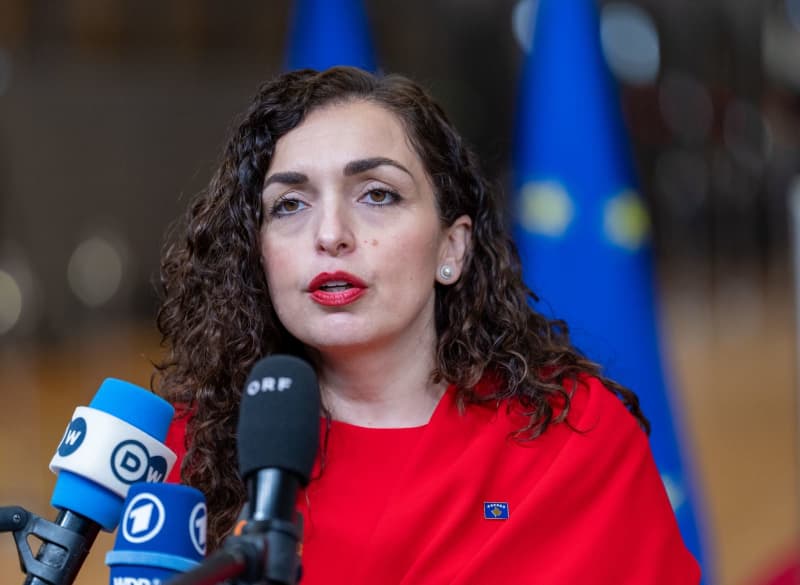
President Vjosa Osmani on Friday said she was dissolving parliament and urged political parties to select a date for elections on the same day, local media reported.
Osmani’s five-year mandate expires on April 4. Under Kosovo’s constitution, at least two-thirds of the 120 lawmakers must be present in parliament to elect a successor.
The president’s move came after only 66 members of parliament — largely from the governing camp — attended a session to choose her replacement, falling well short of the required quorum of 80.
Under the constitution, early elections must now be held because parliament failed to elect a successor within the required 30-day period before the incumbent’s mandate expires.
Consultations on an election date
After declaring parliament dissolved on Friday, Osmani began consultations with the parties on a date for new elections within the next 30 to 45 days.
However, Prime Minister Albin Kurti’s left-wing ruling Self-Determination Movement described Osmani’s dissolution of parliament as “unconstitutional.”
In fact, there are differing views on how the deadlines for the presidential election contained in the constitution should be interpreted.
According to Self-Determination and some legal scholars, parliament still has 60 days to elect a successor to Osmani.
Court ruling expected
In Pristina, it is assumed that the Constitutional Court will issue a landmark ruling on this matter.
Self-Determination had nominated two candidates from its own ranks without coordinating with the opposition.
Opposition parties said they had been sidelined and so boycotted the session, preventing the vote from going ahead.
Kosovo has already held two elections in the past year. Self-Determination received the most votes in the February 9, 2025, election but Kurti failed to find coalition partners, leaving the country in political deadlock.
A new election on December 28 gave the party a majority, and Kurti secured a second consecutive term as prime minister.
Questions over Osmani and Kurti’s leadership
Osmani would have been eligible for a second term and had signalled her willingness to run again. However, Kurti declined to nominate her for re-election, even though opposition parties may have accepted her candidacy and allowed the election process to proceed.
Kurti’s reasons for not backing Osmani remain unclear. Observers have suggested Osmani may have been seen as too independent for Kurti.
Critics accuse the prime minister of an increasingly authoritarian leadership style.
Osmani originally belonged to the centre-right Democratic League of Kosovo (LDK), which governed the country for much of the period before 2021.
She left the LDK in 2020 and founded her own small party, the centre-right Dare movement, which later allied with Kurti’s party.
Kosovo, now almost entirely populated by ethnic Albanians, was once a province of Serbia. After an uprising against Serbian rule and a NATO intervention in 1999, the territory declared independence in 2008.
More than 100 countries recognize Kosovo’s independence, though Serbia and Russia do not.