
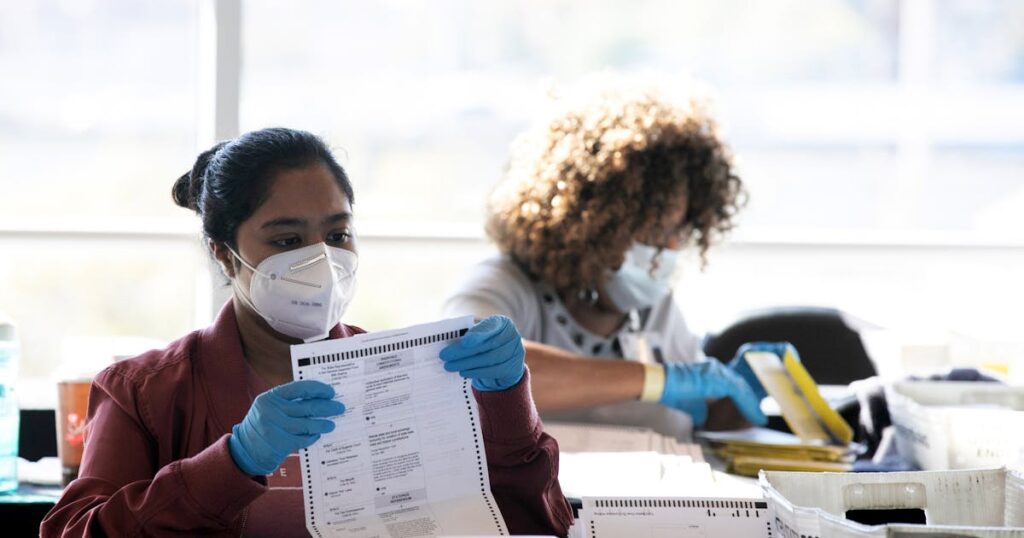
Senate Bill 214, which was introduced by state Senator Max Burns, the author of the bill banning Q.R. codes, would implement optical scanners to read ballots and tabulate votes. Another bill, Senate Bill 568, would utilize a similar optical system to scan hand-marked paper ballots, in addition to requiring recounts to be conducted by hand. The most extreme bill, according to Democrats, is House Bill 1108, which requires the use of hand-marked paper ballots and hand counts of all elections.
All of the bills would require printers to print empty ballots for the hundreds or thousands of individual races that will occur in November—printers that the state does not have, since Georgians currently vote on machines which then print the filled-out ballots. S.B. 214 doesn’t provide funding for these “ballot on demand” printers but instead tasks Secretary of State Brad Raffensperger’s office with procuring the technology and conducting a pilot program for their use. Raffensperger did not respond to a request for comment.
The influx of new equipment, just a few months out from a crucial election, will require significant training for poll workers. “We need time to pilot these systems to work the kinks out,” Kirk said, noting that poll-worker training begins in September. He and other election officials would prefer the significant changes to election systems currently being considered by the legislature to occur in a nonelection year.