
Vojvodina, Serbia’s northern province, often feels like a mosaic, with over 25 ethnic groups speaking six official languages making up roughly 30 per cent of the province’s population. The two largest ethnic minorities – Hungarian and Slovak – make up 13 per cent and 2.3 per cent of the region’s population, respectively.
Serbia’s minority protection framework is often praised in legal terms. National minorities are guaranteed rights to preserve their language and identity through education at minority language and cultural institutions.
The National Councils play a crucial role in this system. Created to protect and advance collective minority rights, these councils are elected by members of each recognised minority. They allow communities to self-govern, as well as shape and defend their own interests instead of relying only on majority institutions.
“The National Councils are the driving forces behind minority groups. They have consultative status and a say in local legislation,” says Ferenc Nemeth, a Budapest-based expert on the Balkans who is currently a Fulbright scholar at Georgetown University, explaining why even the Hungarian minority, which receives a lot of support from Hungary’s nationalist-populist government, sees its National Council as essential.
“I have positive thoughts about the Hungarian National Council – they do provide us rights,” said Izolda Papp, a young Hungarian student in Subotica. Two other ethnic Hungarian university students we spoke to in Novi Sad echoed this.
But for many Slovaks and Hungarians in Vojvodina, autonomy exists only on paper. In practice, they describe systematic pressures coming from the regime of Serbian President Vucic and his SNS.
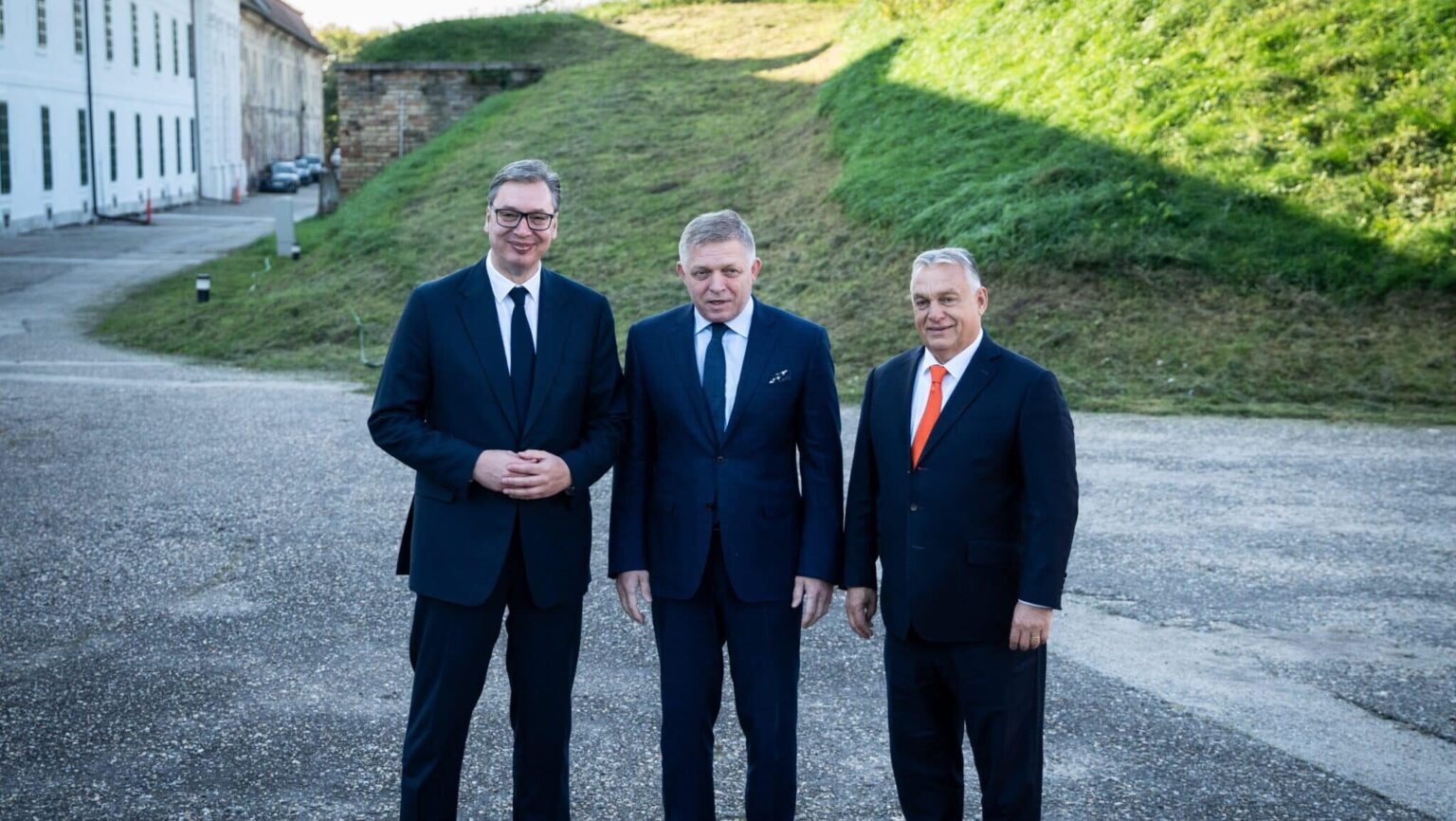
Since SNS consolidated power nationally in 2012, critics say local minority institutions have increasingly aligned with ruling party structures. And political proximity, overlapping political agendas and friendship between the three countries’ leaders – Vucic, Orban and Fico – are exacerbating these trends.
The National Council for Slovaks is not viewed as positively as that for Hungarians. People BIRN spoke to in Kovacica, Backi Petrovac and Padina – some of the towns with the largest Slovak communities – all agreed that elections to the council are based on an illusion of choice, and whomever they choose is likely to be a member of SNS.
This echoes issues previously reported by the Serbian media of local elections marred by voting pressure on public sector employees, the misuse of public resources, and allegations about the organised “migration of voters”, vote buying and domination of the campaign by President Vucic.
The incident in Backi Petrovac followed earlier tensions during the May 2025 election for Matica Slovenska, the main cultural, scientific and educational institution for the Slovak minority. Despite reported attempts by SNS-aligned figures to lock the doors and prevent the public from attending the vote, an independent candidate, Juraj Cervenak, won.
“When I won, a lot of my Serbian friends congratulated me, saying I beat Vucic. I said, people, I didn’t beat Vucic, we are just a small organisation,” Cervenak said.
“What we need in Serbia is guaranteed parliament seats [for minorities] like they have in Croatia. When the parliamentary majority is slim, those representatives can influence decisions, that’s proper political leverage. Here, our National Councils are not independent, they are tied to SNS. Minority representatives should defend their communities,” he said.
Since 2018, the majority of representatives on the Hungarian National Council belong to the Alliance of Vojvodina Hungarians (SVM), the strongest ethnic Hungarian party in Serbia, which is also a coalition partner of the ruling SNS and is seen as Orban’s partner party in Serbia.
Ahead of the last 2022 elections for the national councils, Zuzana Kalmar, who resigned from her post on the Hungarian National Council after it voted to ban a theatre play in mid-2021, told Radio Free Europe that she believes that the councils are just an “extension of the political parties”.
“I was not pressured, I could talk freely, but everyone knew it would not contribute to any discussion, we would be outvoted anyway,” she said.
The Serbian Progressive Party and the Slovak National Council did not respond to BIRN requests for comment. But Arpad Fremond, the president of the Hungarian National Council, wrote in response to BIRN’s enquiries that the Council is working in accordance with the law.
He also stressed that he had resigned as both an MP in the Serbian parliament for SVM, as the Council’s leadership cannot be state or party officials.
Asked about the fact that the SVM-backed list was the only one on the ballot at the last council election, Fremond said that others were free to participate, but could not get enough signatures. “We believe that the only obstacle for others to participate in the election for the Hungarian National Council in 2022 was a lack of citizens’ support to such degree that it completely rendered their participation in the work of the Council meaningless,” he said.
Serbia’s Slovaks: neglected by Belgrade, ignored by Bratislava