
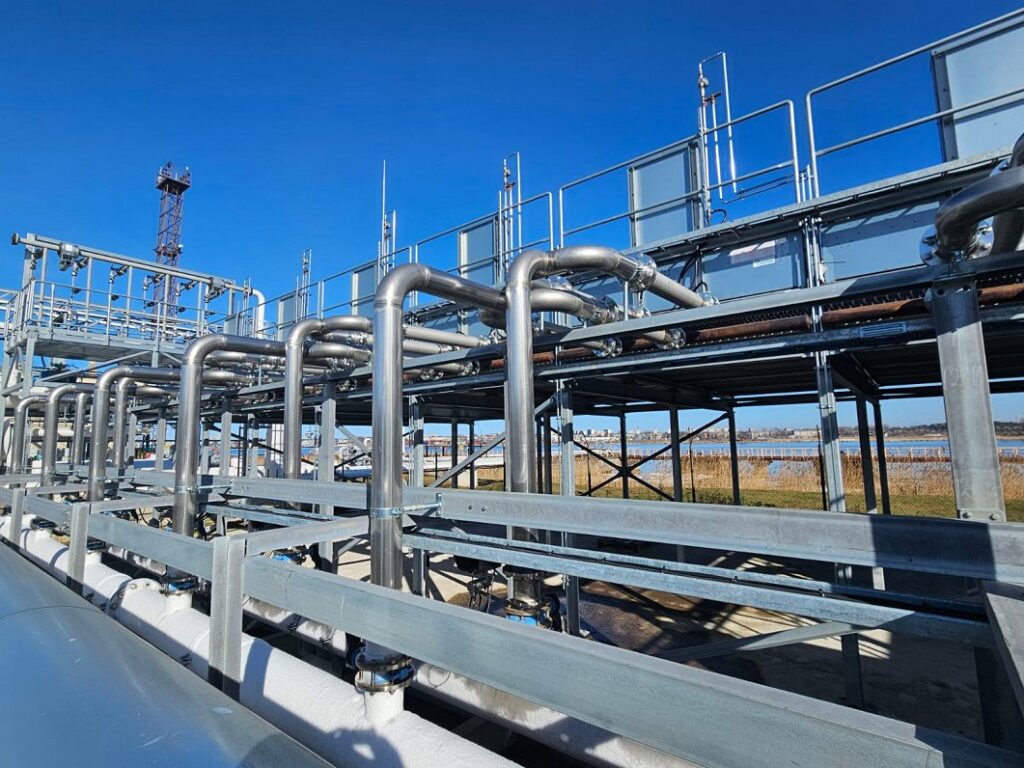
Latvian Radio reports that to ensure the possibility of delivering liquefied propane gas to Latvia by tankers, the company “Latvijas Propāna Gāze” (Latvian Propane Gas, LPG) has invested ten million euros in the modernization of its terminal.
Historically, Latvia’s energy sector has relied primarily on Russian-origin propane gas, which was delivered by rail. Attempts to replace this aggressor country’s product had to address significant logistical and infrastructure issues, most obviously the fact that the USA, which is the replacement supplier, is located across the Atlantic ocean, and servicing transatlantic gas tankers in ports is complicated.
However, the Port of Riga, in cooperation with the company “Latvijas propāna gāze”, has now resolved this issue, and in March the fourth transatlantic gas tanker is being unloaded at the port, according to Latvian Radio.
The tanker “Cerro Alto Explorer” is 180 meters long, 29 meters wide with a cargo of slightly more than 20,000 tonnes of liquefied propane gas. The Port of Rīga can service this vessel thanks to a modernized deep-water berth and investments in unloading infrastructure.
“The most significant thing is that this is the first place in the Baltic States, and indeed in Poland and Finland, that is capable of accommodating such medium-sized gas tankers, which are the minimum size to transport liquefied propane gas across the oceans,” said Heiti Hääl, Chairman of the Board of LPG, who said that the company has invested approximately 10 million euros in the development of gas unloading equipment for its port terminal since 2019.
It takes about 10 days to pump out a 20,000-tonne gas tanker. Propane gas is supplied not only to local consumers, but also for export. From the LPG terminal, it travels by road tankers, trains or smaller ships to Finland, Estonia, Lithuania and Poland. This is a good achievement not only for the transit business, but also for the energy security of the region, says Latvian Minister of Economy Viktors Valainis (Union of Greens and Farmers).
“Today we are turning the flow the other way. Not from east to west, but from west to east. A US ship to provide propane to the Baltics, plus Poland and potentially Scandinavia. Another example of how we can break the usual ties and become even more competitive by developing new trade channels and finding new partners,” the minister said.
LPG plans to service approximately 18 more such ships at the Port of Riga this year, transshipping a total of 400,000 tons of liquefied propane gas from the United States. Meanwhile, the Port of Riga is currently working to be able to accommodate even larger ships – up to 40,000 tonnes in capacity.
Select text and press Ctrl+Enter to send a suggested correction to the editor
Select text and press Report a mistake to send a suggested correction to the editor
Tell us about a mistake