
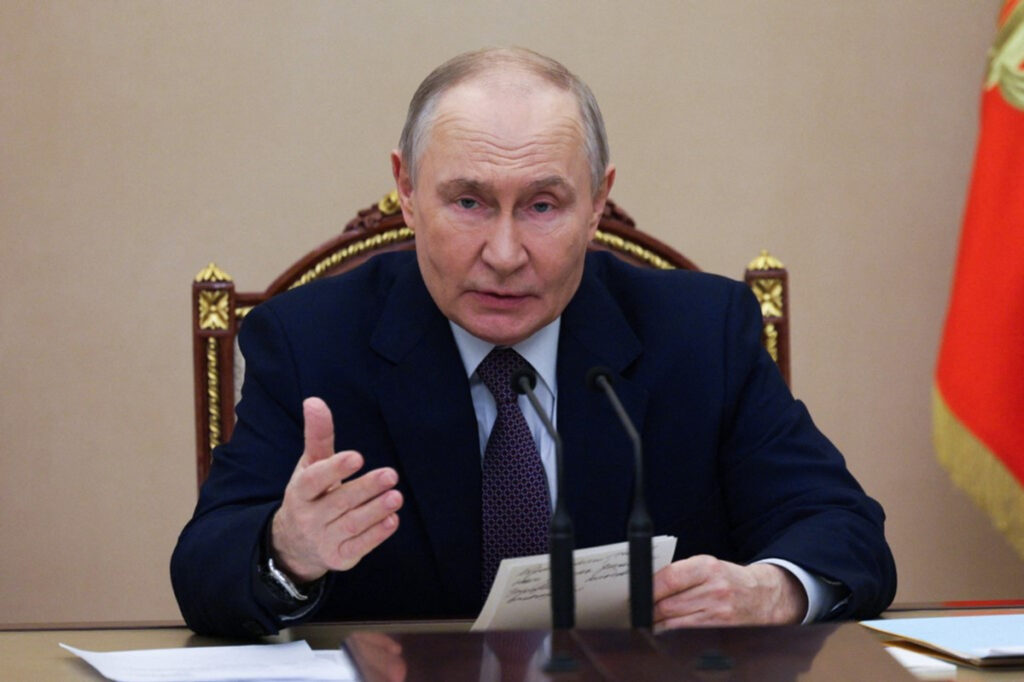
Russian President Vladimir Putin said Monday that Moscow could supply oil and gas to European buyers amid soaring oil prices resulting from the US-Israel war on Iran.
Oil prices have surged above $100 per barrel this week, reaching levels not seen since Russia invaded Ukraine in 2022.
Follow our coverage of the war on the @Kyivpost_official.
The spike comes after US and Israeli airstrikes on Iran that began on February 28 and have since escalated into conflict across the Middle East.
Over the last few years, Europe has gone to great lengths to reduce its dependence on Russian oil as a direct result of the full-scale invasion, though Hungary and Slovakia still heavily rely on Russia for oil imports.
Putin in a televised meeting said he would resume supplying Europe with oil and gas as long as such partnerships are “long-term.” He framed that possibility as dependent on European buyers deciding to restore ties.
He added that Moscow would continue to supply oil to “reliable” partners in Asia, as well as Hungary and Slovakia.
“If European companies and European buyers suddenly decide to reorient themselves and provide us with long-term, sustainable cooperation, devoid of political pressures… then go ahead. We’ve never refused,” he said.
“We’re ready to work with Europeans, but we need some signals from them that they’re ready and willing to work with us and will ensure this sustainability and stability.”
Other Topics of Interest
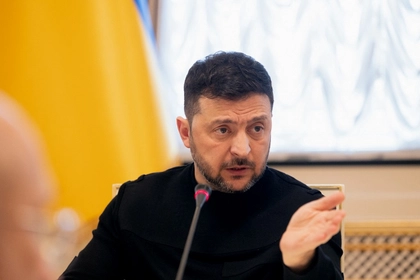
Ukraine Peace Talks Delayed as Partners’ ‘Priority and Attention’ Focuses on Iran
Zelensky reaffirmed Kyiv’s willingness to meet for talks as he announced that a meeting planned for this week had been postponed “at the proposal of the American side.”
The European Union prohibited maritime imports of Russian crude in 2022. Meanwhile, pipeline deliveries to Hungary and Slovakia have been effectively stalled since January due to damage caused by Russia to the Druzhba oil pipeline that runs through Ukraine.
Russian oil is seeing increased demand as the ongoing conflict in the Middle East and rising tensions around the Strait of Hormuz are tightening global energy supplies.
“We are seeing a significant increase in demand for Russian energy resources in connection with the war in Iran,” Kremlin spokesman Dmitry Peskov told reporters on Friday.
Oil and gas tax revenues constitute up to 30 percent of the Russian federal budget.