
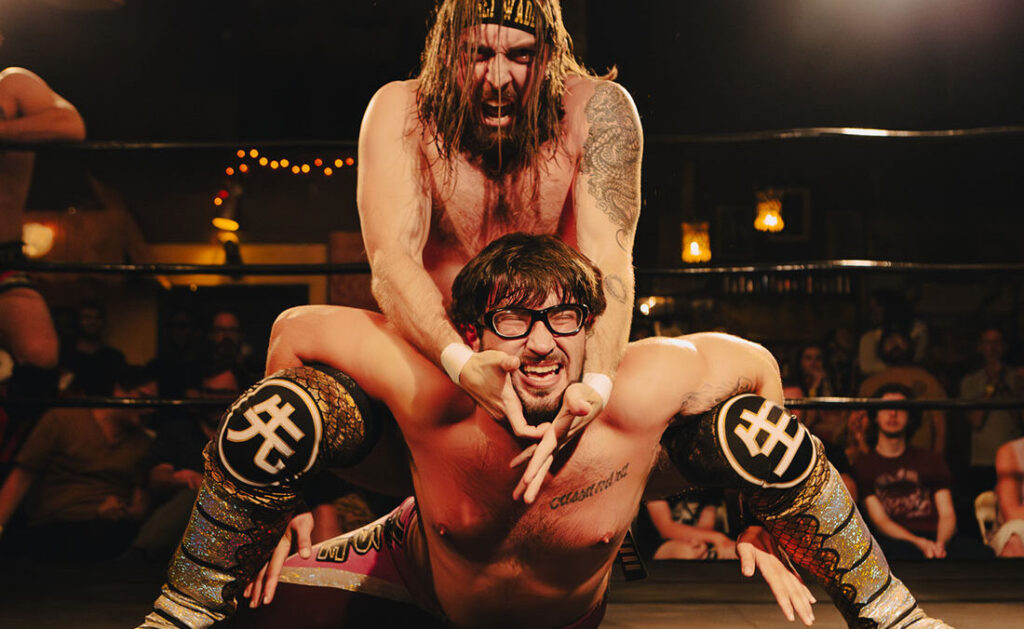
“I remember just standing there that night, and I could feel this connection between the fans and the performers in a way that I hadn’t really ever felt before, which makes sense now that I know more about wrestling, because fans really have agency over the action in the ring. The louder they cheer, the more the wrestler is going to labor to his feet. Wrestling doesn’t really work without an audience,” says Athens journalist Alison Lyn Miller, who published the nonfiction book Rough House: A Father, a Son, and the Pursuit of Pro Wrestling Glory earlier this year.
Miller wasn’t a wrestling fan when she attended the now-defunct Southern Violence And Wrestling match back in 2019, but her passion for writing about ordinary people doing interesting things left her with a fascination for what she experienced that night. When Miller first began researching indie wrestling as a topic for a book, she sat down with Justin Burnham, who was involved with Southern Violence and now is co-owner of local promotion company Classic City Wrestling with Cole Taylor.
“[Burnham] pulled the curtain back, not only on the industry, but shared his own life experience with wrestling. It was impactful for him in a really deep way as a child and as a teenager growing up… His father was a pastor, and he was busy a lot, and he was away from the house a lot. So every Saturday night at 6:05 p.m. on TBS, it was Georgia Championship Wrestling. It was just this touchstone of his life. Wrestling really defined his life. And I learned that he wasn’t alone in that,” says Miller.
This conversation led her to talk to as many people around the area as possible about what led them to wrestling and why they continue such a physically strenuous entertainment sport. Part of what she found as she sought out interviews was that, in Georgia, you’re never more than an hour away from an indie wrestling show. Georgia has a rich history in wrestling, and the cultural impact is wider than even non-fans might expect. Outside of speaking to the wrestlers themselves, whenever Miller would talk about her project with people, she almost always found that they had a nostalgic story connected to wrestling.
 Jason Thrasher
Although Rough House focuses on aspiring star Hunter James, who was born into a wrestling family, Miller clarifies that it’s a very human story about self-actualization and how we measure success in our lives, in addition to exploring culture and performance art. Critics of wrestling often point to its violent nature, but Miller counters that with the cathartic experience of play fighting.
“Anger is an emotion that’s never going to go away. So, how are we channeling that?” says Miller. “A lot of wrestlers kind of come to it because they have a lot of trauma, or they’ve come from bad places. So when they’re in the ring, it’s a way for them to work it out… It’s just like any other way to channel that anger, frustration, anxiety or whatever.”
How this plays out in the ring differs greatly between the indie wrestling promotion companies. Some events lean into different styles, and audiences are not all the same from city to city. Marketing plays heavily into how a wrestler builds their persona, and then how they deliver it for each show.
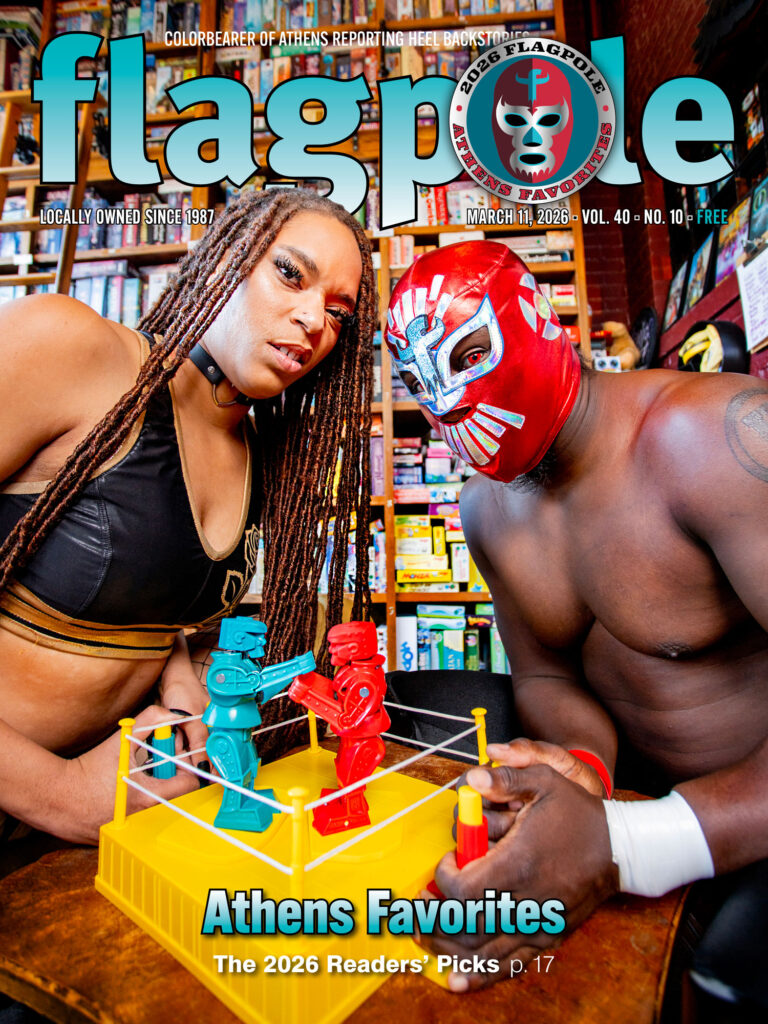
“You have to promote yourself in specific spaces so that people who like wrestling or people who book wrestling can become aware of you,” says wrestler Trever Aeon, featured as one of this year’s Flagpole Favorites models. “It helps if you have stuff that can connect you to the outside world, that your fans can grasp on to. For example, I hang out in the goth scene. That’s my thing. So when there are people at goth night who like wrestling, they’re like, ‘Oh, we thought that was a character. No, you’re really here.’ And I’m like, ‘Yes, it’s my thing.’ It’s not a character. I’m really like this.”
“I just try to be my most authentic self, really, because there’s not a lot of Black queer wrestlers doing anything. They’re not getting recognition. There’s a lot of us. We don’t really get noticed. So I’m really trying to push the recognition for that, because I know that’s really important,” says Rose Gold, also one of the Flagpole Favorites models.
Aeon backs up Gold that, at this point, there are enough talented women and non-binary wrestlers on the indie circuit that there’s no excuse for promoters to not book evenly diverse matches. There are a lot of issues in the industry of promoters disrespecting or downplaying their women wrestlers. “It’s not needed. I’m bigger than most of the men anyway,” Gold says, laughing.
However, Classic City Wrestling has a great reputation among the promotion companies. Aeon says that they put in a lot of effort in their promotion, and give the wrestlers freedom to be themselves. The attitude is “y’all know how to do this, just have a good match and don’t get hurt,” says Aeon.
“They actually want you to succeed, and they believe in everybody. They kind of let you do your own thing, and they don’t make you fit in whatever box they want you to fit in,” says Gold.
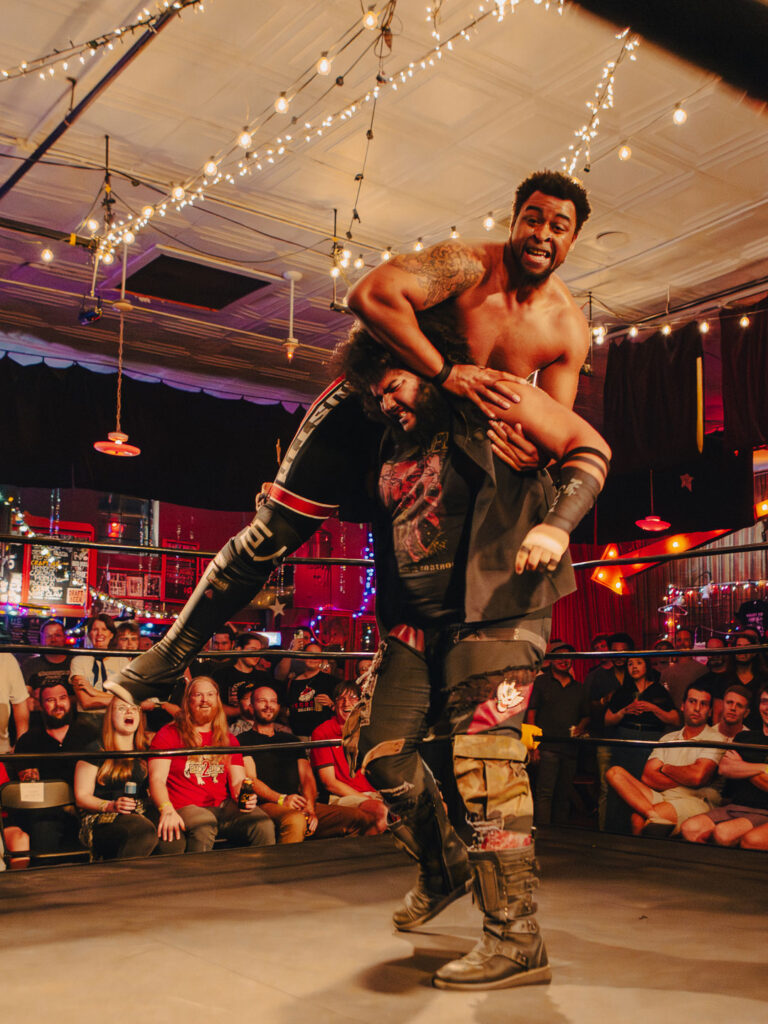
At the beginning of every Classic City Wrestling show, the audience is told to cheer, boo and taunt as much as they want, but there’s a zero tolerance rule for any racist, homophobic or transphobic comments. Co-owner Taylor says this has built trust within their community. The rosters feature wrestlers of the LGBTQ+ community, different races and various socioeconomic backgrounds, so the matches feel representative of the larger community.
“It’s also inclusive in the way that it’s more of a grassroots movement that we are all a part of together. The requirement of being a part of it is believing. I love seeing punk rockers and grandmas high five each other over the same body slam. As a fan, being a part of Classic City Wrestling is being a part of Athens,” says Taylor.
 Kat Wood
Part of Miller’s research for Rough House included attending a lot of different indie wrestling shows for perspective, and she agrees that Classic City Wrestling is “just so Athens.” The inclusion of a live band performing on stage, in addition to the wrestling match happening in the middle of the venue, sets these events apart from any others she’s seen. “I think it kind of represents the next wave of wrestling,” says Miller.
At its core, Athens has always been and continues to be a music town. Incorporating music into the wrestling events really added the “Classic City” to Classic City Wrestling, and this union of cultures became more solidified when the events moved from the now-closed Southern Brewing Co. to the iconic 40 Watt Club downtown. Taylor says that the venue is part of what makes their product special, and it has that “old school, punk rock energy.”
“When Justin and I first started Classic City Wrestling, part of our mission was to create a product that truly reflected the arts in a way that was uniquely Athens. Athens has a rich history within the arts community,” says Taylor. “There has been professional wrestling in the area for over 50 years, but nothing really that captures the spirit of Athens. It was our duty to present wrestling as a true art form and allow Classic City Wrestling to be a part of the history of all the great art that has come out of Athens. We are the alternative brand… Even when we have shows in other parts of the Southeast, I always express that we are there to present the pro wrestling of the Classic City.”
Classic City Wrestling will return to the 40 Watt Club on May 16. For more information about Miller and her book Rough House, visit alisonlynmiller.com.
Like what you just read? Support Flagpole by making a donation today. Every dollar you give helps fund our ongoing mission to provide Athens with quality, independent journalism.