
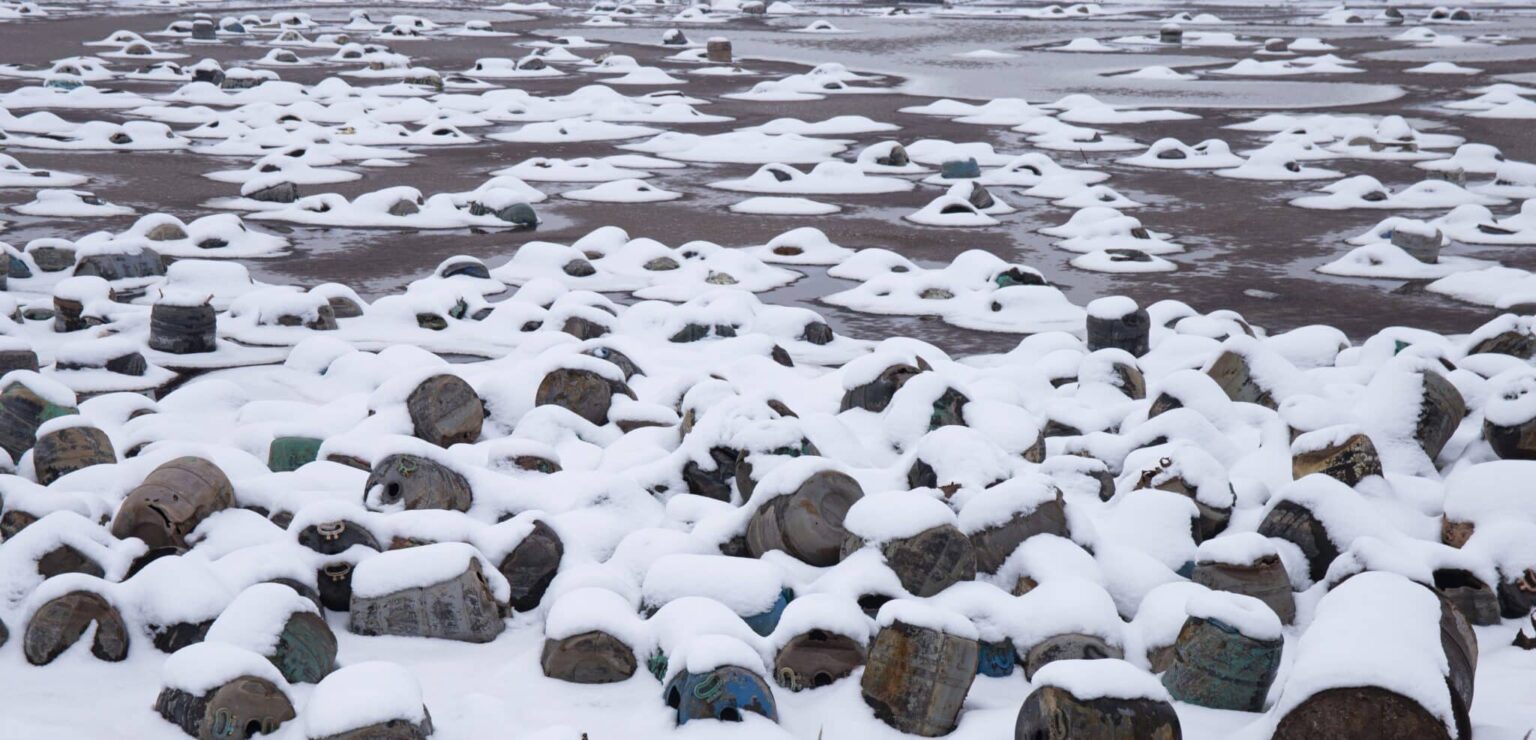
Industrial landfills are just one aspect of a much wider issue. As mentioned by Octavian Berceanu, most of Romania’s cities and towns rely on communal waste disposal sites.
Cluj-Napoca, which until recently hosted the largest municipal landfill in the country, has now been transformed, under the direction of the European Commission, into an integrated waste management centre containing a sorting station, a mechanical-biological treatment plant and two smaller landfills.
Problems caused by the mountains of garbage haven’t disappeared however, with citizens regularly complaining about a foul stench wafting from the dump. Some claim that the garbage smell reaches as far as Floresti, a settlement located 15 kilometres from the Cluj-Napoca landfill. And there are people who have little choice but to live in its direct neighbourhood.
“The landfill was really important for us, because there was no other place where we could work,” says Andrea*, who lives on the slopes of the previous landfill, now covered with soil.
“I myself raised my children by working with the garbage. But now [the authorities] have opened a new landfill, and only a couple of people from our community work there. Summertime is really nasty – all of the smell comes from the waste disposal site and hangs around our houses for weeks,” she complains.
Today, the name of the dump, Pata-Rat, has become synonymous with four settlements located hundreds of metres from the waste disposal site. Its inhabitants are almost exclusively Roma people, who arrived here in four waves since the 1960s: some searching for work, some driven out from the city centre by re-privatisation or rent price rises, some evicted by force. Now they live in overcrowded shacks, ridden with insects and rats, with trash piling up everywhere. Pata-Rat is considered the largest waste-related ghetto and a glaring example of the environmental injustice that Roma people across Central and Eastern Europe suffer.
The air around the landfill is highly polluted and the people in Pata-Rat suffer the consequences. A 2022 survey by the Romanian NGO Desire revealed that every person questioned stated that living next to the dump was negatively affecting their health. The most common afflictions include breathing problems, dizziness and coughing. These are made worse by the fact that many public services, including ambulances, tend to avoid going into the ghetto.
The Pata-Rat settlements are facing an uncertain future. The mayor of Cluj-Napoca has vowed “there will be no more Pata-Rat” and his administration announced in 2024 that it plans to provide social housing for the people living there before demolishing the buildings.
There are doubts, however, about whether the proposed resettlement is motivated solely by good intentions, as just before these plans were revealed, the construction of a luxurious Transilvania Smart City on a hill overlooking Pata-Rat began. However, the development was stopped when investors pulled out, which some fear could reduce the city’s motivation to help the Pata-Rat Roma.
There are also worries that moving out of the ghetto will merely deepen the residents’ lack of access to public services and transport exclusion.
“Of course I want to move out of here; I want to provide a better future for my children. We already suffer here because there is no proper public transport, so getting all the kids to different schools is difficult. But if they moved me again, we’d have to change schools again, which is also a complicated process to go through. I really don’t want to be sent to one of the communes in the metropolitan area,” says Cristian, who has lived in Pata-Rat since being evicted from the city centre in 2010.