
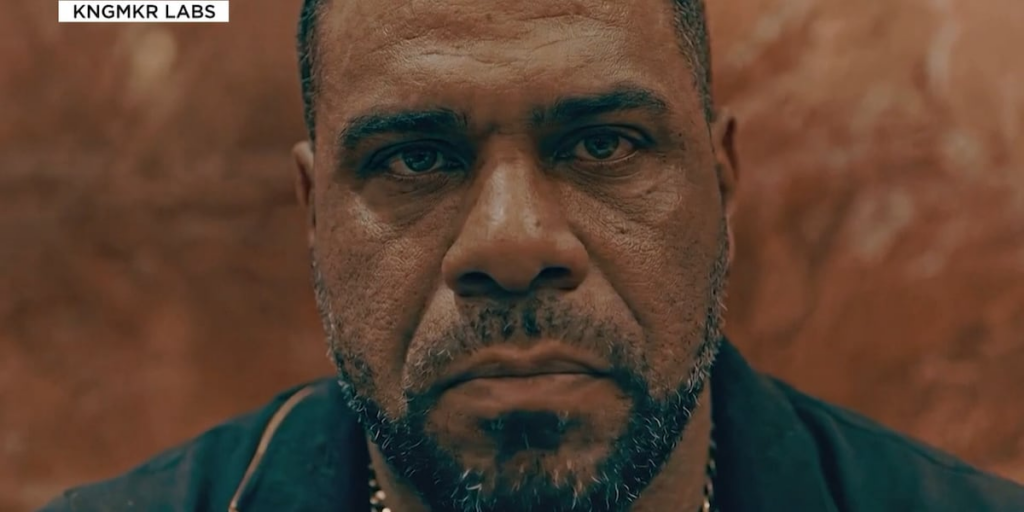
PHOENIX (AZFamily) — Oscar-winning director Guillermo del Toro famously said he would “rather die” than use generative AI in filmmaking. Matt Zien can’t get enough of it.
Zien, a film and TV producer who co-founded KNGMKR Labs, just released “Degen” – a 12-minute film about loneliness in a dystopian future. Every character, voice, and visual effect was generated by artificial intelligence.
The cost to make Degen was in the “low thousands of dollars.” The same production shot traditionally would cost millions, Zien said on the latest episode of Generation AI.
“No one would ever make that film. No one would ever fund that film,” Zien said, pointing to Degen’s elaborate high-rise party scenes that feature robots, Ferraris, and futuristic drones. “Even the VFX would be a fortune.”
The film producer, whose credits include the Cannes film “Slauson Rec” and the Paris Hilton documentary “This is Paris,” said the creative process of AI filmmaking starts with a casting call, but with synthetic beings.
“You generate hundreds of them often, sometimes more,” Zien explained. “Eventually, you narrow them down, and some hit what is in your imagination and who speaks to you.”
Then comes voice generation. “You generate different voice options with different nuances of accents. And then you sort of put them together. And it’s funny. People think this sounds crazy. But sometimes these synthetic characters have chemistry with each other. And sometimes they don’t.”
“Writing, Directing, and Shooting at the Same Time”
Traditional storyboarding goes out the window. “This is all kind of made up as it goes,” Zien said. “You generate and you edit at the same time.”
Zien’s first AI film, “The First Humans,” went viral at the end of 2024. He said the tools have evolved dramatically since then. “I think we are entering a brand new chapter of AI filmmaking,” he said, pointing to new releases like SeeDance 2.0 from ByteDance.
“Multi-character dialogue in moving scenes is now possible in consistent locations. The character consistency issue is pretty much solved. And we are getting really close to the point where literally any movie will be able to be made.”
His timeline is aggressive: “The difference between AI and non-AI films, I estimate by the end of the year, will be pretty much indiscernible.”
“It’s Easy for Him to Sit on $130 Million”
Not everyone in Hollywood shares Zien’s enthusiasm. There’s a “No AI Film Festival” in Los Angeles scheduled for March. And then there’s Guillermo del Toro, and his life-or-death rejection of the tech.
Zien’s response was blunt. “It’s easy for him to sit on $130 million budget,” he said. “But for every filmmaker who is scrapping their way up to get their movie made against all odds. Yeah, of course. We’re going to do what we have to do to tell our stories.”
For Zien, AI filmmaking recaptures something lost in traditional Hollywood. “I haven’t felt this way since maybe I was a freshman at USC film school or in middle school, like making films, forcing my friends to be in movies on my dad’s home video camera.”
He said the old-school business of Hollywood requires begging for favors, huge financial risk, and major strokes of luck to get a film made. AI removes those barriers. “The difference here now is you don’t need anyone’s permission to make the craziest ideas. The financial risk is generally very low.”
A Flood of Beautiful, Meaningless Content
Zien predicts an avalanche of AI-generated content ahead. “We will see our algorithms flooded with beautiful, entertaining, meaningless content.”
In that environment, he argues, meaning will become the scarce resource. “The only thing that will remain scarce as content is commoditized is meaning. It’s the person making this film saying something unique and original. That isn’t just trying to get my attention, but is giving me something valuable that is helping me see the world in a different way.”
So far, the flood of AI-generated videos has largely lacked meaning in the eyes of Arizona’s Family film critic Hunter V. Norris. “It’s stuff that doesn’t have very much emotional content or resonance to it,” Norris said.
“I really don’t consider them real, genuine art,” he added. “It’s a lot of people kind of playing with toys, playing with their action figures.”
Zien embraces the action figure analogy. He acknowledged there’s a gold rush among AI filmmakers to find the next “Toy Story” – a breakthrough animated hit that can be commercially successful on a global scale.
But Zien isn’t interested in using AI to make a cheaper Toy Story. He wants to make something audiences have never seen before; something that only exists because AI made it possible.
“Here’s the bottom line,” Zien said. “I love telling stories through the medium of film way more than they hate AI.”
See a spelling or grammatical error in our story? Please click here to report it.
Do you have a photo or video of a breaking news story? Send it to us here with a brief description.
Copyright 2026 KTVK/KPHO. All rights reserved.