
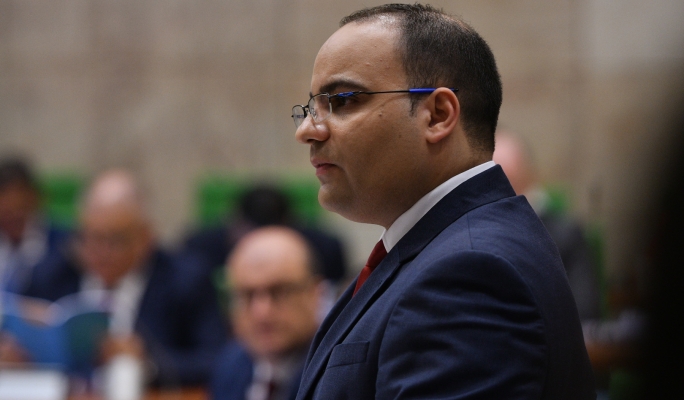
Finance Minister Clyde Caruana said Malta has a €250 million fiscal buffer available to cushion potential energy price shocks linked to the Iran conflict.
The figure, Caruana said, is on top of the €150 million the government is already spending on energy and fuel subsidies.
Speaking in an adjournment speech in parliament on Wednesday, Caruana outlined the possible economic impact of the conflict, saying the situation is being closely monitored following meetings he attended at the Eurogroup and the Economic and Financial Affairs Council.
He said the current geopolitical tensions are affecting energy markets differently than the crisis triggered by the Russian invasion of Ukraine in 2022.
“When the Ukraine war started, the bloc was heavily dependent on gas. This brought big shocks to the economy,” Caruana said.
At the height of that crisis in 2022, gas prices had surged to €350 per megawatt hour. Today they stand at around €50 per megawatt hour.
“This shows that between the two conflicts, the impact has not been the same,” he said, noting that the current tensions are hitting oil markets more than gas.
Oil prices, he said, were around $120 per barrel in 2022 and currently stand at about $90 per barrel, indicating a smaller shock compared with the earlier crisis.
Similarly, diesel prices had reached around $4 per gallon for six months in 2022 but currently stand at about $2 per gallon.
Caruana said Europe’s energy mix has also changed since the start of the Ukraine war.
At the time, around 40% of energy generation in Europe relied on fossil fuels. Today that figure has dropped to around 30%, with renewable energy accounting for roughly half of Europe’s energy generation.
Beyond energy markets, Caruana said conflicts also affect financial markets and currencies.
“History has shown that in times of conflict and uncertainty the dollar strengthens,” he said, adding that the euro typically weakens during such periods.
“How long the conflict goes determines what will happen now,” he added.
Caruana also addressed recent reports about government spending following comments by the European Commission.
“Last November newspapers had said I would need to lower government spending,” he said, insisting that forthcoming economic performance data would show otherwise.
He emphasised the difference between fiscal policy and government finances, arguing Malta’s fiscal approach remains credible.
“We have improved on deficit and spending, and we are now on track to perform even better than expected,” he said.
Caruana said the government has “headroom” if energy prices spike further.
“If prices had to surge, the country has the equivalent of €250 million which can be used to cushion the impact,” he said, stressing Malta must remain within the EU’s 3% deficit limit.