
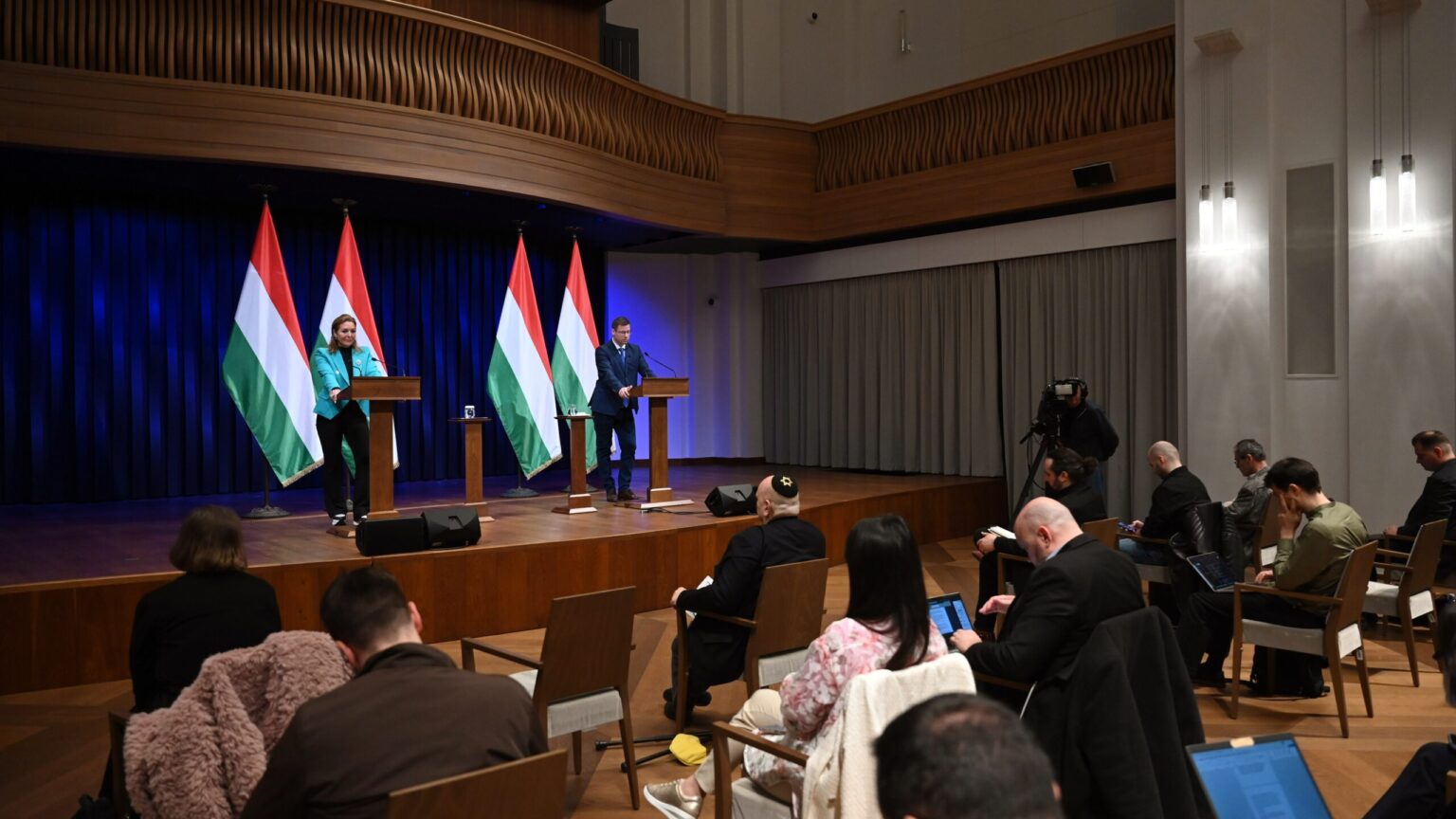
Hungary’s government has introduced a protected price cap on fuel and linked its support for future European Union financial assistance to Ukraine to the restart of oil deliveries through the Druzhba pipeline, Head of the Prime Minister’s Office Gergely Gulyás said on Thursday.
Speaking at a government press briefing, Gulyás said the cabinet had focused primarily on the energy situation during its latest meeting. According to the minister, the government decided to introduce a maximum retail price for fuel in response to rising global energy risks. Gulyás said the move was partly prompted by instability in the Middle East, which he argued has disrupted global oil and gas supply chains.
He also criticized Ukrainian President Volodimir Zelenskyy over the suspension of oil deliveries through the Druzhba oil pipeline, describing the situation as doubly damaging for Europe. The minister said the fuel price cap applies primarily to Hungarian motorists in order to prevent so-called fuel tourism, where drivers from neighbouring countries cross the border to purchase cheaper fuel.
Gulyás confirmed that a Hungarian delegation had been sent to Ukraine to inspect the condition of the pipeline and hold discussions about restarting deliveries. He suggested that Kyiv’s reluctance to engage with the mission could indicate that there are no technical obstacles preventing the resumption of shipments. ‘If President Zelenskyy lifts the blockade, then we will also support other European countries providing loans to Ukraine,’ Gulyás said.
He also condemned what he described as threats made by the Ukrainian president toward Hungary’s prime minister and his family, arguing that such rhetoric is unacceptable in European political culture. According to the minister, state leaders should not threaten one another. Gulyás added that Hungary remains committed to peace efforts and opposes initiatives that could prolong the war.
‘We condemn every attack that threatens Europe’s energy supply,’ he said, calling on countries involved in armed conflicts to avoid actions that could jeopardize international energy deliveries. The minister said Hungary’s energy reserves are currently sufficient and that supplies could also be supplemented through the Adria pipeline, although its capacity is limited and oil delivered through that route would be more expensive.
Responding to questions from journalists, Gulyás said the government is determined to use all available tools to persuade Ukraine to resume oil transit through the Druzhba pipeline. Hungary has already sent a diplomatic note to Kyiv regarding the issue, he added.
The minister also argued that divisions within Hungary over energy policy may have encouraged Ukraine’s position, accusing the opposition Tisza Party and its leader Péter Magyar of supporting the EU’s efforts to reduce dependence on Russian oil.
Looking ahead to a European Union summit scheduled for next week, Gulyás said Hungary’s position is that Ukraine should receive financial support and the bloc should adopt new sanctions only if Kyiv guarantees the uninterrupted operation of the Druzhba pipeline.
The minister also addressed reports about an investigation into what he described as an ‘Ukrainian gold convoy,’ a shipment allegedly carrying an unusually large amount of foreign currency. According to Gulyás, authorities are examining the case to determine the purpose of the funds, though no formal charges have been brought so far. He added that the quantity of foreign currency involved was unusually large, claiming that the volume exceeded what Hungary’s largest bank typically transports over an entire year.
The minister added that the protection of Hungary’s critical energy infrastructure has recently been tightened, which he described as an appropriate step given the current security environment.
Gulyás also encouraged citizens to complete the government’s national petition, arguing that it has gained particular relevance after the suspension of oil deliveries through the Druzhba pipeline, which he said is essential for maintaining Hungary’s household utility cost reduction policy. He noted that the government’s defence council examines all possible responses to the current situation, including the potential ban from Hungary of Ukrainian individuals who have issued threats.
‘Our aim is for President Zelenskyy to face reality,’ Gulyás said, adding that Ukrainian officials have already admitted that the closure of the pipeline is politically rather than technically motivated. According to him, this raises questions about whether a candidate country for EU membership is fulfilling its contractual obligations.
Gulyás also said it remains unclear what further steps Ukraine might take. However, he stressed that Hungary is not planning to halt electricity exports in response to the suspension of diesel deliveries, noting that ethnic Hungarians living across the border would also be affected by such a measure.
Finally, the minister argued that Ukraine may ultimately be forced to reopen the pipeline if it cannot influence political change in Hungary. He added that the opposition Tisza Party has repeatedly stated its intention to end Hungary’s reliance on Russian oil.
Related articles: