
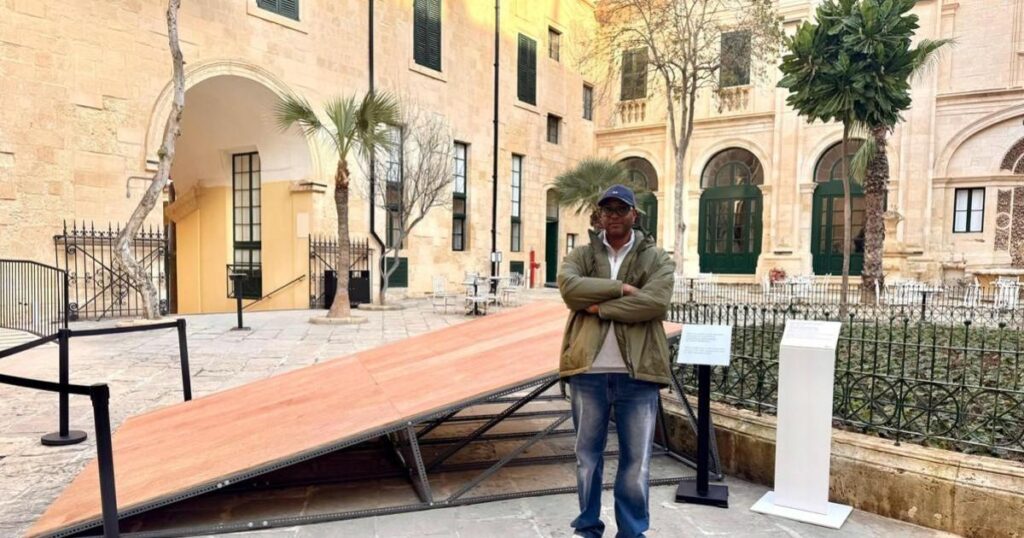
An Egyptian artist selected to exhibit at the Malta Biennale says organisers rejected an alternative version of his work after the war in the Middle East prevented him from transporting the original installation.
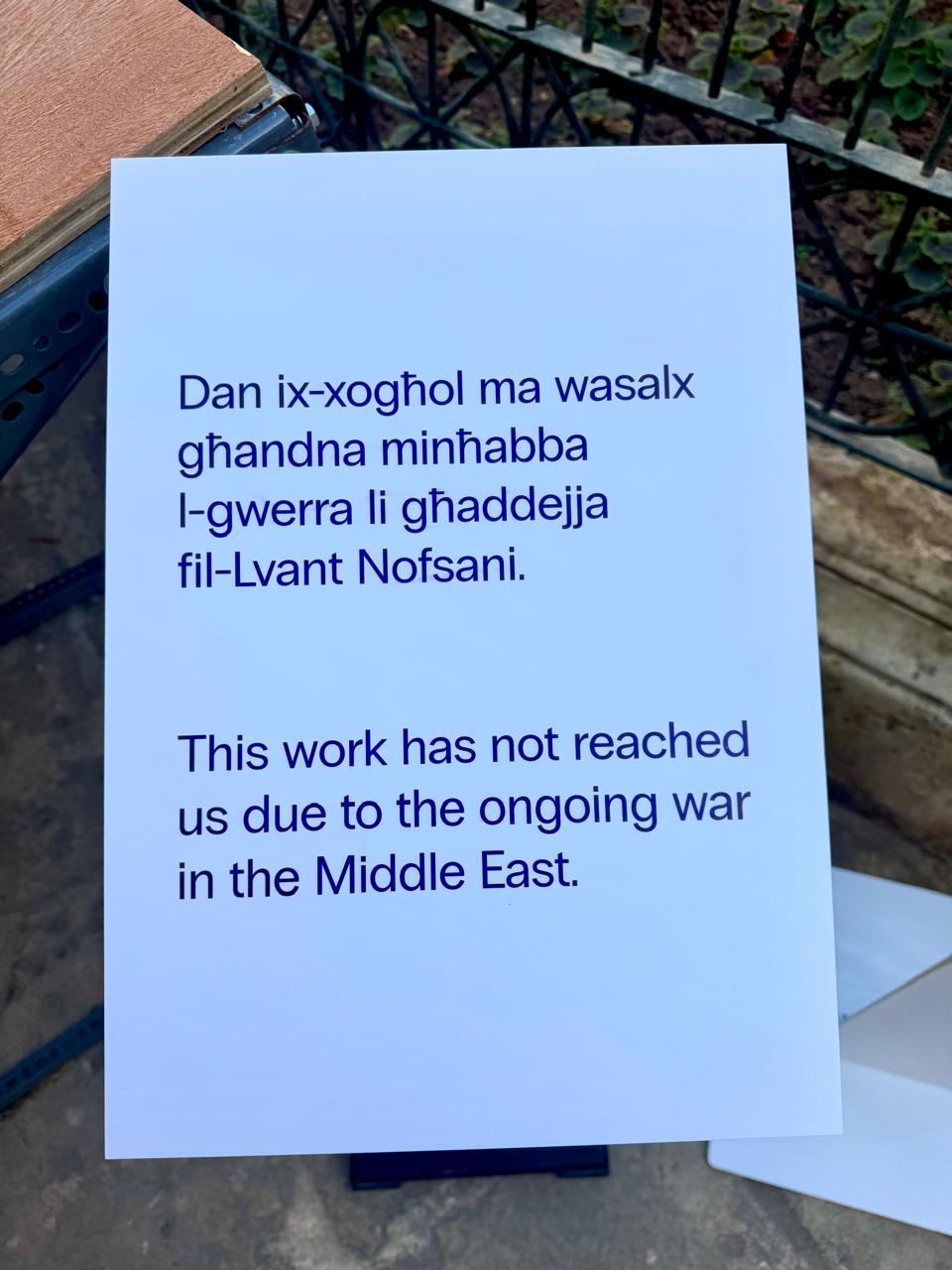 The sign at the site allocated for his artwork.
Mohamed Ibrahim El Masry had been due to present his piece, The Economy of Power Pays the Price, during the second edition of the Malta Biennale.
The installation features two large inflatable golden tanks measuring roughly 10 metres by three metres and examines the economic and political systems surrounding weapons production.
El Masry planned to travel to Lebanon to collect the installation and transport it to Malta ahead of the exhibition.
“I was preparing to go to the airport when I checked my phone and a lot of my friends were saying the war had started,” said El Masry. At that point, he realised he would not be able to retrieve the work from Lebanon or ship it to Malta as originally planned.
El Masry contacted the Malta Biennale team to explain that transporting the installation had become impossible. He also informed the organisers that he would try to find an alternative way to participate in the exhibition.
One option he proposed was to produce a publication documenting the disruption to his project and the circumstances surrounding the conflict that prevented the artwork from leaving Lebanon, as well as a smaller version of the installation to keep the project alive.
“Egypt is known for producing this hardened steel used in the armouring of military vehicles. The idea, therefore, is not simply a visual representation of a tank, but a representation, albeit in smaller form, made from the same material used to protect it in reality.”
While in Cairo, El Masry created a smaller version of the installation. The alternative piece included two small golden silhouettes of tanks made from armoured steel.
“It’s a work that addresses war, rejects it, and seeks to propose an alternative,” said the artist in his communication to the biennale team.
However, according to El Masry, the Malta Biennale team told him they could not accept new proposals at that stage of the exhibition’s preparations. Instead, organisers said they would place a sign explaining that the artwork had been delayed by the war.
“This made me angry,” El Masry told Times of Malta.
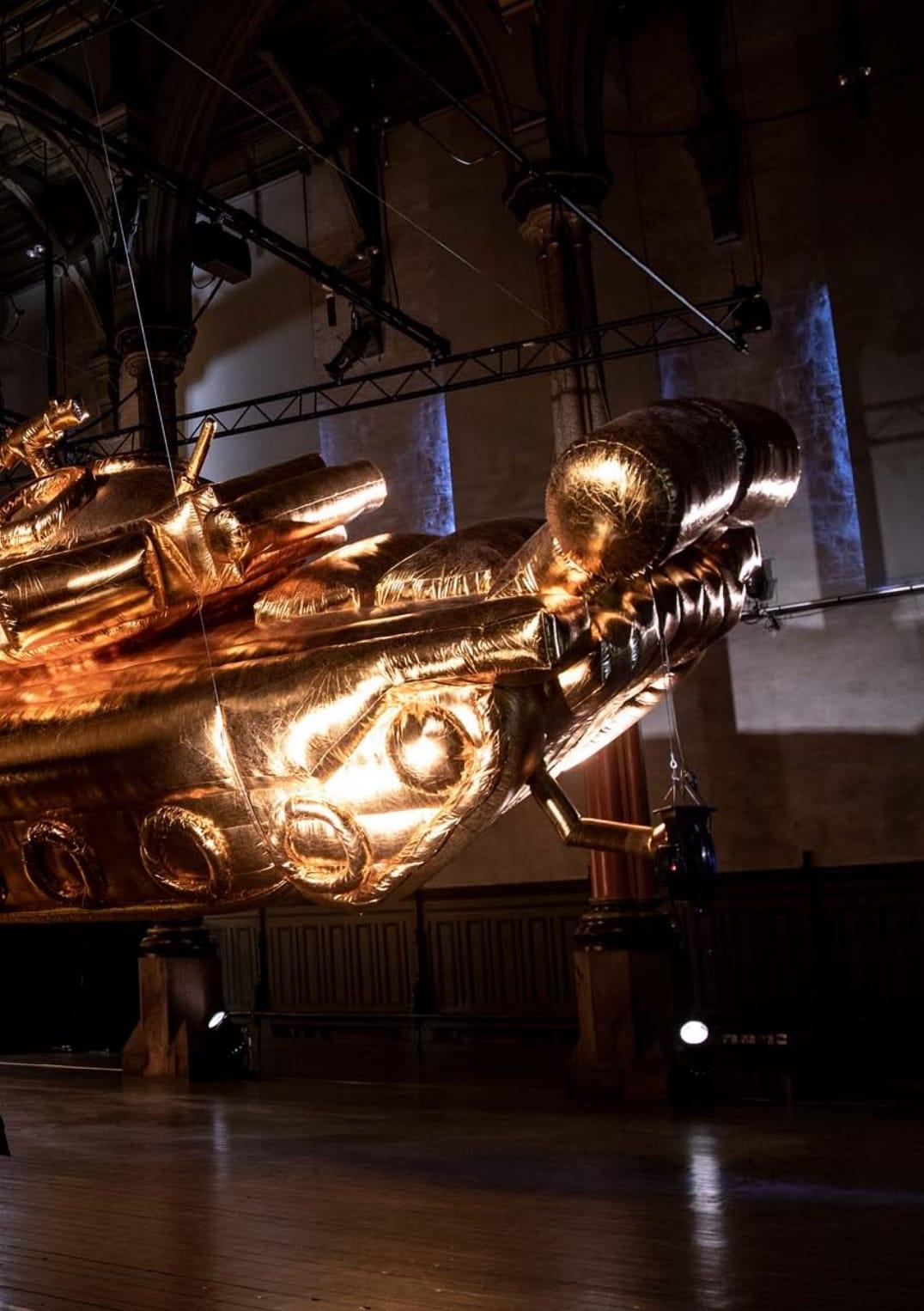
Photo of the original piece: Mohamed Ibrahim El Masry
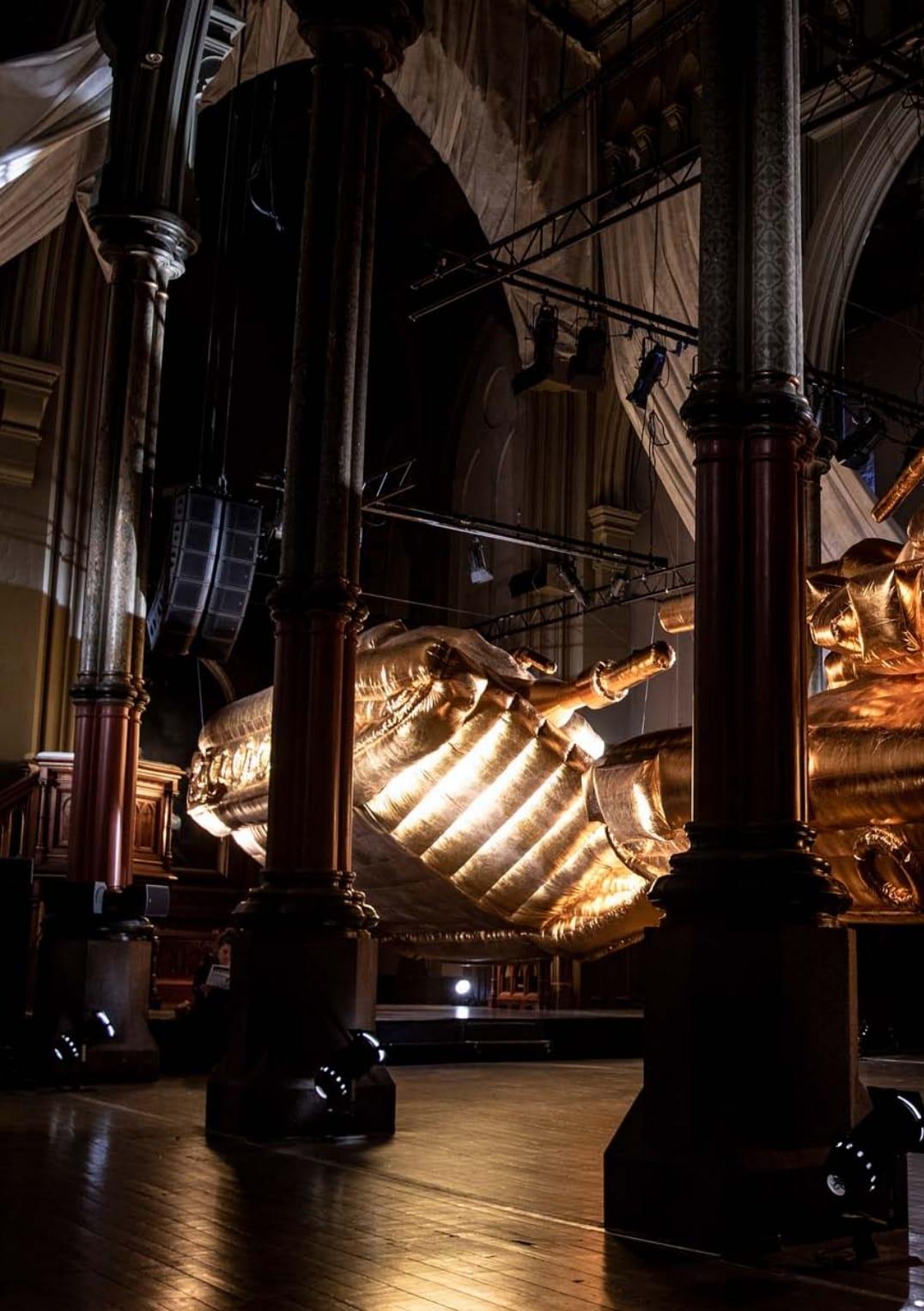
Photo of the original piece: Mohamed Ibrahim El Masry
‘Artists can’t independently decide how their work is presented’
He told the organisers that as the artist and author of the work, he believed he had the right to decide the way this reality is presented within the exhibition.
In an e-mail seen by Times of Malta, the artistic director of the exhibition, Rosa Martinez, said the organisers respected the artist’s experience but explained that alternative versions of the project could not be accepted.
“While we respect your experience of how the war impacted you, it would also be appreciated that you understand that derivative proposals from the original one you submitted are not curatorially accepted at this stage.”
Martinez also wrote that artists could not independently decide how their work is presented within a biennale exhibition.
Furthermore, she said the publication submitted by El Masry had not been approved by the curatorial team. She added that the small metallic tanks were not accepted either because they were visually poor.
“I am sorry to be so clear, but a biennale is a collective exhibition and not the field for autonomous and not negotiated proposals, even if these proposals speak about love, war, death or any other relevant human issues,” she said in the e-mail.
The Malta Biennale has placed a sign in El Masry’s allocated space at the Grandmaster’s Palace stating: “This work has not reached us due to the ongoing war in the Middle East.”
Questions were sent to the Malta Biennale team, but no reply was forthcoming by the time of publication.