
Even with lots of talent, Europe is behind in robotics. Belgium’s ports, universities, and logistics sectors have the scale but lack sufficient hands-on spaces where developers can tackle real industrial problems.
North Star, Belgium’s biggest AI and robotics community with more than 800 members, 15 events, and 20 hires, has launched The Vessel. This open lab at the Port of Antwerp-Bruges supports ongoing robotics and AI prototyping through August and will be featured at the Port of the Future Summit in September.
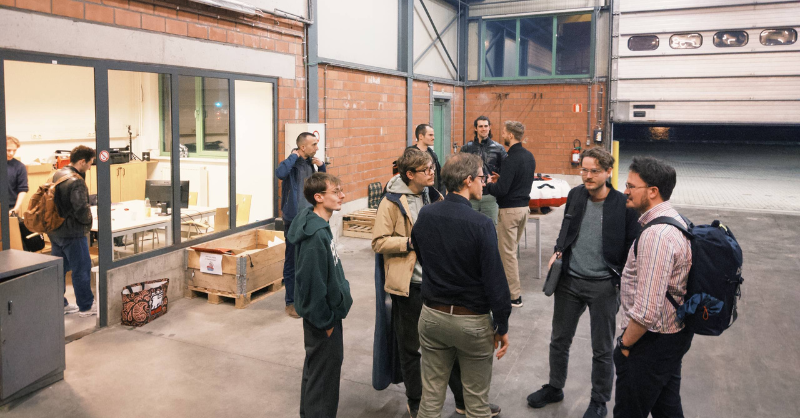
The Vessel is filling that gap: a makerspace in the heart of the port, with 24/7 access to tools, resources, and real industrial hardware. Every week, Open Lab Thursdays bring the community together, and their Fure in Bloom hackathons with a focus on tackling real-world automation problems.
In a conversation with TFN, Filip Nowak, CEO and co-founder of North Star, shares, “We see a problem of silos. There are a lot of smart people in Belgium and great institutions, but they don’t talk to each other enough. Another point is that robotics and hardware in general are an expensive field. By investing in a shared space, we foster experimentation and curiosity, enabling more people to build expertise in this topic. The story we want to tell is that, yes, you can build this here! You can find your people! To inspire students and professionals to become more curious towards AI and robotics, and someday build something great.”
No funding has been announced yet, but they are actively looking for partners.
Turning Antwerp’s port into the Benelux’s next AI and robotics hotspot
Filip Nowak, CEO and co-founder, built North Star from scratch in under a year, spreading across six cities. He spotted Belgium’s hungry young talent and companies desperate for problem solvers.
Nowak shares, “The world around us is very uncertain. European sovereignty is one of the defining conversations of this decade, and technical independence is at its heart. Our mission is to bridge the gap between what’s possible with AI and robotics and what people know about them. We need to invest more in technical expertise to create lasting knowledge.”
“I like to refer to this McKinsey report – it shows that across 30 advanced economies, there are more open jobs than people to fill them, and the working-age population is shrinking. A crisis is on the horizon, and decisive action is needed. Port of Antwerp-Bruges is already a pioneer in technology, especially with its autonomous drone network. The appetite for innovation and workforce augmentation is here. Belgium either takes action or is left behind,” Nowak continues.
The Vessel offers industrial hardware, including the world’s first autonomous port drone network operations, for robotics and AI developers. Its unique features include 24/7 access, real-world port challenges, and a community-first approach instead of the usual isolated university labs.
As Nowak notes, “It’s really the sense of proximity and the ability to test solutions right where the problems happen. Seeing how things work in real life, you talk to the people running these operations. Belgium makes this very easy. I live in Antwerp, and almost every other day I hop on a train to meet a founder in Ghent or a researcher in Brussels. Finding people with similar passions or interesting ideas happens naturally when everyone is 30 minutes apart. In 2026, we’re expanding into the Netherlands because the Benelux corridor has this same advantage at a regional level.”
Unlike closed-off R&D centres or generic makerspaces, The Vessel is built for the port, by the port. No other open robotics lab like this exists in Benelux ports.
What’s next?
After launching in August 2026, The Vessel plans to scale prototypes for the Port of the Future Summit. It will expand partnerships to introduce robotics, AI, and automation challenges and grow the Benelux ecosystem by connecting talent, real-world problems, and companies across the Benelux.
Nowak concludes, “North Star started because there weren’t enough hackathons happening in Belgium. In successful engineering ecosystems, such as San Francisco and London, events, demo days, and hackathons run constantly. That energy is what keeps builders around. We want to build this out through recurring Open Labs and meetups, as well as larger hackathons and conferences. In our first year, we ran 18 events across six cities and facilitated over 20 hires through community connections. So far, our best way to track these is people coming back to us with their stories and reports of companies hiring through us.”