
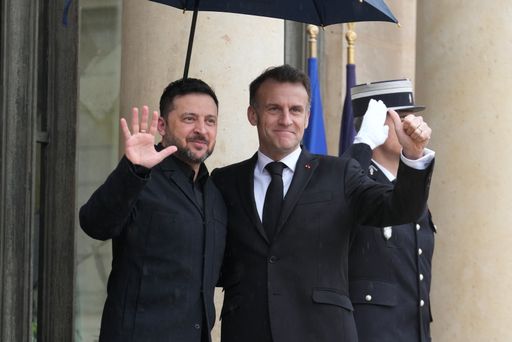
Ukrainian President Volodymyr Zelenskyy has said that a US decision to ease sanctions on Russian oil sales could give Moscow revenues of $10 billion to help fund its war in Ukraine.
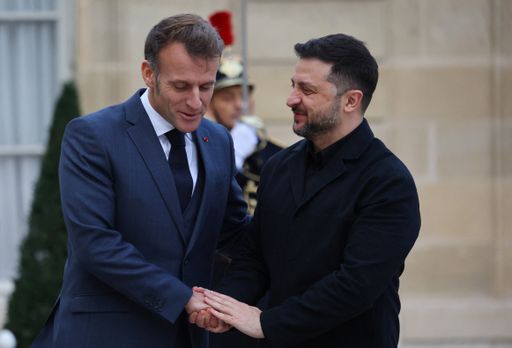
“This one concession alone by the United States could give Russia about $10 billion for the war. This certainly does not help peace,” Zelenskyy said at a press conference in Paris with French leader Emmanuel Macron on Friday.
The visit comes as Kiev’s allies worry that a temporary lifting of Russian oil sanctions by the United States could benefit Russian President Vladimir Putin, already bolstered by rising energy prices due to the war in the Middle East.
The talks focused on increasing pressure on Russia by targeting its “shadow fleet” of tankers used to transport oil in breach of sanctions imposed over the war in Ukraine, the French presidency has said.
But the United States on Thursday said it was allowing the sale of Russian oil that is at sea, in a bid to cool international oil prices after US-Israeli strikes on Iran on February 28 sparked a regional war.
Related
US Treasury Secretary Scott Bessent said the short-term measure was aimed at “increasing the global reach of existing supply”.
German Chancellor Friedrich Merz said on Friday that “easing sanctions now, for whatever reason, is wrong. We believe that is the wrong course of action”.
“After all, we want to ensure that Russia does not exploit the war in Iran to weaken Ukraine,” he said.
During a call with US President Donald Trump earlier this week, “six members of the G7 were very clear in their opinion that this would not send the right signal,” he added.
Macron had said after a G7 video call that easing sanctions on Moscow was “in no way” justified.
US-brokered talks between Kiev and Moscow to end the Ukraine war have also been derailed by the Middle East conflict.
The Kremlin said earlier this week that the planned meeting in Paris would obstruct the peace process and that the “very idea of trying to put pressure on Russia is absurd”.
Zelenskyy on Thursday travelled to Romania, where he agreed to launch joint drone production with Bucharest, and offered to develop anti-drone defence systems with Kiev’s European allies.