
In contemporary international relations, geopolitical competition is increasingly fought not only through military power and economic influence but also through control over narratives. The recent political transformations in the Sahel region of West Africa demonstrate how propaganda and strategic communication can reshape international alignments. Military coups in countries such as Mali, Burkina Faso, and Niger have often been analyzed through the lenses of security crises or democratic backsliding. Yet another dimension deserves closer attention: the growing information battle that is redefining external influence in the region.
For decades, the Sahel formed part of the strategic sphere of influence of France, the former colonial power that maintained close security partnerships with several West African states. French military engagement, particularly through Operation Barkhane, was designed to combat jihadist insurgencies and stabilize fragile governments. However, despite years of military presence, extremist violence continued to spread, while frustration among local populations increased. Many communities began to question whether foreign military intervention truly addressed the root causes of insecurity.
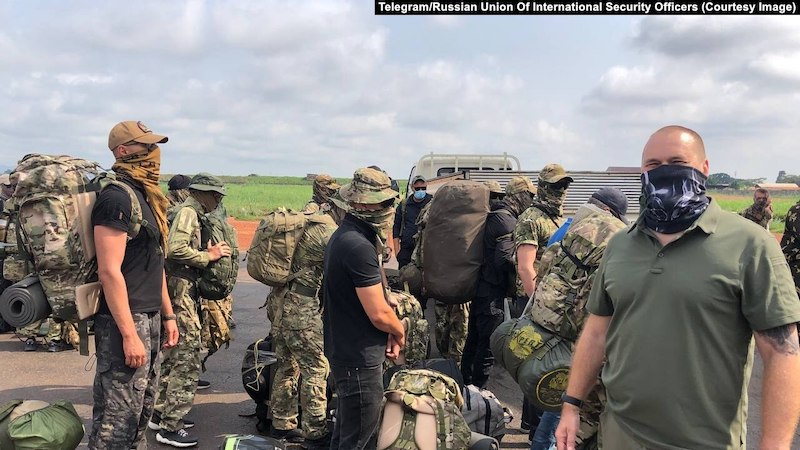
This environment created fertile ground for alternative geopolitical narratives. In recent years, actors linked to Russia have increasingly positioned themselves as partners willing to support Sahelian governments without imposing political conditions. The growing presence of the Russian-linked paramilitary organization Wagner Group in Mali has symbolized this shift. In public demonstrations across the region, Russian flags have appeared alongside anti-French slogans, reflecting a dramatic shift in political sentiment.
The emergence of pro-Russian narratives in the Sahel illustrates the power of propaganda in shaping international politics. Rather than relying solely on formal diplomacy, narratives circulating in local media and online platforms portray Russia as a defender of sovereignty and a partner in the struggle against neo-colonial influence. Western powers, in contrast, are often framed as actors seeking to maintain control over African resources and political decisions.
From a theoretical perspective, this phenomenon reflects the growing relevance of propaganda and narrative framing in international relations. Communication scholars have long described propaganda as the strategic use of information to influence public perception and political behavior. Techniques such as “glittering generalities”—the use of emotionally appealing but vague terms such as “freedom,” “sovereignty,” and “security”—are frequently employed to legitimize political alliances. In the Sahel, the language of liberation and anti-colonial resistance has proven particularly effective in mobilizing public support for new geopolitical partnerships.
Digital platforms have significantly amplified the impact of these narratives. Social media networks allow political messages to circulate rapidly across borders, transforming local grievances into global political narratives. In this environment, the struggle for influence is no longer confined to diplomatic negotiations or military cooperation; it also unfolds through information networks that shape public opinion both domestically and internationally.
At the same time, Western governments have struggled to respond effectively to this information challenge. Their messaging often focuses on democratic norms and human rights concerns related to military regimes in the region. While these issues remain important, such narratives frequently fail to resonate with populations facing immediate security threats and economic hardship. As a result, Western discourse sometimes reinforces the perception that external actors are attempting to dictate political outcomes in the region.
The Sahel therefore represents more than a regional security crisis. It has become a laboratory for understanding how propaganda and narrative competition influence global geopolitics. Control over narratives can reshape alliances, redefine legitimacy, and alter the balance of international influence without direct confrontation between major powers.
As geopolitical competition intensifies across the world, the battle for influence increasingly depends on the ability to shape perceptions and political meaning. In the Sahel, the struggle for legitimacy is being fought not only on the battlefield but also in the arena of information. The outcome of this narrative contest may determine not only the future of the region but also the evolving nature of power in international relations.
Reference
- Edward S. Herman & Noam Chomsky. (2002). Manufacturing Consent: The Political Economy of the Mass Media. New York: Pantheon Books.
- Garth S. Jowett & Victoria O’Donnell. (2019). Propaganda and Persuasion (7th ed.). Thousand Oaks: Sage Publications.
- Joseph S. Nye Jr.. (2004). Soft Power: The Means to Success in World Politics. New York: Public Affairs.
- Chatham House. (2023). The Wagner Group and Russia’s Expanding Role in Africa.
- Council on Foreign Relations. (2024). Russia’s Growing Footprint in Africa.
- International Crisis Group. (2023). Russia’s Influence in the Sahel.
- Brookings Institution. (2023). Coups and Geopolitical Shifts in the Sahel.
- United Nations. (2023). Security Developments in the Sahel Region.
- French Ministry of Armed Forces. (2022). Operation Barkhane: Counterterrorism