
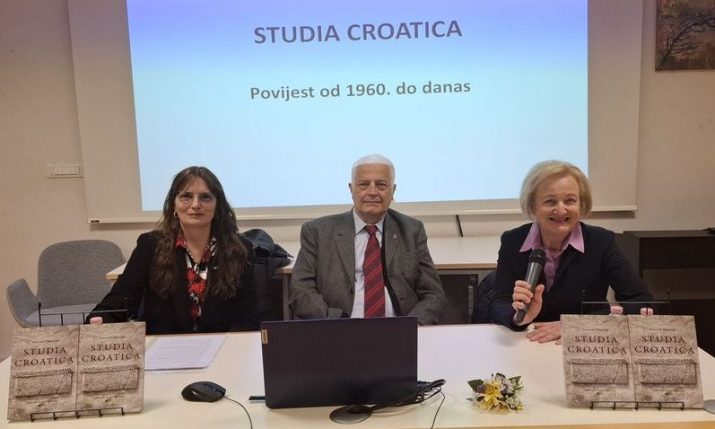
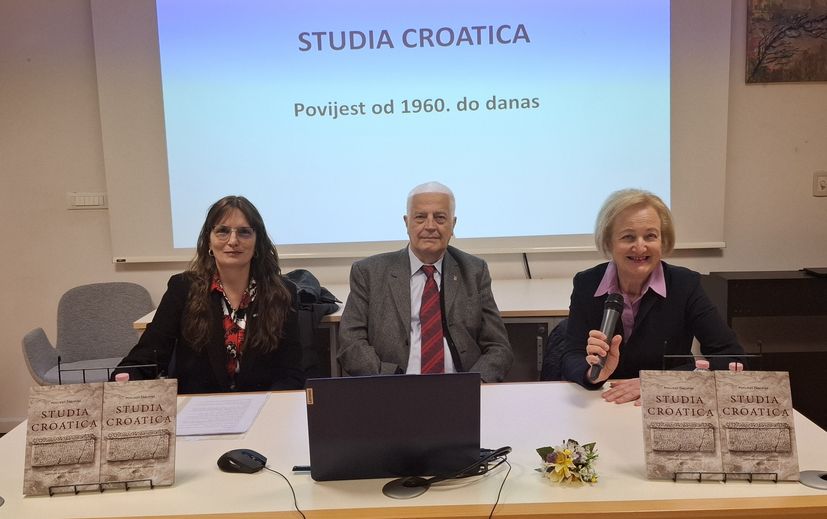
Adriana Smajić, Joza Vrljičak, Branka Bezić Filipović (Photo: Branka Bezić Filipović)
By Branka Bezić Filipović
A special evening celebrating the influential Croatian diaspora journal Studia Croatica was held at the Marko Marulić City Library in Split, bringing together voices from the homeland and the Croatian diaspora.
The event highlighted the remarkable story of a publication that has, for more than six decades, connected continents, generations and communities through the written word.
In the 1950s, a group of Croatian emigrants in Buenos Aires, far from their homeland but deeply connected to its history and identity, recognised the need for a publication that would present an authentic account of Croatia to the world.
Their goal was to publish a journal in a major global language that would showcase Croatia’s rich cultural heritage, history and the Croatian people’s aspiration to live in an independent state.
The idea quickly evolved into more than a publishing project, it became a mission.
In 1960, the first issue of Studia Croatica, a quarterly journal published in Spanish, was released. Since then, the publication has produced thousands of pages in print and digital formats, playing a significant role in promoting Croatian cultural heritage and national identity among Croats around the world.
Today, the journal is edited by economist Joza Vrljičak and legal scholar Dr Adriana Smajić.
Joza Vrljičak was born in Buenos Aires in 1947. An economist, IT specialist and translator, he studied at Loyola College of Université de Montréal and at Concordia University in Canada.
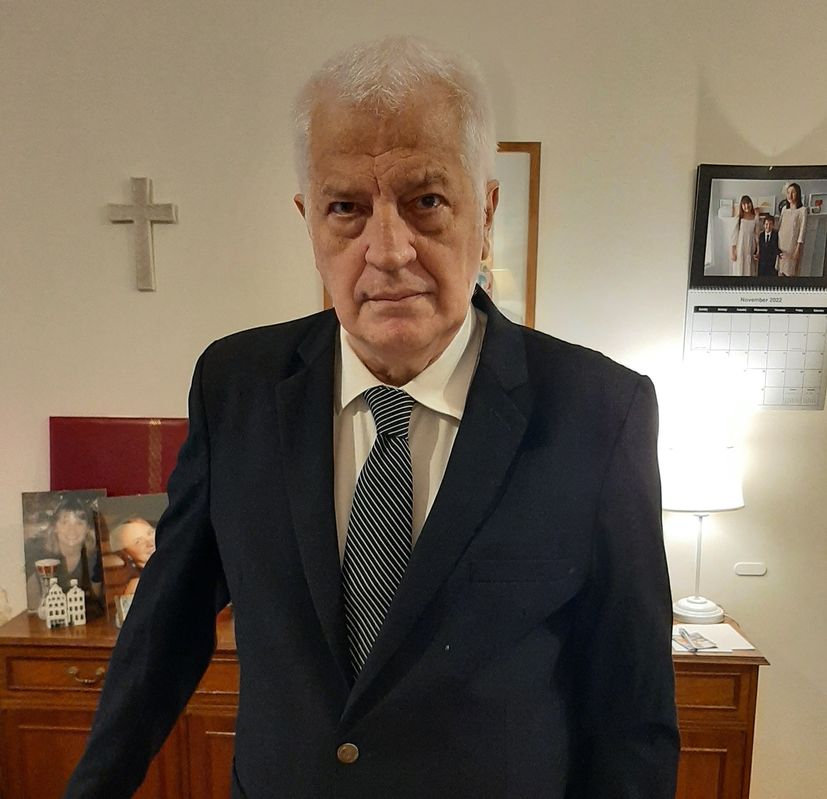
Joza Vrljičak (Photo: Branka Bezić Filipović)
Fluent in Spanish, Croatian, English and French, Vrljičak has maintained strong ties with Croatia throughout his life, regularly visiting the country and collaborating with numerous intellectuals and cultural figures.
He served as vice-president of the Inter-Association Committee of Croatian Organisations in Argentina and was a member of the Croatian Government Council for Croats Living Outside the Republic of Croatia between 2013 and 2017.
Vrljičak has served as editor-in-chief of Studia Croatica since 1994 and has shared editorial leadership with Adriana Smajić since 2015.
Smajić, born in 1973 in Chovet in Argentina’s Santa Fe province, graduated in law from the National University of Rosario, where she also completed postgraduate studies in notarial law.
Since 2004 she has lived in Buenos Aires, working as a lawyer on cases connected to Croatia and the Croatian community. She has also worked as a court interpreter since 2005.

Adriana Smajić (Photo: Branka Bezić Filipović)
Her professional and personal work is closely tied to preserving Croatian identity abroad. She participated in the first Spanish translation of Zlatarovo zlato, the famous novel by Croatian writer August Šenoa, helping introduce Croatian literary heritage to the Spanish-speaking world.
In recent years, she has also focused on assisting Croats in Argentina with documentation for Croatian citizenship and provides translation support during official visits and community gatherings across South America.
Recognition from Spain
The Split presentation also featured a recorded address from Professor Francisco Javier Juez Gálvez of the Complutense University of Madrid.
A prominent Ibero-Slavist, literary translator and court interpreter for Latin and South Slavic languages, Professor Juez Gálvez has long promoted Croatian literature and culture in the Spanish-speaking world.
He is also known in Split cultural circles for serving as commissioner of the exhibition Marko Marulić y la Europa humanista, the largest international exhibition dedicated to Croatian Renaissance writer Marko Marulić, held at Spain’s National Library in Madrid in 2002.
Professor Juez Gálvez will also take part in this year’s Marulić Days festival with a lecture on Croatian Latinism.

Javier Galvez (Photo: Branka Bezić Filipović)
The 65th anniversary of Studia Croatica was marked with the publication of the bilingual book Historia de la revista Studia Croatica 1960–2018, written by Joza Vrljičak.
The book traces the journal’s history and significance for Croatian emigrant communities and for the international promotion of Croatian culture.
It explores the role of the Croatian Latin American Cultural Institute in Buenos Aires, which founded the magazine, as well as the journal’s development following Croatia’s independence when a new generation of Croatian descendants in Argentina took over editorial responsibilities.
Over the decades, Studia Croatica has published 147 print editions and distributed copies to dozens of countries worldwide.
The publication also embraced digital publishing early, launching its online edition in 1996 and becoming one of the most comprehensive Spanish-language online platforms dedicated to the Croatian diaspora.
A bridge between continents
The event in Split was more than a formal presentation. It symbolised the arrival of a magazine in the homeland it had written about, defended and preserved through words during decades when Croatian voices abroad played a crucial role.
Hosted in the Marko Marulić City Library, a venue deeply rooted in the city’s literary and humanist tradition, the evening brought together editors, scholars and readers to reflect on the importance of the Croatian diaspora and the future of Croatian culture in a global context.
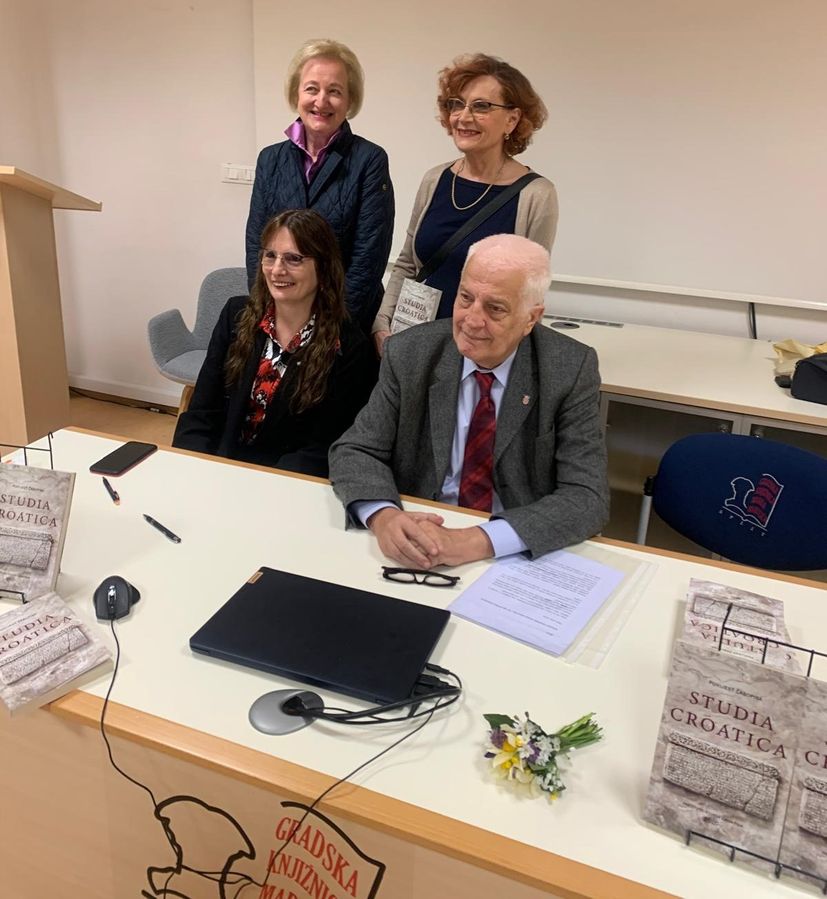
(Photo: Branka Bezić Filipović)
Opening remarks were delivered by library director Grozdana Ribičić and Branka Bezić Filipović, international relations associate at Aspira University College.
For those gathered, the evening served as a powerful reminder that distance does not weaken identity. Instead, it can strengthen it, proving once again that the written word can bridge continents.