
Published on
March 15, 2026
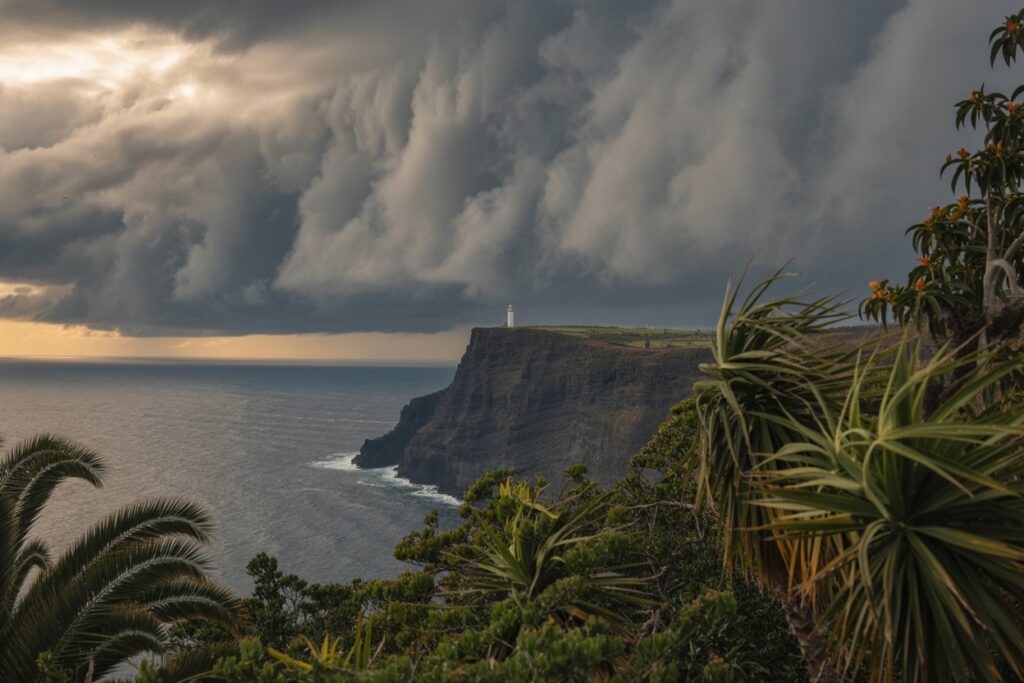
Image generated with Ai
For many UK holidaymakers, the month of March represents the first chance to swap heavy coats for shorts. However, nature has other plans for the spring of 2026. While Ireland and the UK are enjoying a rare “settled and drier” spell thanks to high pressure, that same weather pattern is pushing a volatile low-pressure system toward the southwest of Spain.
The result? A “highest risk” warning for some of Europe’s most beloved winter sun destinations.
The 300mm Threat: Breaking Down the Forecast
Weather expert Alan O’Reilly from Carlow Weather has sounded the alarm for travelers, noting that several climate models are converging on a “washout” scenario for the Western Canary Islands and parts of Portugal.
- La Palma: Forecasts suggest up to 300mm of rainfall could fall over the next two weeks. For an island known for its steep volcanic terrain, this volume of water raises significant concerns regarding flash flooding and localized landslides.
- Madeira (Portugal): The lush “Garden Island” is also in the crosshairs, with models predicting up to 270mm of rain.
- Tenerife: While the southern resorts are often shielded by the Teide volcano, the northern and western regions are being placed on high alert for intense downpours.
Why the Western Islands?
The Canary Islands are often described as having “microclimates.” In this specific weather event, the moisture-heavy Atlantic front is expected to stall over the westernmost islands (La Palma, El Hierro, and La Gomera) before its energy dissipates. This “stalling” effect means that instead of a quick afternoon shower, these islands could face persistent, heavy rain for days on end.
Humanizing the Holiday: Managing Disappointment
For the traveler who has been counting down the days to a Teide hike or a sunset dinner in Funchal, this news is undoubtedly a blow. But “forewarned is forearmed.”
In 2026, the modern traveler has tools that our parents didn’t. Checking local apps like AEMET (Spain’s Met Office) or the IPMA (Portugal’s Meteorological Institute) can provide street-level accuracy. If you are staying in a rural villa in La Palma or northern Tenerife, this is the time to check with your host about road access—volcanic soil and heavy rain can occasionally lead to debris on the winding mountain roads.
Advertisement
Advertisement
Silver Linings: What to Do When it Rains
A rainy day in the Canaries or Madeira is not a wasted day. Both regions boast a rich “indoor” culture that often goes ignored in favor of the beach:
- The Bodega Trail: Use the rain as an excuse to visit the interior vineyards of Tenerife or the world-famous wine cellars of Madeira.
- Museums & History: Explore the Museo de la Naturaleza y la Arqueología in Santa Cruz or the contemporary art galleries in Funchal.
- Gastronomy: There is no better time to enjoy a slow, multi-course meal of Conejo en Salmorejo (rabbit stew) or Espada (scabbard fish) while watching the rain hit the Atlantic from a covered terrace.
The “Dual Warning”: Weather and Overtourism
It is worth noting that this weather warning comes at a time when the Canary Islands are under intense scrutiny for overtourism. In March 2026, several islands were placed on the “No List” by travel publications due to unsustainable pressure on local resources.
Advertisement
Advertisement
Ironically, a wet March might provide the “breather” that local environmental groups have been calling for. For the responsible tourist, this is a reminder to tread lightly—stick to marked paths (when safe) and support local indoor businesses that may see a dip in foot traffic due to the weather.
Traveler’s Checklist for March 2026
If you are flying out this week, here is your “Storm Survival” kit:
- Waterproof Gear: A lightweight, high-quality rain shell is more important than a second swimsuit this week.
- Flexible Itinerary: Use the first few days for indoor activities and save the hikes for the “clear windows” predicted in the models.
- Local Alerts: Follow @CarlowWeather and AEMET on social media for real-time updates on the Atlantic front’s movement.
- Insurance Check: Ensure your travel insurance covers weather-related disruptions if you have booked specific excursions like whale watching or paragliding.
Conclusion: The Resilient Traveler
Tenerife, La Palma, and Madeira have survived far worse than a heavy rainstorm. These are islands born of fire and tempered by the sea. While the “highest risk” warning is a serious call for caution, it shouldn’t be a reason to cancel your trip.
By adjusting your expectations and embracing the “greener” side of these islands, you can still have a spectacular holiday. After all, the incredible biodiversity and lush forests of Madeira and the Canaries wouldn’t exist without these periodic Atlantic soakings.
