
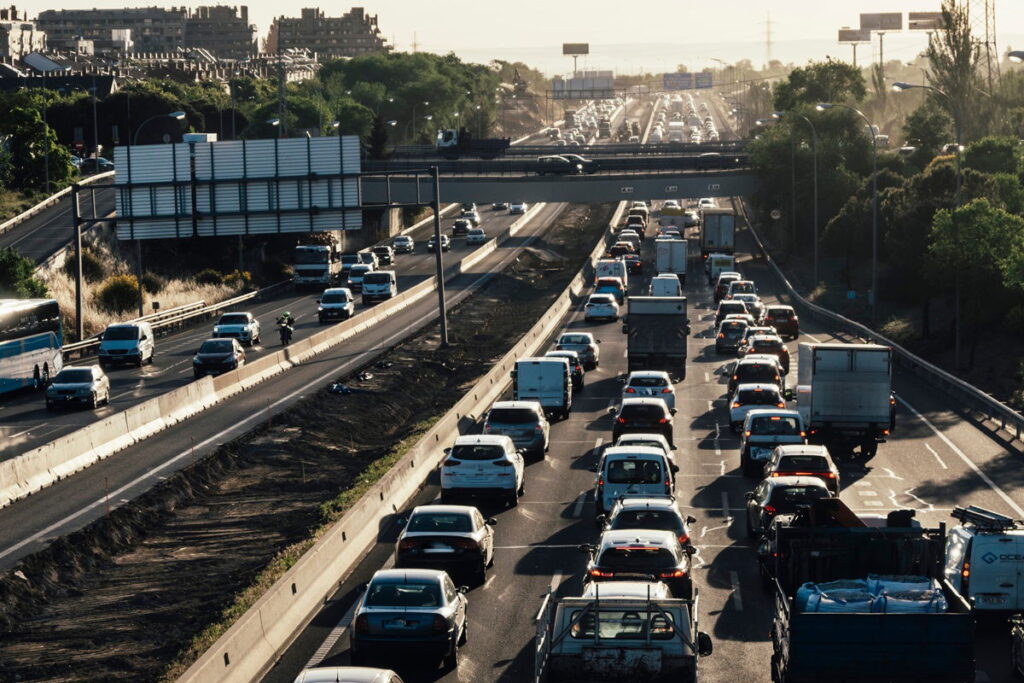
Long queues of vehicles on a Spanish motorway during the busy Easter travel rush.
Credit : Jose Luis Carrascosa, Shutterstock
Millions of people across Spain are preparing for Easter 2026 getaways, but the country’s traffic authority is warning drivers that the holiday travel rush could come with serious delays, strict controls and heavy congestion. Spain’s Dirección General de Tráfico (DGT) has announced a large-scale traffic operation covering the entire Easter period, with increased road surveillance and new measures designed to manage the surge of vehicles expected on Spanish roads.
For residents and expats planning to drive during the Easter break, the message from traffic officials is clear: plan your journeys carefully, expect delays and prepare for strict monitoring on the roads.
The operation will mobilise hundreds of traffic officers, aerial surveillance units and control centres to monitor the country’s road network during one of the busiest travel periods of the year.
Most Read on Euro Weekly News
Spain prepares massive Easter traffic operation as millions travel
Spain traditionally sees one of its largest traffic movements of the year during Semana Santa, when millions of people leave major cities to visit family, second homes or tourist destinations.
The DGT has therefore organised its “Operación Especial Semana Santa 2026”, a nationwide traffic management plan designed to handle the expected surge in vehicles.
The operation will unfold in two main phases.
The first major travel wave will begin on Friday 27 March at 3pm, marking the start of the first “Operación Salida”. This phase will continue throughout the weekend, ending at midnight on Sunday 29 March.
The second and busiest stage will begin on Wednesday 1 April at midday, when a new wave of holiday traffic is expected across Spain’s motorway network. This phase will run through Thursday 2 April and continue until the traditional return operation on Saturday 4 and Sunday 5 April, when drivers head back to major cities.
During these days, the DGT expects millions of long-distance journeys across Spain, particularly towards coastal resorts, mountain areas, religious destinations and second homes.
Where traffic jams are most likely during Easter travel
Experience from previous years suggests that several major routes will become traffic hotspots.
The most intense traffic flows usually occur when drivers leave large urban areas, especially Madrid, Barcelona and other major cities. Popular holiday destinations such as the Mediterranean coast, Andalusia, mountain regions and ski resorts tend to see the heaviest traffic volumes.
During the return phase, congestion often appears again as drivers travel back towards large metropolitan areas.
Historical traffic data from Semana Santa illustrates just how intense these journeys can be.
Major delays were recorded across dozens of Spanish provinces and motorways, including:
- A-31 in Albacete, where traffic jams lasted for several hours
- A-70 near Alicante, a key route for Costa Blanca travel
- AP-4 between Cádiz and Seville, which regularly experiences holiday congestion
- A-7 along the Mediterranean corridor, one of Spain’s busiest highways
- A-6 and A-1 routes leading into Madrid
In cities such as Barcelona, Valencia and Málaga, congestion extended across ring roads and access routes throughout the holiday period.
Even the Balearic Islands experienced heavy traffic, particularly on major routes such as the Ma-1, Ma-19 and Ma-20.
These patterns are expected to repeat in 2026 as millions of drivers head for the coast, countryside and traditional Easter celebrations.
What drivers in Spain should expect on the roads
The DGT’s Easter operation is not just about managing traffic flow. It also involves intensified road monitoring and safety checks.
During the operation, authorities will deploy:
- Guardia Civil traffic officers across major routes
- Traffic control centres monitoring road conditions
- Aerial surveillance units and drones
- Additional road safety patrols
The aim is to prevent accidents and reduce dangerous behaviour during the busiest travel days of the year.
Officials have repeatedly stressed that driver attention remains the most important factor in road safety, particularly during long journeys or heavy traffic conditions.
Motorists are therefore being urged to check their vehicles before travelling, plan rest stops and follow real-time traffic updates.
What this means for expats and holiday travellers
For the large expat communities living in Spain, especially in regions such as Costa del Sol, Costa Blanca and the Balearic Islands, the Easter holiday period can dramatically increase traffic levels.
Many residents may also be travelling during this period, either visiting family or taking advantage of the long weekend.
Traffic authorities recommend avoiding peak departure times whenever possible, especially during Friday afternoon and Wednesday evening travel waves.
Using alternative routes, leaving earlier in the day and checking live traffic updates can help reduce delays.
Despite the warnings, Easter remains one of the most important travel periods in Spain, blending religious celebrations, family reunions and holiday escapes.
But with millions of vehicles expected on the road, drivers should prepare for heavy traffic, increased police presence and slower journeys across the country.
In short, if you are planning a road trip during Semana Santa, patience and careful planning may be just as important as packing your bags.