
As Malta begins to discuss its long-term development through the Malta Vision 2050 policy document, one important question must be asked: What kind of country do we want to build for the years ahead?
For me, the answer begins with a simple principle: that the Malta of tomorrow should always be better than the Malta of today. Every generation is called to look beyond the present and help shape what comes next.
Since the early days of my activism, I have always believed that politics should be a tool to build a stronger, fairer and more equal society, one where progress is measured by the real improvement in people’s daily lives.
More often than not, progress has been discussed almost exclusively in economic terms. Growth figures, investment flows and productivity rates are important indicators but they do not always capture the full picture of people’s well-being.
As a country, we are now widening our perspective and beginning to consider the happiness of our people and think more deliberately about the kind of society we want to see emerge over the next decades. That is why long-term thinking matters.
As a small island state in the centre of the Mediterranean, Malta has always relied on its ability to adapt. As someone who has always lived in the harbour region of Malta, I grew up listening to the experiences of how previous generations managed to develop their skills and build their livelihoods around the harbour.
For decades, the harbour communities were sustained by a dynamic local economy. Dock workers, craftsmen, traders and small business owners formed a network of activity that supported entire neighbourhoods.
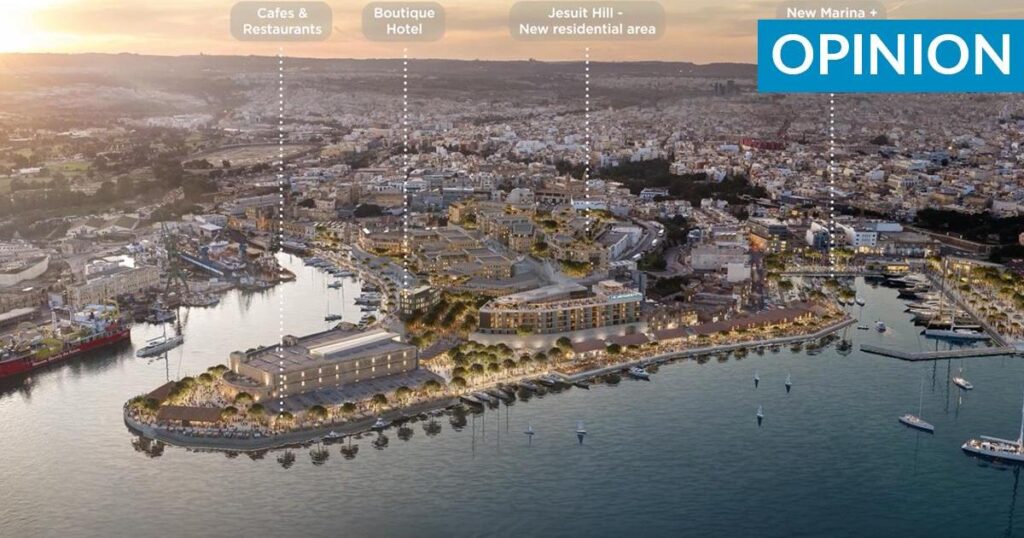
Revitalisation is not merely about new projects or physical redevelopment. It is about restoring confidence in a region that has long been central to our national story. It means ensuring that the harbour once again becomes a place where economic activity, culture and community life can develop side by side.
Malta has always relied on its ability to adapt- Georvin Bugeja
This revitalisation exercise must therefore strengthen public spaces, improve connectivity within and between communities and create opportunities for local businesses to grow. When people see their surroundings are improving, when streets become more vibrant, when opportunities for employment and entrepreneurship expand, the benefits are felt well beyond the physical boundaries of the project itself.
At the same time, the future of the Grand Harbour cannot be viewed in isolation. Our airport and maritime infrastructure represent the main gateways through which Malta connects with the world. Ensuring that these gateways remain efficient, modern and competitive is essential for a country whose prosperity depends on trade, tourism and international mobility. Investment in these strategic assets is therefore not only about infrastructure; it is about strengthening Malta’s position in an increasingly interconnected global economy.
However, communities must remain at the centre of these transformations. This means protecting the social fabric of harbour areas while opening new pathways for education, employment and cultural activity. When development respects the identity of a place and builds on its strengths, it creates lasting value rather than short-term change.
The harbour has always symbolised Malta’s openness to the world, a place where ideas, goods and people converged. Today, we have an opportunity to redefine that role for a new generation.
This is precisely the spirit behind the long-term thinking that is now shaping Malta’s Vision for 2050. The ambition to regenerate the Grand Harbour and renew our national gateways reflects a broader effort to plan ahead, to connect infrastructure with quality of life and to ensure that progress benefits the communities that make Malta what it is.

Georvin Bugeja is a former president of Labour Youth who served as the first Maltese vice president of the Young European Socialists.