
Another bombing hit Amsterdam on Sunday night as police investigate a small explosion in the Dutch capital’s financial district outside an office complex. The attack follows similar incidents in the country, including the bombing of a Jewish school on Friday night, claimed by the same Islamist group and linked to the war in the Middle East between the United States, Israel, and Iran.
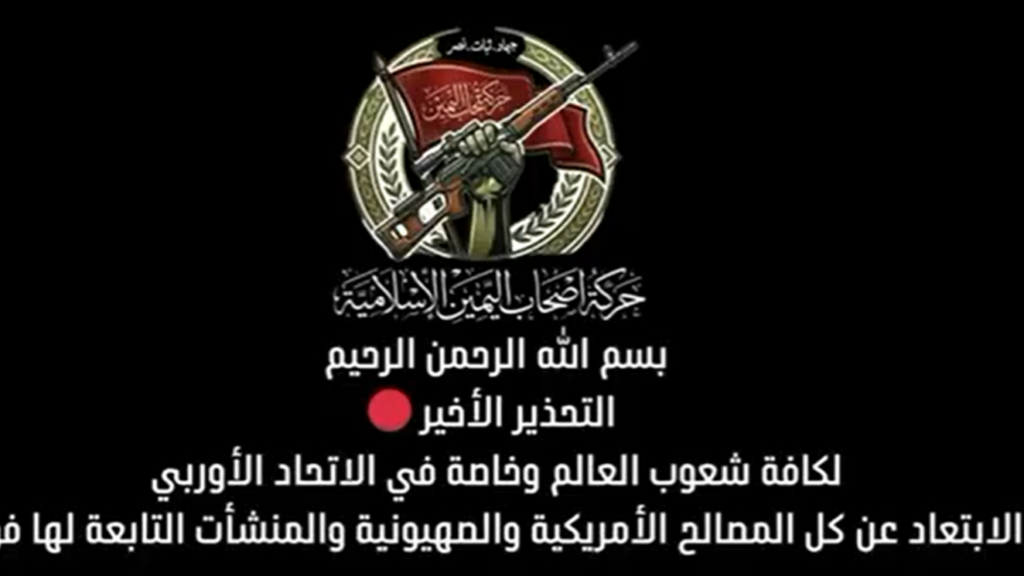
According to media reports, the Atrium complex in Zuidas, Amsterdam’s financial district, was targeted, with the Bank of New York reportedly the intended target. In a video circulating online, the group Islamic Movement of the Companions of the Right (IMCR) issued a warning: ‘In the name of Allah…distance yourselves from American and Zionist interests.’
The Sunday night bombing is the third attack claimed by the group, following an explosion at a Jewish school in Buitenveldert and an arson attack on a synagogue in Rotterdam. The attacks resulted in no injuries or deaths.
After the United States and Israel launched a joint military operation against Iran at the end of February, many analysts predicted a new wave of terrorism in Europe, especially targeting Jewish communities across the continent. Before the Dutch incidents, a synagogue in Belgium was also hit by an explosion, mainly damaging the windows and the façade of the building, with no injuries reported. The US embassy in Oslo, Norway, was also targeted in a bombing attack on 8 March.
Soon after the conflict in the Middle East escalated, Hungarian Prime Minister Viktor Orbán warned that such a conflict in the region would bring serious consequences for Europe, most notably an increased terrorist threat and rising energy prices. He also warned that sleeping terrorist cells linked to Iran could easily be activated. To prevent similar attacks in Hungary, the government raised the terror threat level and introduced several countermeasures in recent weeks.
The Islamist group claiming responsibility for the attacks in the Netherlands was previously unknown and, according to analysts, does not appear to be well organized or coherent. Linguistic mistakes in its statements suggest that the authors may not be native Arabic speakers and may not be part of a trained militant network.
Related articles: