
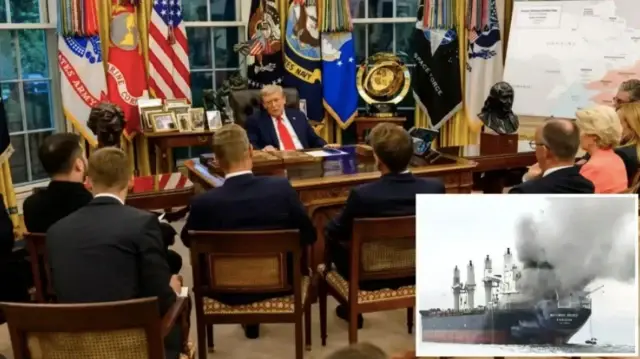
President Donald Trump finds himself increasingly isolated as NATO allies flatly reject his calls for naval support to reopen the Strait of Hormuz, forcing Washington to seek assistance from unexpected quarters—including Iran’s closest partner, China. The strategic waterway, through which approximately one-fifth of the world’s oil passes, has remained effectively closed since Feb. 28 following the outbreak of war with Iran.
Allies refuse to join fight
Trump’s threats of a “very bad future” for NATO have fallen on deaf ears as European capitals firmly decline involvement. German Defense Minister Boris Pistorius delivered the sharpest rebuke, questioning why European frigates should accomplish what the powerful US Navy cannot. “This is not our war and we did not start it,” Pistorius stated. Chancellor Friedrich Merz reinforced the position, seeing “no reason” to consider military protection of shipping lanes. Britain’s Keir Starmer, France, Spain, Italy and Belgium have all ruled out participation, while Japan, Australia and South Korea also declined Washington’s requests. Even Israel, America’s co-belligerent against Iran, was notably absent from Trump’s list of requested contributors, raising speculation that Washington aims to put NATO forces on the line for Israeli interests.
China approached for assistance
In a striking development revealing Washington’s limited options, Trump disclosed that his administration has approached seven countries for help—including China, which receives the vast majority of its imported oil via the Hormuz route. “I think China should also help because China gets 90% of its oil through this strait,” Trump told reporters aboard Air Force One. The outreach to Beijing comes despite escalating US-China trade tensions and represents a remarkable reversal, with Washington now soliciting support from Tehran’s strategic partner.
Military options limited
Behind Trump’s public demands, serious obstacles complicate any military solution. US military commanders have reportedly warned the president that Iran could transform the region into a “death box” using drones and anti-ship missiles. More than 600 tankers remain stranded in the Gulf, and even with naval escort, insurers and ship owners require guarantees no military force can provide. Meanwhile, the Pentagon has positioned 5,000 Marines for possible operations, with speculation they could target Iran’s Kharg Island, through which 90% of Iranian oil exports flow. Treasury Secretary Scott Bessent acknowledged that Washington is now permitting Iranian tankers to transit, suggesting quiet accommodation where military pressure has failed.