
This the latest title in Lund Humphries’ series New Directions in Contemporary Art, which looks at how the art world tackles the most pressing issues of our time.
Of these, the climate crisis is surely the most urgent, and Filipa Ramos argues for the transformative power of contemporary art, not only to do active good in specific settings, but to propose better modes of being in the world.
She is sensitive to the “feeling of despair, paralysis or nostalgia for a bygone world induced by the notion of climate crisis”. In response, she titles her five chapters with verbs, each describing different types of “concrete artistic action”.
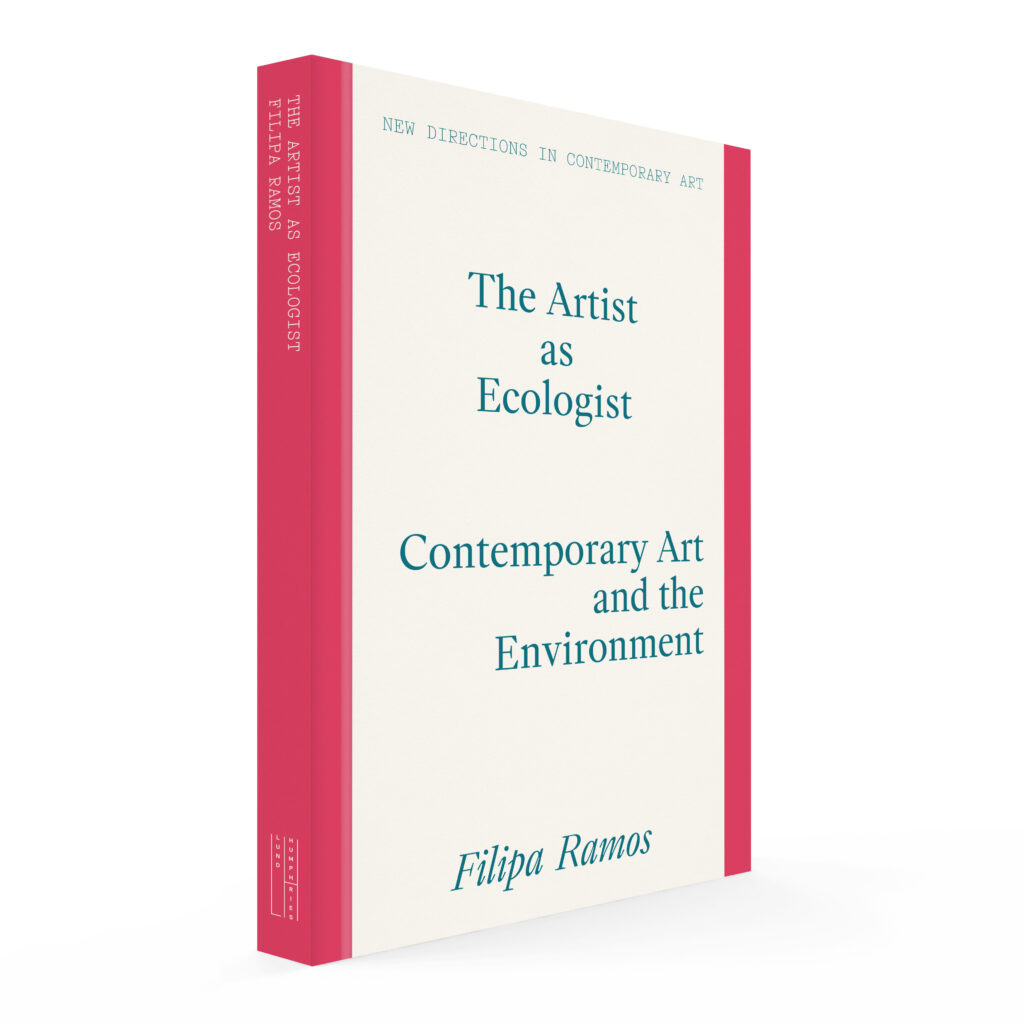 By Filipa Ramos
£29.99, Lund Humphries
ISBN 978-1-848225237
Ramos presents positive examples of the ways in which contemporary artists are working with and on the land. For instance, how they use performance and sound to share, change, reinforce and articulate their relationship with Earth. This, she emphasises, is not about representing and illustrating, but “proposing practices and methodologies that have the potential to transform”.
Her optimism is an over-correction. When she writes of “practices that attempt to repair and transform the mindsets that enabled the destruction of the planet”, it is impossible not to speculate on the likelihood of presidents Donald Trump, Xi Jinping or Vladimir Putin – or even Keir Starmer – being so affected by a work of art that it informs their policy-making. Because that is the level of urgency required if we are to avert the catastrophe that climate scientists tell us is already underway.
In acknowledging such luminaries as Joseph Beuys and Ana Mendieta – 20th-century artists whose concern for the fragile environment intersects with broader aspects of political and social conscience – Ramos inadvertently flags the weakness in her own argument, which hinges on art’s transformative potential.
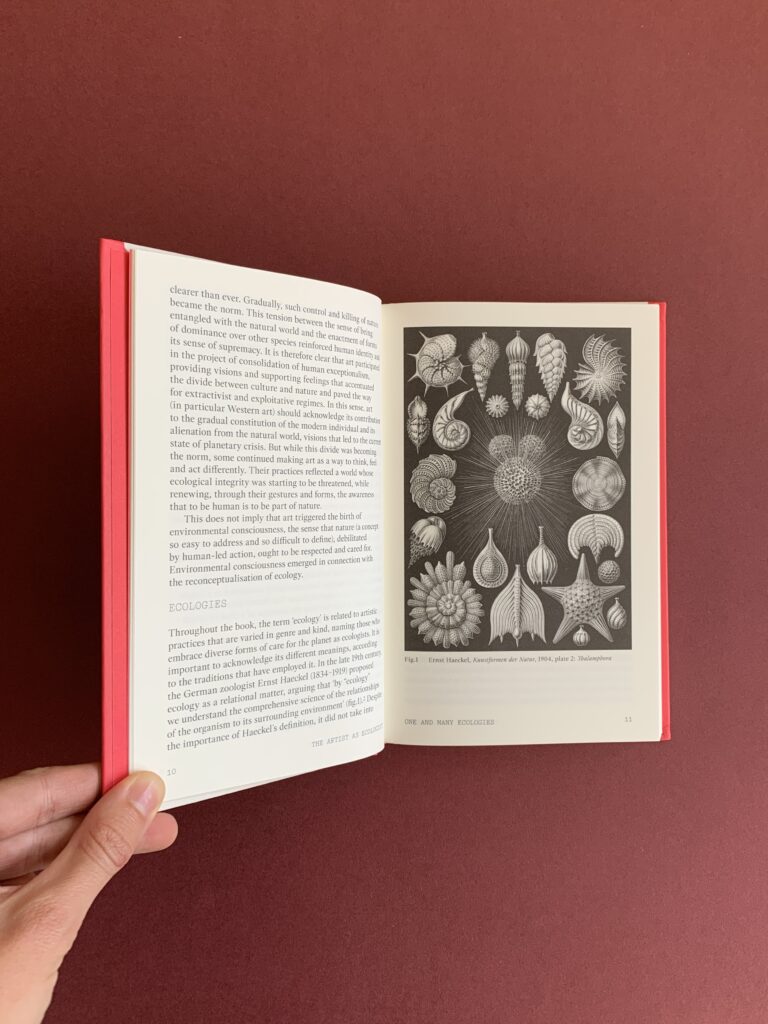 The few images inside this book include this, Thalamphora, by Ernst Haeckel for his 1904 book Kunstformen der Natur
Today, Mendieta and Beuys, Nancy Holt and Bonnie Ora Sherk join the reproachful ghosts of generations past, who tried to alter humanity’s destructive patterns of behaviour.
In the introduction, Ramos argues movingly that artists have always been ecologists, “using art to affirm their belonging to something larger than themselves and to share with others this connection to the land and the Earth”. In a more expansive study, she might have added that John Ruskin’s Guild of St George, founded in 1871, was a direct and holistic response to the ills of modernity that proposed a new social model based around arts education, craftsmanship and sustainable agricultural practices.
That was more than 150 years ago, making Ramos’s analysis of similarly concerned artists working today sobering rather than inspiring. Artist-led projects such as Futurefarmers in the US offer radical ideas for reconfiguring humanity’s relationship to the planet, but what is glaringly missing is the galvanising force needed to create a meaningful shift.
The systemic nature of the problem is reflected in the book’s price, which at £29.99, is unlikely to tempt readers simply curious to know more. It’s no way to start a revolution. Like the premium prices of eco-friendly cleaning products, it is a reminder that caring for the planet is a pastime for the privileged.
In a series marketed as “accessible, stimulating and polemical”, this failure to engage a wider audience is significant. And though Ramos’s text sparks with feeling and ideas, it is spoilt by turgid academese – “consolidated exhibitionary models”, for example – and poor-quality illustrations.
In her most persuasive chapter, Claiming, Ramos explores what is currently the most prominent intersection of art with the environment. It is where art anchors the shared rights of communities and nature, which are reinforced within social and cultural systems.
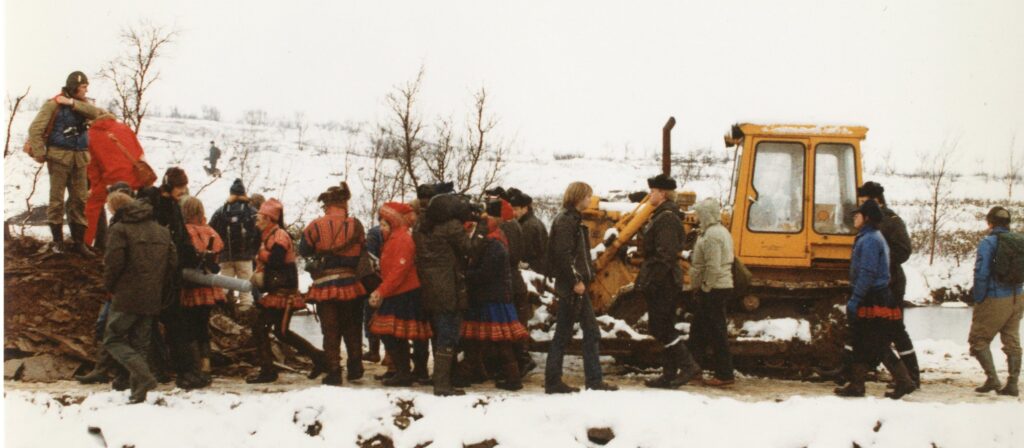
She leans into the current visibility of the Sámi people, whose struggles for survival and recognition in the face of state-imposed dispossession, have been powerfully and visibly expressed by Sámi artists, notably at the 2022 Venice Biennale. But a photograph of Sámi people protesting against the Alta hydroelectric project imposed by the Norwegians in 1979, is included in the book in murky reproduction, forcing Ramos to describe it for the reader.
A paucity of visual material is a problem that extends beyond the book. Ramos nails the point when she notes that social and agricultural initiatives such as Futurefarmers “are messy, opaque, and hard to categorise”. To put it bluntly, they lack visual impact.
Unwittingly, Ramos’s book demonstrates that art and ideas are absorbed into societal structures and behaviours slowly and partially. The question that inevitably follows is what role we can expect artists to take in this particular crisis?
As the climate crisis takes hold, it may be that we value artists more for their ability to lead us into the calmer realm of the imagination.
Florence Hallett is a critic and journalist, and a regular contributor to the inews, the New European and the Art Newspaper
Most Museums Journal content is only available to members. Join the MA to get full access to the latest thinking and trends from across the sector, case studies and best practice advice.