
Summary and Key Points: Defense analyst Jack Buckby evaluates President Emmanuel Macron’s decision to redeploy the nuclear-powered Charles de Gaulle (R91) from the Baltic Sea to the Eastern Mediterranean.
-Amidst escalating 2026 hostilities with Iran, the carrier strike group—including the frigate Languedoc—aims to protect RAF Akrotiri and maritime lanes near Cyprus from UAV and missile strikes.
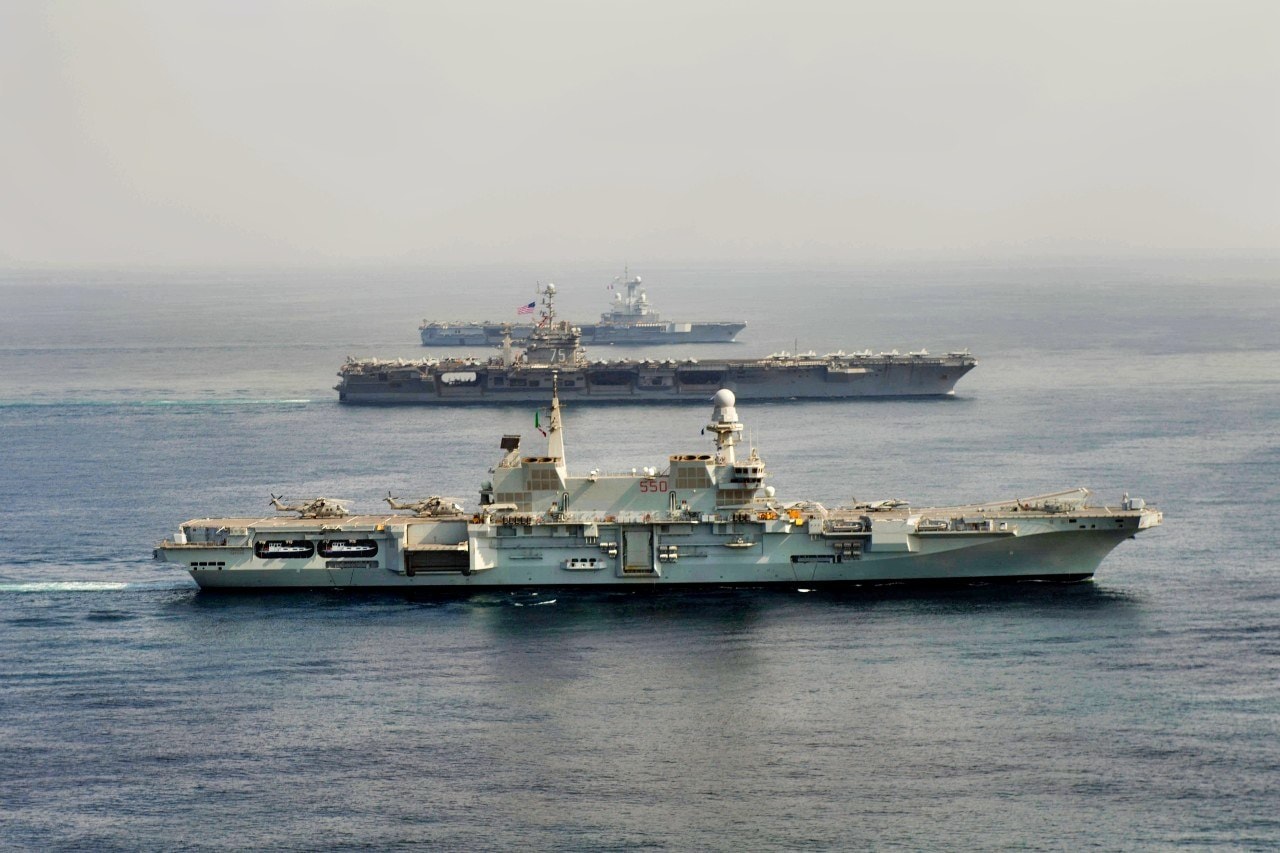
(Jan. 3, 2014) The Italian navy aircraft carrier ITS Cavour (CVH 550), front, the aircraft carrier USS Harry S. Truman (CVN 75) and the French navy aircraft carrier Charles de Gaulle (R 91), conduct operations in the Gulf of Oman. Harry S. Truman, flagship for the Harry S. Truman Carrier Strike Group, is conducting operations with Task Force 473 to enhance levels of cooperation and interoperability, enhance mutual maritime capabilities and promote long-term regional stability in the U.S. 5th Fleet area of responsibility. (U.S. Navy photo by Mass Communication Specialist 3rd Class Ethan M. Schumacher/Released)
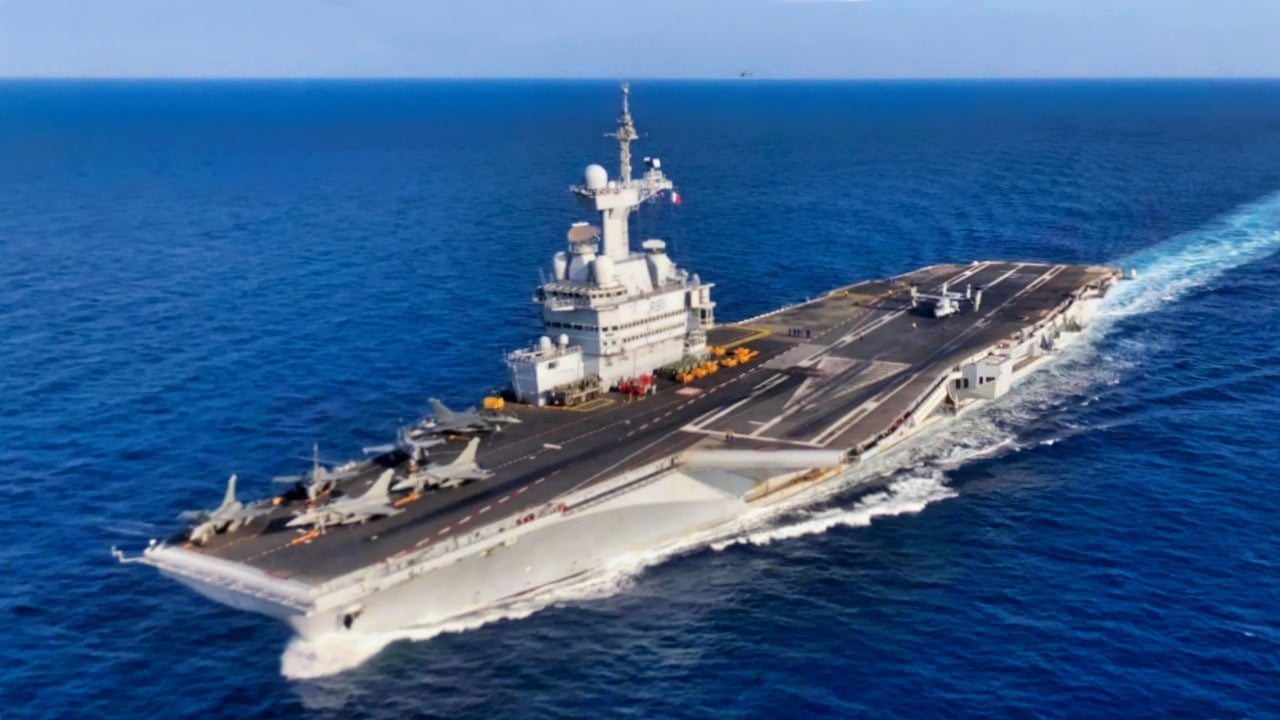
U.S. 5TH FLEET AREA OF OPERATIONS (April 24, 2019) A U.S. Marine MV-22 Osprey assigned to the 22nd Marine Expeditionary Unit sits on the flight deck of France’s Marine Nationale aircraft carrier FS Charles De Gaulle (R 91). This was the second time that Ospreys have landed aboard the French vessel. Marines and Sailors assigned to the 22nd MEU and Kearsarge Amphibious Ready Group are currently deployed to the U.S. 5th Fleet area of operations in support of naval operations to ensure maritime stability and security in the Central region, connecting the Mediterranean and the Pacific through the western Indian Ocean and three strategic choke points. (U.S. Marine Corps photo by Maj. Joshua Smith/Released)
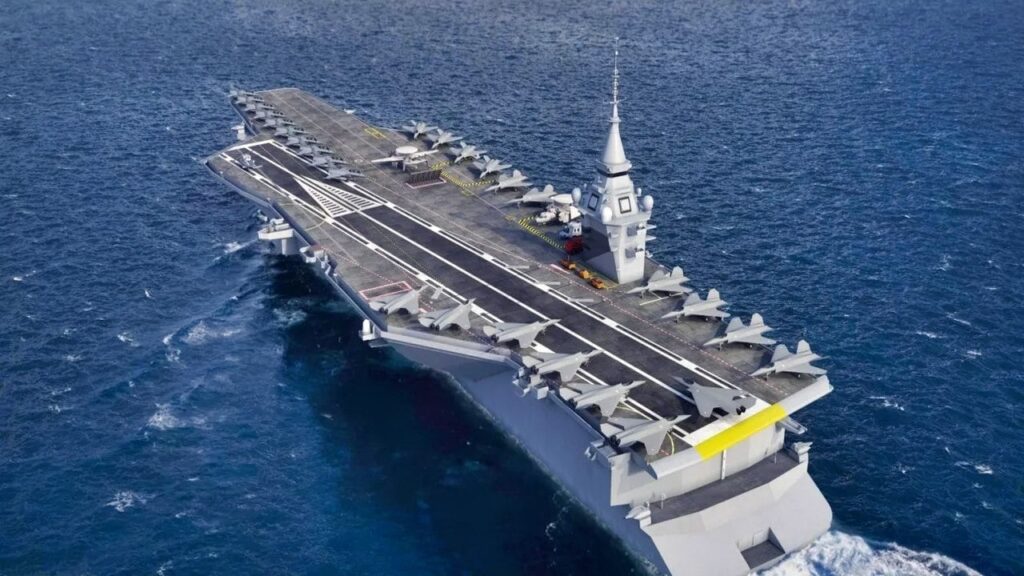
-This deployment underscores France’s “one-carrier” limitation; with the 42,000-ton vessel nearing its 2038 decommissioning, Paris is accelerating the PANG (Porte-Avions de Nouvelle Génération) program. This 70,000-ton successor will feature EMALS and FCAS integration to survive an “era of predators.”
Why Paris Sent Its Only Nuclear Aircraft Carrier Into Escalating Conflict
On March 3, 2026, French President Emmanuel Macron ordered the nuclear-powered aircraft carrier Charles de Gaulle to leave the Baltic Sea and redeploy to the Eastern Mediterranean as the Iran war escalated beyond the Gulf.
The carrier strike group had been operating as part of NATO-linked exercises in the North Atlantic and Baltic under Mission Lafayette 26, including a recent stop in Malmö, Sweden, before receiving new orders to head south.
France is deploying its main naval power to help protect allied assets and shipping routes as Iranian missile and drone attacks spread across the region, threatening maritime traffic through the Strait of Hormuz and beyond – and threatening the global economy in the process.
But the deployment is interesting given that the Charles de Gaulle, a perfectly capable nuclear-powered carrier, is France’s top naval asset. It is the only nuclear-powered aircraft carrier operated by the country, and in deploying to the region, it is showing the limits of what France can actually sustain at sea – and why Paris is investing heavily in its successor.
France’s Carrier Enters Real Conflict
France is not technically at war with Iran, nor is it specifically providing combat support for the United States – but the deployment of the Charles de Gaulle means that Paris is becoming increasingly involved in the conflict.
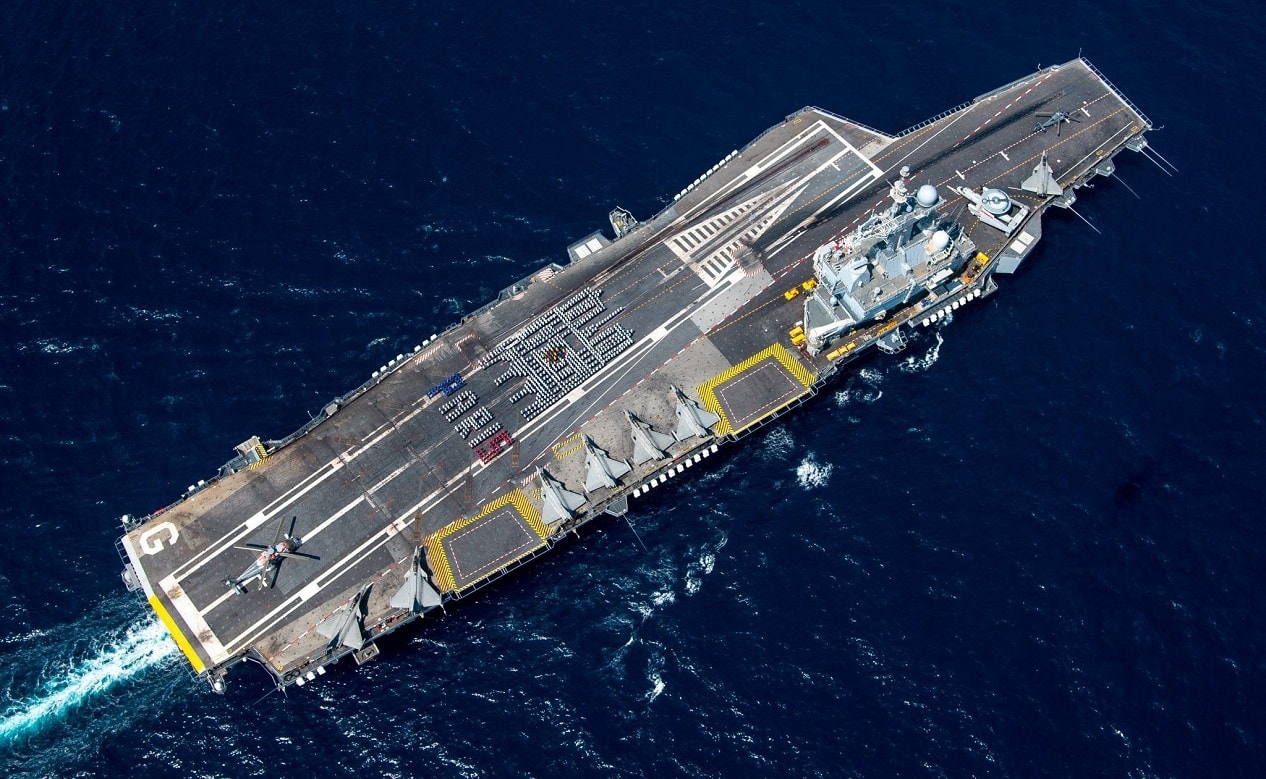
French Aircraft Carrier Charles de Gaulle.
The carrier is heading to the Eastern Mediterranean, with its operations centered around the waters near Cyprus, where European and NATO assets have come under threat from Iranian drones and missile strikes in response to U.S. and Israeli activity.
Its mission includes defending allied infrastructure, including bases like the British-controlled RAF Akrotiri on Cyprus, which has already been targeted on multiple occasions as part of the ongoing conflict in Iran.
Upon announcing the decision, French President Emmanuel Macron said that the strikes required French support.
“This requires our support. That is why I have decided to send additional air-defense assets there as well, along with a French frigate, Languedoc (D653), which will arrive off the coast of Cyprus later this evening,” Macron said on Tuesday, March 3.
France is not operating alone, but part of a larger European naval response to the attacks, with multiple frigates and warships being sent to the region to reinforce air defense. The carrier itself brings a substantial and credible air wing, too, including around 20 Rafale M fighter jets and E-2C Hawkeye airborne early warning aircraft. Those assets allow France to conduct air patrols and surveillance missions while also performing defensive operations where necessary without land-based infrastructure. But, there are limits.
What the Deployment Means
The deployment of the Charles de Gaulle exposes the structural limits of France’s current carrier capability.
France, after all, only operates a single aircraft carrier – and with the Charles de Gaulle’s deployment, there is no second carrier available to cover other theaters or provide redundancy (availability of backup systems).
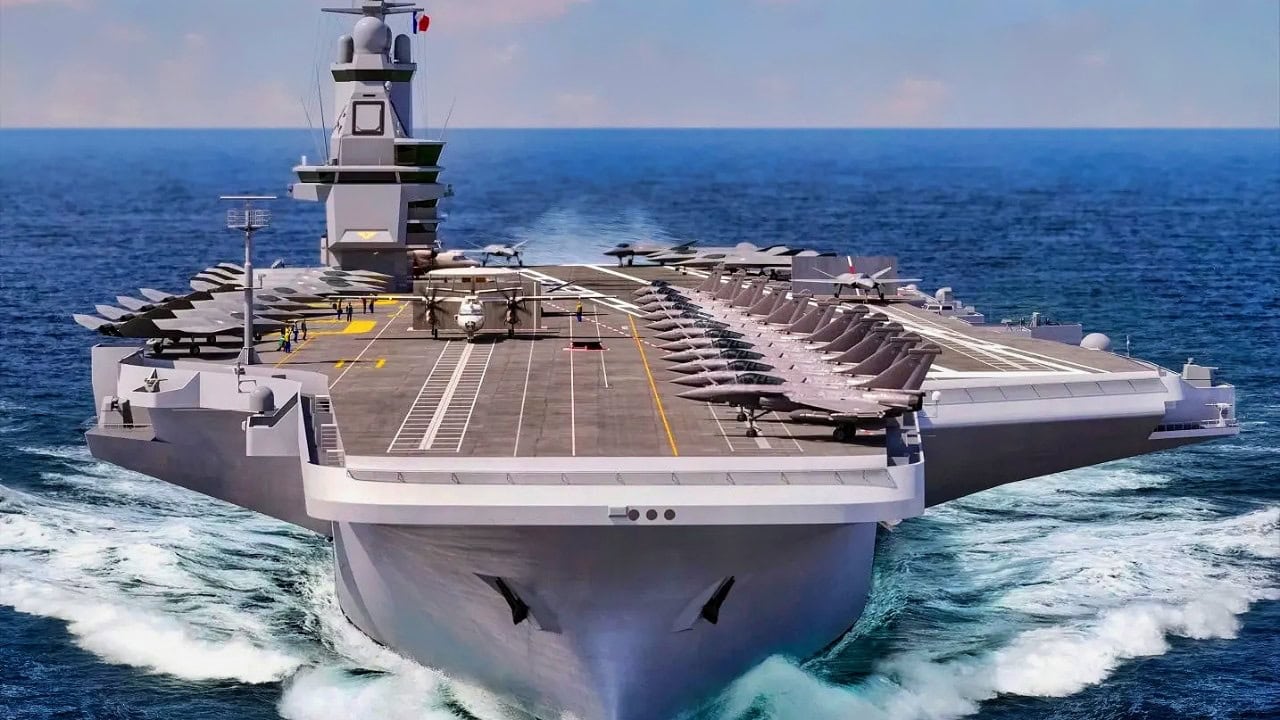
PANG Aircraft Carrier from France. Image Credit: Industry Handout.
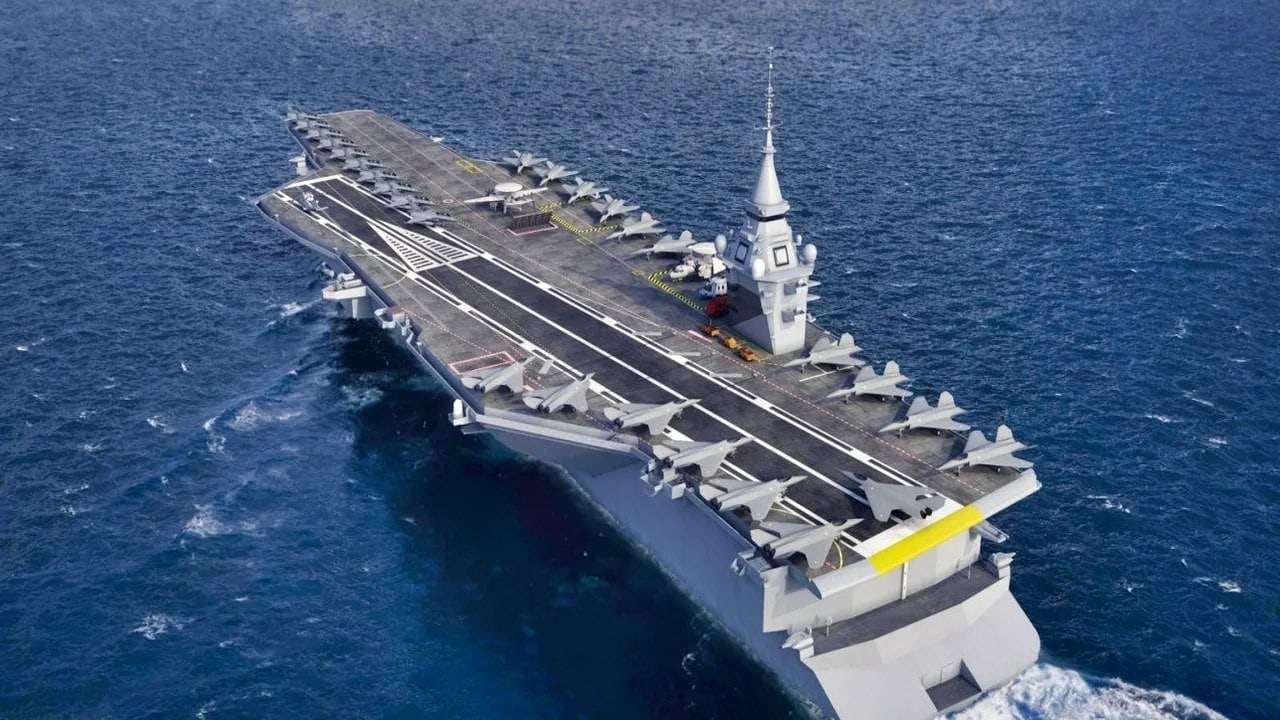
PANG Aircraft Carrier from France. Image Credit: French Navy.
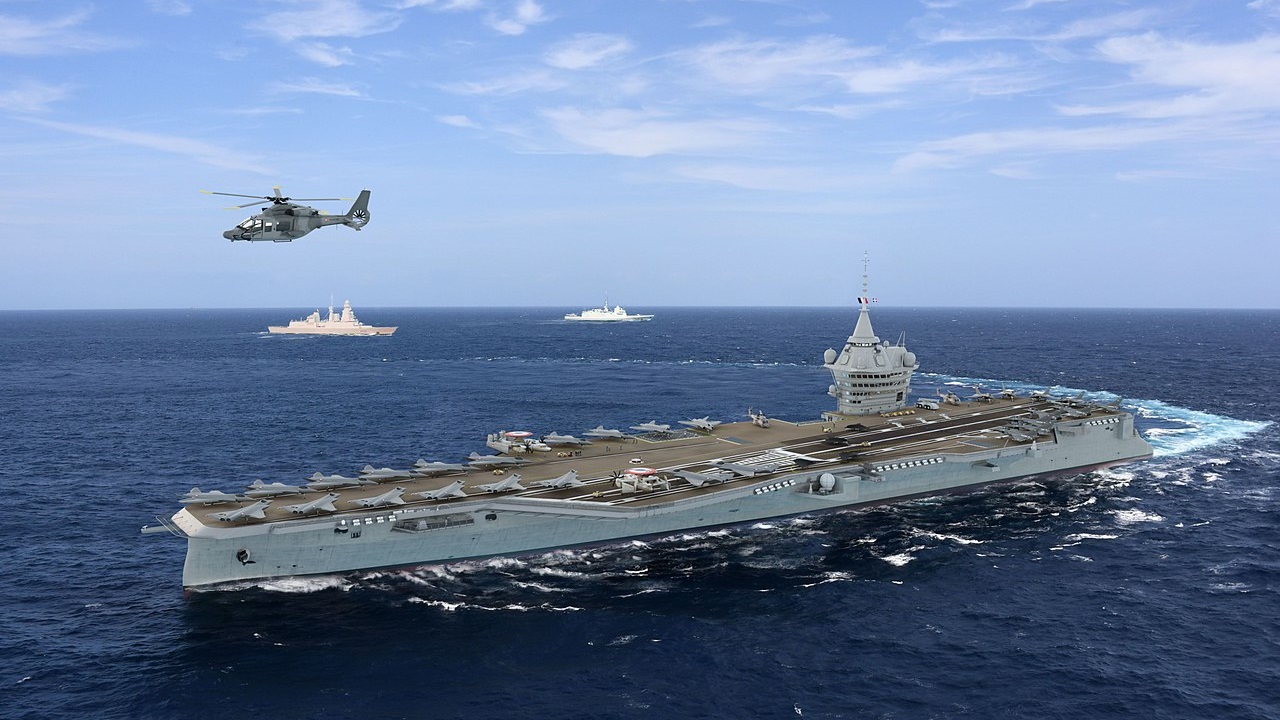
PANG Aircraft Carrier. Image Credit: Creative Commons.
The deployment, much like maintenance cycles or operational problems, immediately creates a gap in French naval aviation capability.
The ship’s size also imposes some constraints. At roughly 42,000 tons, it carries a significantly smaller air wing than U.S. supercarriers, limiting sortie generation rates and the ability to sustain high-intensity operations when or if necessary.
That matters in the current environment because the Iran conflict is already defined by large-scale drone attacks and missile strikes across multiple countries, including the UAE and Saudi Arabia, putting constant pressure on air defenses and naval assets.
The Charles de Gaulle, then, is set to do its part in contributing to defensive operations – protecting assets and helping to stabilize the region where possible – rather than delivering overwhelming offensive air power.
PANG Is Coming
France knows that its current aircraft carrier is not suitable for the long-term, not in terms of its size and current capabilities, but because it will soon approach the end of its service life, with its decommissioning expected around 2038.
The country is developing a new nuclear-powered aircraft carrier under the Porte-Avions de Nouvelle Génération (PANG) program, designed to replace the Charles de Gaulle by the time it is decommissioned.
The next system will be a major leap in capability, expecting to displace up to 70,000 tons – nearly double the size of its predecessor. It will be the largest warship ever built in Europe. Macron has described it as a ship for an “era of predators.”
PANG will feature electromagnetic launch systems (EMALS), allowing it to launch heavier aircraft and generate higher sortie rates.
And, it will be designed for a different kind of war: it will operate next-generation fighter aircraft developed under the Future Combat Air System (FCAS) program – assuming the program doesn’t crash and burn – alongside drones and unmanned systems.
What happens next is, obviously, uncertain. French officials don’t know how long the deployment could last, and securing regional shipping lanes will depend on how quick Iranian capabilities can be fully degraded. U.S. and Israeli strikes are already targeting missile infrastructure and naval assets, including mine-laying assets.
The White House has expressed confidence that significant damage has been done, but analysts can’t agree on the extent of the damage.
But for France, the situation is tough: it is not operating uncomfortably close to an active conflict – without formally being part of it.
About the Author: Jack Buckby
Jack Buckby is a British researcher and analyst specialising in defence and national security, based in New York. His work focuses on military capability, procurement, and strategic competition, producing and editing analysis for policy and defence audiences. He brings extensive editorial experience, with a career output spanning over 1,000 articles at 19FortyFive and National Security Journal, and has previously authored books and papers on extremism and deradicalisation.