
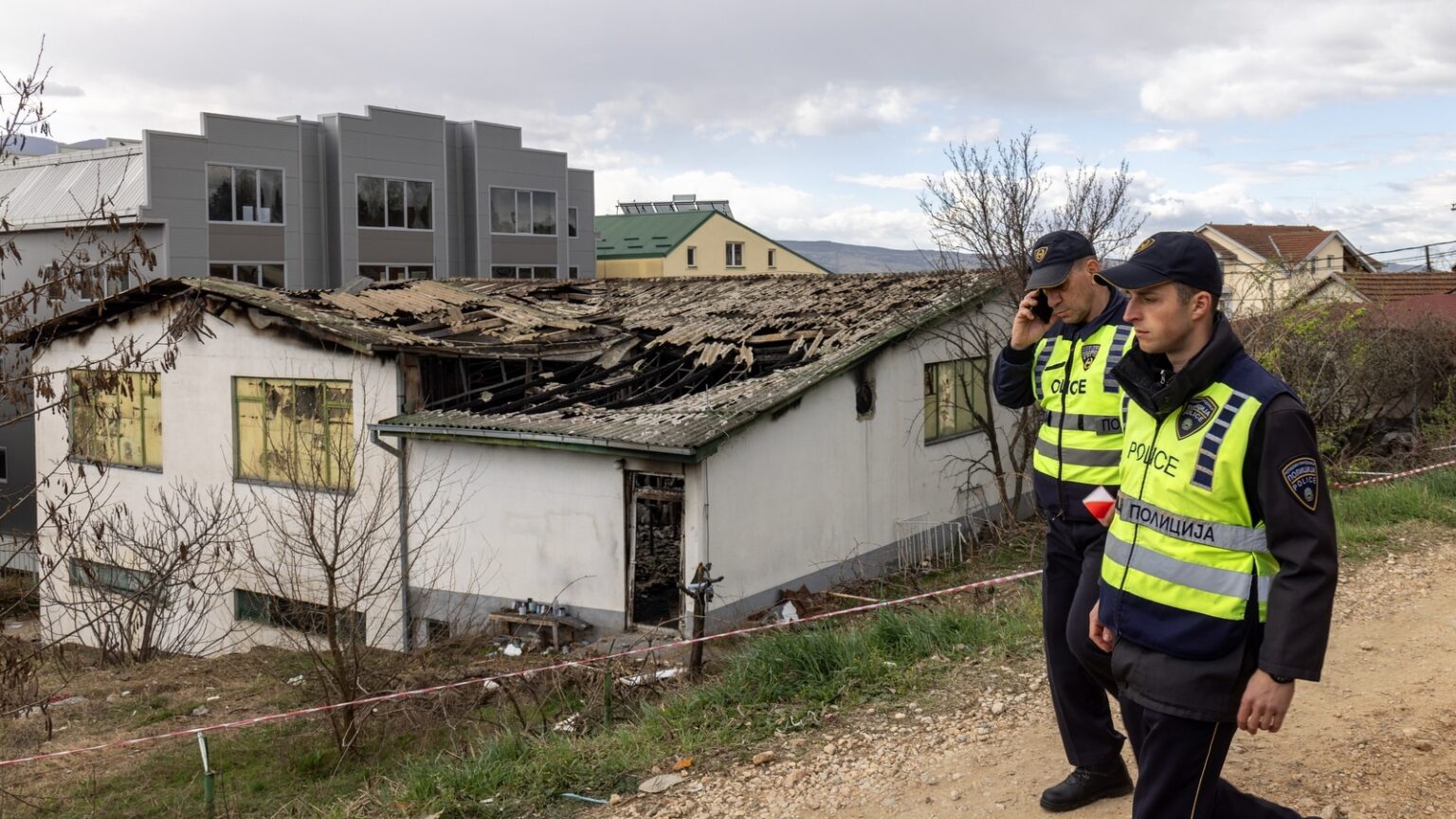
The big courtroom in the Idrizovo prison near Skopje, which hosts the high-profile trial, fell into silence when, in the first testimonies in the case, parents who lost children in the fire recounted the fatal night. Their statements seemed to bring back the tragedy in the courtroom.
“It is very hard seeing your child dead,” recalled Gabriela Naunova, mother of Nadica Naunova, remembering the scene at the hospital when she realised her daughter had died in the fire.
Marija Petrushova spoke shockingly about having to turn over dead bodies in order to find her son, Andrej.
“He looked so alive, so I could not believe he was dead,” she said, explaining that that her son had not suffered any burns; he had suffocated in the smoke.
Survivors described horrifying scenes. “Blackened faces, peeled skin,” recalled Kristian Panov, who had been working as a bartender at “Pulse” that night.
“Our eyes were burning, we couldn’t see anything, we were moving our feet forward centimetre by centimetre,” recalled Martin Kitanov, who had been trapped in the stampede of people trying to escape during the rapid spread of the fire and smoke. In a trembling voice, he said his entire group of friends had died.
The indictment for the nightclub fire calls it a predictable tragedy. It summarizes that it was only a matter of time before 13 years of systemic failings, inaction and corruption related to the work of the nightclub, a venue flawed with many key safety omissions, would catch up, resulting in disaster.
The indictment treats all the accused as co-perpetrators, as if they had acted with shared intent, even though their actions or inactions occurred over different periods of time during the existence of the nightclub.
All the accused, including state officials, are charged with the same offence: “serious crimes against public safety”. In other words, they are all accused of being directly accountable for the deaths of the victims.
Alongside eyewitnesses, the court also heard from the accountant who worked with the security agency that operated at the club, the PR representative of the band DNK that was performing that night and the seller of the pyrotechnics used at the concert.
Tensions frequently erupted in the courtroom when parents reacted vociferously to some testimonies and to objections raised by defence lawyers.
Judge Diana Gruevska-Ilievska has tried to maintain order by warning them of penalties, although at times she has tolerated the parents’ emotive reactions.
These confrontations have also spilled outside the courtroom, when parents encountered some of the defendants and their lawyers.
The defendants themselves have largely remained silent, except for their opening statements in which they all pleaded not guilty. They have been since then speaking mainly through their lawyers.
This strategy aligns with objections raised during the review of the indictments, when defence lawyers essentially contested the entre basis of the trial, insisting that people who were holding official positions ten years before the nightclub fire could not be held legally accountable for the tragedy and put on trial so long afterwards.
Early evidence focuses on safety failures