
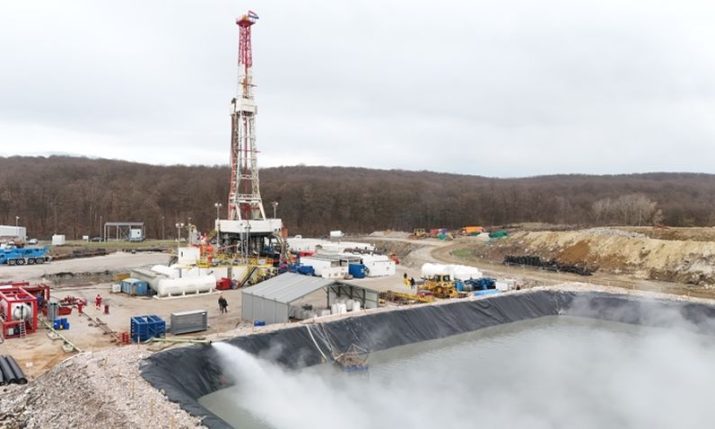
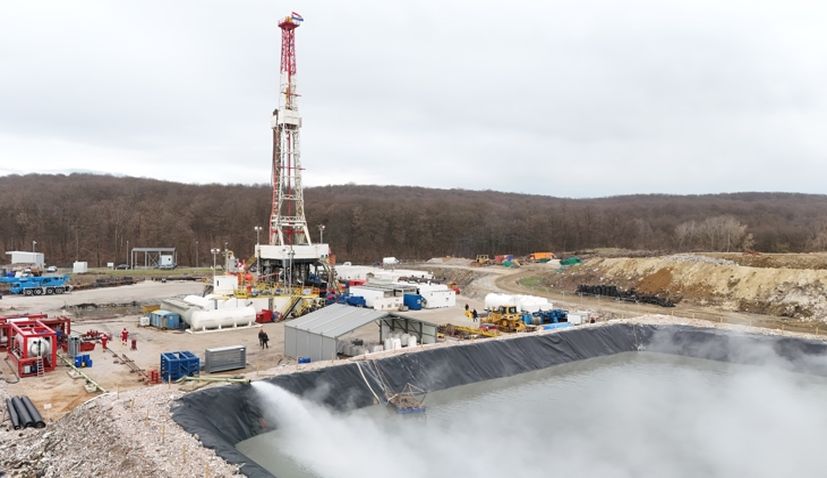
(Photo: Agencije za ugljikovodike)
Croatia has recorded a perfect success rate in a series of geothermal exploratory drilling projects, marking a major step forward in the country’s transition towards renewable energy.
Exploratory drilling carried out in Velika Gorica, Zaprešić, Osijek and Vinkovci has successfully located geothermal water of sufficiently high temperature at all four sites.
The achievement significantly exceeds the global average success rate for similar projects, which stands at around 60 percent, Večernji list reports.
The results were presented at the conference “Future Heating: Geothermal Leap of the NPOO Project – From Potential to Thermal Energy.” The event highlighted Croatia’s growing ambitions to harness geothermal resources across the Pannonian region.
Following the successful initial phase, further geothermal exploration is planned in Sisak, Karlovac and Vukovar.
At the same time, work is underway to convert the four successful exploratory sites into operational projects capable of producing thermal energy for district heating systems. Experts estimate that it will take approximately two more years before the sites can begin delivering heat.
Marijan Krpan, President of the Management Board of the Croatian Hydrocarbon Agency, said the results demonstrate the country’s technical capability in advanced energy projects.
“While the global success rate of such projects is around 60 percent, our experts achieved a 100 percent success rate, finding geothermal water of sufficiently high temperature at all four locations,” Krpan said.
“These results confirm that Croatia has the professional expertise and technical capacity to carry out complex energy projects that ensure long-term energy stability and security for our cities.”
€50 million investment in geothermal energy
The project is financed with €50.8 million from Croatia’s National Recovery and Resilience Plan (NPOO). Its primary goal is to support the decarbonisation of the energy sector by increasing the share of renewable energy sources.
A central part of the conference featured an expert panel on the role of geothermal energy in district heating systems.
Participants included energy experts, representatives from the Croatian Hydrocarbon Agency and the national electricity company HEP, as well as officials from cities where drilling has already been carried out.
Potential for lower heating costs
Local leaders expressed strong expectations that geothermal energy could significantly reduce heating costs for residents once the projects are commercialised.
Vinkovci mayor Josip Romić said the city has ambitious plans to use geothermal energy as a key part of its energy transition.
“Investing in new energy sources is crucial, and geothermal energy offers stability, sustainability and a local energy source,” Romić said, adding that Vinkovci is taking major steps towards decarbonisation.
He noted that once the geothermal well near the city becomes operational, it could provide heating for a large number of households.
Similar optimism was expressed in Osijek, where deputy mayor Dragan Vulin welcomed the success of the project’s first phase.
Stable and year-round energy source
State Secretary in the Ministry of Economy Vedran Špehar stressed that geothermal energy offers several advantages compared to conventional fuels.
According to Špehar, geothermal energy provides a reliable, year-round energy source that can contribute to lower energy costs while helping Croatia meet its decarbonisation goals.
Officials also confirmed that additional cities interested in geothermal projects may be able to access funding through future EU instruments, as the European Union prepares a broader Geothermal Strategy and Action Plan.
With strong initial results and further exploration planned, geothermal energy is increasingly seen as a key component of Croatia’s long-term renewable energy strategy.