
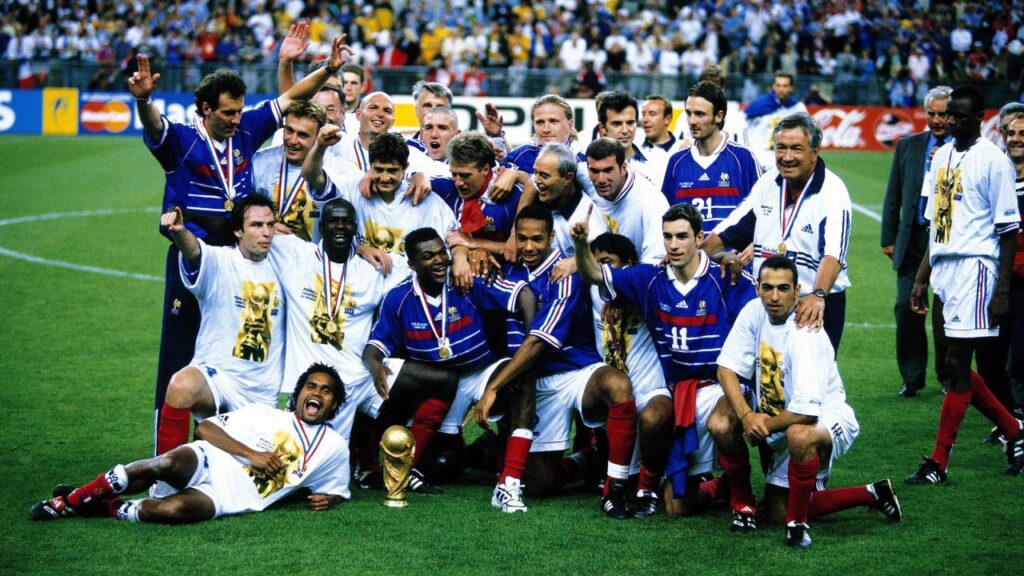
Ten clean sheets across three World Cups. That is the record Fabien Barthez shares with England’s Peter Shilton — and it remains unbroken to this day. But Barthez was just one piece of a French squad that, in the summer of 1998, did something no French team had ever done before: win the World Cup on home soil.
France conceded just two goals across seven matches in that tournament, dismantling Denmark, Italy, and a highly fancied Croatia side before defeating Brazil in the final. It was a performance of collective discipline and individual brilliance that has defined a generation of French football. Now, more than 25 years later, the question fans keep asking is simple: where did they all end up?
The answers are more varied — and in some cases more surprising — than you might expect.
The 1998 World Cup: What Made That French Team So Special
Managed by Aimé Jacquet, France’s 1998 squad wasn’t built around one superstar. It was a machine — organized, deep, and ruthlessly efficient. They hosted the tournament, carried the weight of a nation’s expectations, and delivered. The final against Brazil is still one of the most discussed matches in World Cup history, remembered as much for Ronaldo’s mysterious pre-match disappearance as for the football itself.
France won that final convincingly. And the players who made it happen went on to live remarkably different lives after hanging up their boots.
The Goalkeepers: Two Very Different Stories
France’s goalkeeping situation in 1998 had an unusual twist. Bernard Lama wore the No. 1 jersey, but never played a single minute. The former Paris Saint-Germain keeper was an unused substitute throughout the entire tournament. After 1998, he made only a handful of appearances for Les Bleus before retiring in 2001. He later moved into coaching, taking charge of the Kenya national team at one point, though he has since retired from football entirely.
The man who actually played — all seven matches, five clean sheets — was Fabien Barthez. He was France’s undisputed first choice, and his performances in 1998 cemented his status as one of the best goalkeepers of his generation. He went on to add more clean sheets at the 2002 and 2006 World Cups, finishing his international career with 10 World Cup clean sheets in total — a joint record that still stands alongside England’s Peter Shilton.
France 1998 World Cup Squad: Key Facts at a Glance
Position
Role in Tournament
Post-Retirement Path
A Tournament That Still Echoes Through French Football
What It shaped careers, defined legacies, and sent players in wildly different directions once the final whistle blew and the trophy was lifted.
Barthez, for instance, didn’t stop at 1998. He returned to two more World Cups, adding to a record that no goalkeeper has managed to match since. That kind of sustained excellence across three tournaments is extraordinarily rare. Meanwhile, Lama’s story is a reminder that World Cup squads are full of players whose contributions happened in training sessions and on the bench — players who were part of something historic without ever touching the ball in anger during the competition itself.
His post-football path into coaching, and his work with the Kenya national team, shows how widely the influence of that 1998 generation spread — not just across European football, but globally.
Why the Class of 1998 Still Matters to Football Fans Today
France’s 1998 World Cup win didn’t just produce a trophy. It produced a blueprint — a style of tournament football built on defensive solidity, tactical discipline, and collective trust — that influenced how the country approached the game for decades. The squad that Jacquet assembled conceded only two goals in seven matches, a figure that stands as a testament to how locked-in that defensive unit was.
For supporters who watched that summer unfold in real time, tracking what happened to those players afterward is more than nostalgia. It’s a way of understanding how football careers end, how identities shift, and how men who were once global icons find meaning after the roar of the crowd goes quiet.
Some go into coaching. Some disappear from the sport entirely. Some, like Barthez, leave behind records that outlast everything else.
Frequently Asked Questions
Who was France’s goalkeeper at the 1998 World Cup?
Fabien Barthez played all seven of France’s matches at the 1998 World Cup, keeping five clean sheets. Bernard Lama wore the No. 1 shirt but was an unused substitute throughout the tournament.
How many goals did France concede at the 1998 World Cup?
France conceded just two goals across their entire seven-match run at the 1998 World Cup, including wins over Denmark, Italy, and Croatia before the final against Brazil.
What is Fabien Barthez’s World Cup record?
Barthez kept 10 clean sheets across three World Cups (1998, 2002, and 2006), a joint record he shares with England’s Peter Shilton that still stands today.
What did Bernard Lama do after retiring from football?
After retiring in 2001, Lama moved into coaching and notably took charge of the Kenya national team. He has since retired from football altogether.
Who managed France at the 1998 World Cup?
France were managed by Aimé Jacquet, who guided the team to their first-ever World Cup title on home soil.
What happened in the 1998 World Cup final?
France defeated Brazil in the final, a match remembered both for France’s dominant performance and for Ronaldo’s mysterious pre-kickoff disappearance, which became one of football’s most enduring talking points.