
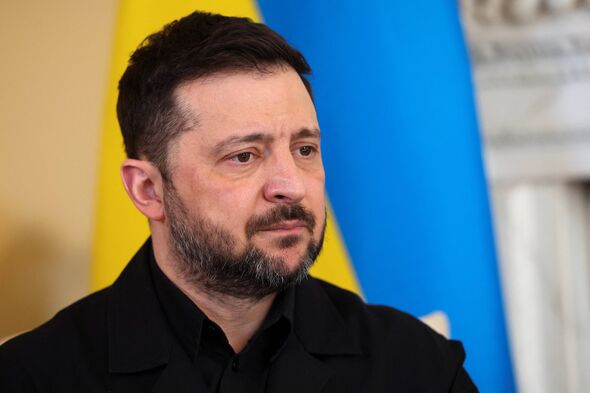
Ukrainian President Volodymyr Zelensky
With U.S.-mediated negotiations for peace in Ukraine stalled amid escalating conflict in the Middle East, Russian President Vladimir Putin is anticipated to pursue expanded military operations against his neighbor to the south, potentially increasing pressure on Kyiv.
Moscow’s war treasury is being replenished by windfall profits from soaring global oil prices, whilst U.S. air defense resources are being rapidly depleted by Iranian strikes throughout the Gulf region, sparking worries that Ukraine may face shortages in its fifth year of confronting Russia’s comprehensive invasion.
Ukraine’s European partners have pledged unwavering backing, yet disagreements over a substantial 90 billion euro ($106 billion) European Union loan intended to address Kyiv’s defense and economic requirements for two years have highlighted growing difficulties.
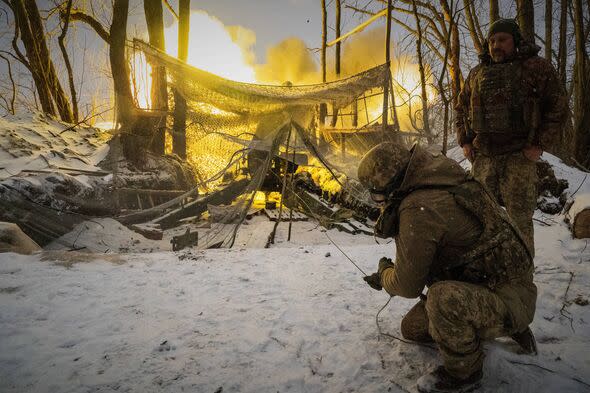
Ukrainian soldiers fire at Russian positions on the front line (Image: Copyright 2026 The Associated Press. All rights reserved.)
The unwillingness of NATO member states to deploy naval forces to help restore oil tanker operations through the Strait of Hormuz has provoked sharp criticism from President Donald Trump, revealing another developing tension that carries significant potential consequences for Ukraine.
Ukrainian President Volodymyr Zelenskyy has attempted to maintain Washington’s focus by proposing Ukrainian knowledge in countering Iranian Shahed drones, deploying more than 200 military specialists to the Gulf. Trump, however, has dismissed Zelenskyy’s assistance offer, indicating the U.S. doesn’t require Kyiv’s support. As fresh indications of division surface within Western alliances, Putin and his military leadership are weighing strategies for the spring and summer offensive along the expansive 1,200-kilometer (roughly 750-mile) front line.
The Russian armed forces seem to be preparing for a renewed effort to seize the remaining Ukrainian-controlled territory in the eastern Donetsk region, alongside potential offensives in multiple other areas.
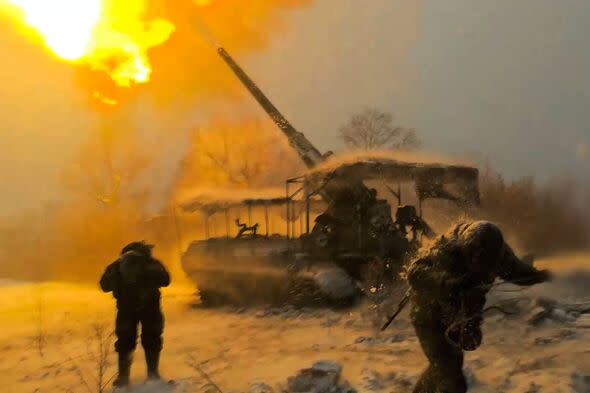
Russian soldiers in Ukraine fire toward Ukrainian positions (Image: Russian Defense Ministry Press Service)
Observers have noted that Moscow has been accumulating reserves, with operations anticipated to accelerate as spring weather dries out the landscape.
The Institute for the Study of War, based in Washington, has reported that Russian forces have intensified artillery bombardment and drone strikes, aiming to degrade Ukrainian defensive positions ahead of ground assaults.
Ukraine has attempted to disrupt the Kremlin’s objectives by launching counteroffensives in the Dnipropetrovsk and Zaporizhzhia regions, where Russian forces have been working to establish footholds with the goal of advancing toward the regional capitals-critical industrial centers.
In a recent battlefield analysis, the ISW indicated that Ukraine’s effective response in the Dnipropetrovsk region will probably continue to compel Russia to “choose between defending against the Ukrainian counterattacks and allocating manpower and materiel for offensive operations elsewhere” along the front, potentially undermining the expected Russian offensive. The report also highlighted that Ukrainian forces have intensified their medium-range attacks targeting Russian logistics, military hardware and personnel in an effort to disrupt the anticipated offensive.
Russian military bloggers caution that Moscow would need to significantly strengthen its forces to launch any substantial offensive, presenting considerable challenges for the Kremlin.
Following the widely criticized “partial mobilization” of 300,000 reservists in the early stages of the conflict that triggered hundreds of thousands to leave the country to avoid conscription, the Russian military has shifted its approach, depending on volunteers and recruiting foreign combatants drawn by relatively competitive salaries and additional benefits.
Putin stated Russia has approximately 700,000 troops deployed in Ukraine, roughly equivalent to the number Ukraine is reported to have.
After rapid movements involving large formations of tanks and mechanized infantry during the early phase of Russia’s 2022 invasion, the conflict has evolved into a war of attrition where small units of soldiers engage in grueling, building-to-building combat throughout the devastated towns and villages of eastern Ukraine.
The widespread use of drones has limited the ability to mass troops for any significant operations.
Russia has also depended on long-range missiles and drones to batter Ukraine’s energy infrastructure and other critical facilities. Over the last year, Russia has successfully penetrated and weakened Ukrainian defense lines, attributed to the “growing lethality” of Moscow’s assaults and Ukraine’s diminishing military personnel, according to Royal United Services Institute analyst Jack Watling.
He noted that “Russia is likely able to maintain its current rate of recruitment, despite the punishing rate of casualties” that Ukraine has inflicted.
In preparation for fresh offensives, Russia has increasingly recruited students into its newly established Drone Forces, providing comparatively generous compensation and positioning them at safer distances from combat zones.
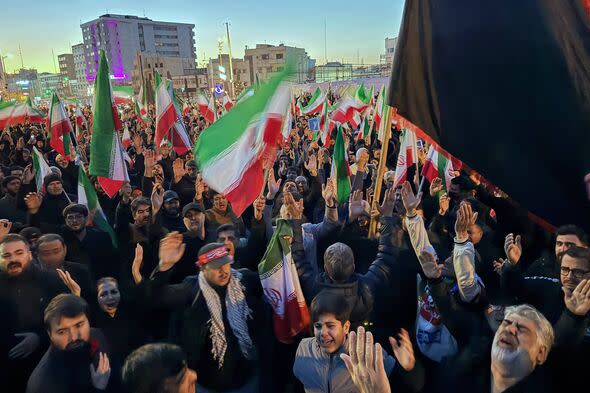
Government supporters in Iran mourning Iranian Supreme Leader Ayatollah Ali Khamenei (Image: Copyright 2026 The Associated Press. All rights reserved.)
During testimony before the Senate Intelligence Committee on Wednesday, U.S. Director of National Intelligence Tulsi Gabbard stated that “Russia has maintained the upper hand in the war against Ukraine.”
She indicated that U.S.-facilitated negotiations between Ukraine and Russia “are ongoing. Until such an agreement is met, Moscow is likely to continue fighting a slow war of attrition until they view their objectives have been achieved.”
Multiple negotiation sessions have yielded no apparent progress, with both sides remaining deeply divided on critical matters.
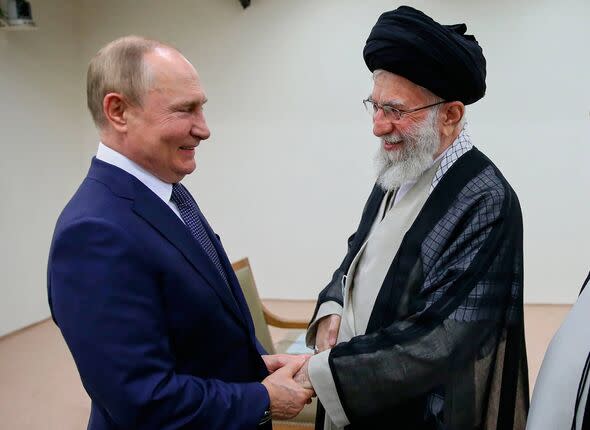
Putin with former Iranian Supreme Leader Ayatollah Ali Khamenei (Image: Office of the Iranian Supreme Leader)
Putin’s demands include Ukraine withdrawing troops from four illegally annexed but incompletely controlled regions, abandoning NATO membership aspirations, significantly reducing military forces, and lifting restrictions on the Russian language and the Moscow-aligned Orthodox Church-conditions that Zelenskyy has firmly rejected.
Zelenskyy has demanded a ceasefire, U.S.-backed security guarantees to deter future Moscow invasions, and has dismissed any territorial concessions to Russia.
European allies of Kyiv have accused Moscow of prolonging negotiations to secure additional territorial gains and have insisted on European representation at the talks. Moscow has flatly refused their involvement.
Russia has stated it will not permit any European forces to oversee a potential ceasefire and will consider them legitimate military targets.
“There have been signals from the Europeans indicating that they would like to take a place at the negotiating table regarding the Ukrainian settlement,” Kremlin spokesman Dmitry Peskov said this week, though he added that “we don’t consider it necessary or expedient.”
Sam Greene, a professor at King’s College London, offered analysis suggesting Moscow’s approach is transparent: “engaging with Washington just enough to prevent Ukraine from getting what it needed to shift the balance on the ground, and just enough to keep the Europeans at bay, but not enough to make real progress.”
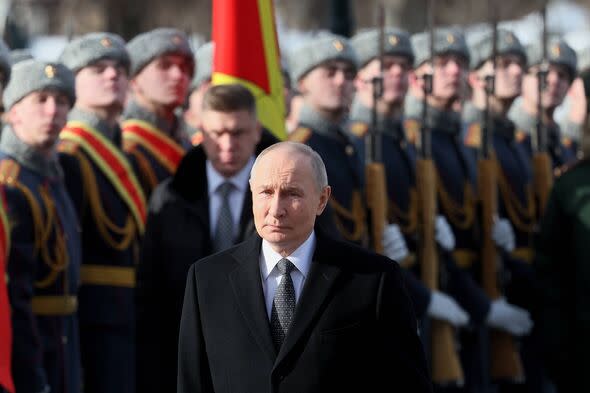
Russian President Vladimir Putin attends a wreath-laying ceremony at the Tomb of the Unknown Soldier last month (Image: Unknown)
Washington has issued Moscow a temporary exemption from oil sanctions, permitting sales of Russian crude already in transit, a move that has frustrated both Kyiv and European partners.
Meanwhile, Trump has portrayed Zelenskyy as hindering peace efforts. “He has to get on the ball, and he has to get a deal done,” Trump said of the Ukrainian leader earlier this month. In an NBC News interview, he suggested that whilst Putin appeared prepared to negotiate, “it’s much harder to reach a deal with Zelenskyy.”
Trump also dismissed Zelenskyy’s offer to assist in protecting U.S. forces and their allies in the Gulf against Iranian drones. “No, we don’t need their help on drone defense,” Trump stated to Fox News Radio.
Zelenskyy, who has adopted a more pragmatic public approach with Trump following their tense White House encounter in February 2025, has voiced mounting apprehension that the Iran conflict could negatively impact Ukraine.
Speaking with the BBC this week, he revealed he had a “very bad feeling” about how the Middle East situation might affect the war in Ukraine, pointing out that peace talks are being “constantly postponed” whilst Russia benefits from elevated oil prices and Ukraine faces a potential shortage of U.S.-manufactured Patriot missiles.
]]>