
(Photo: Gradska knjižnica Ivan Goran Kovačić Karlovac)
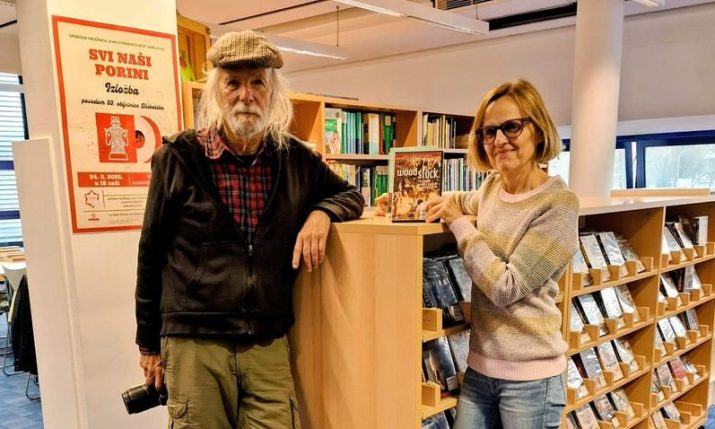
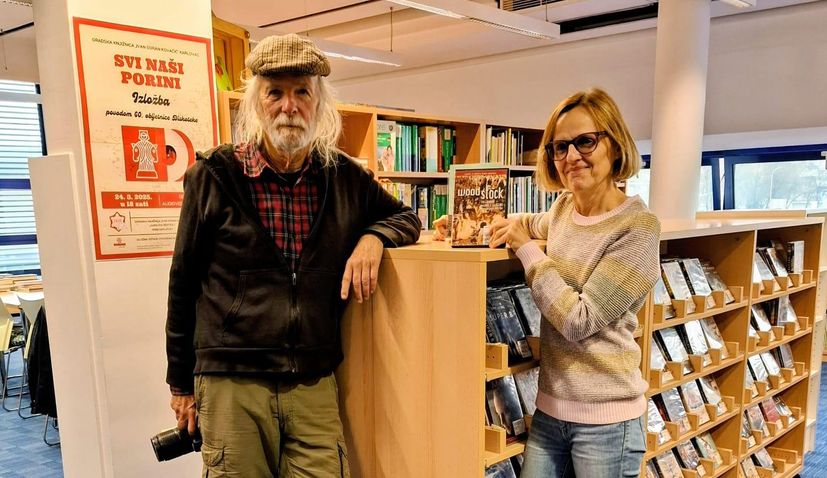
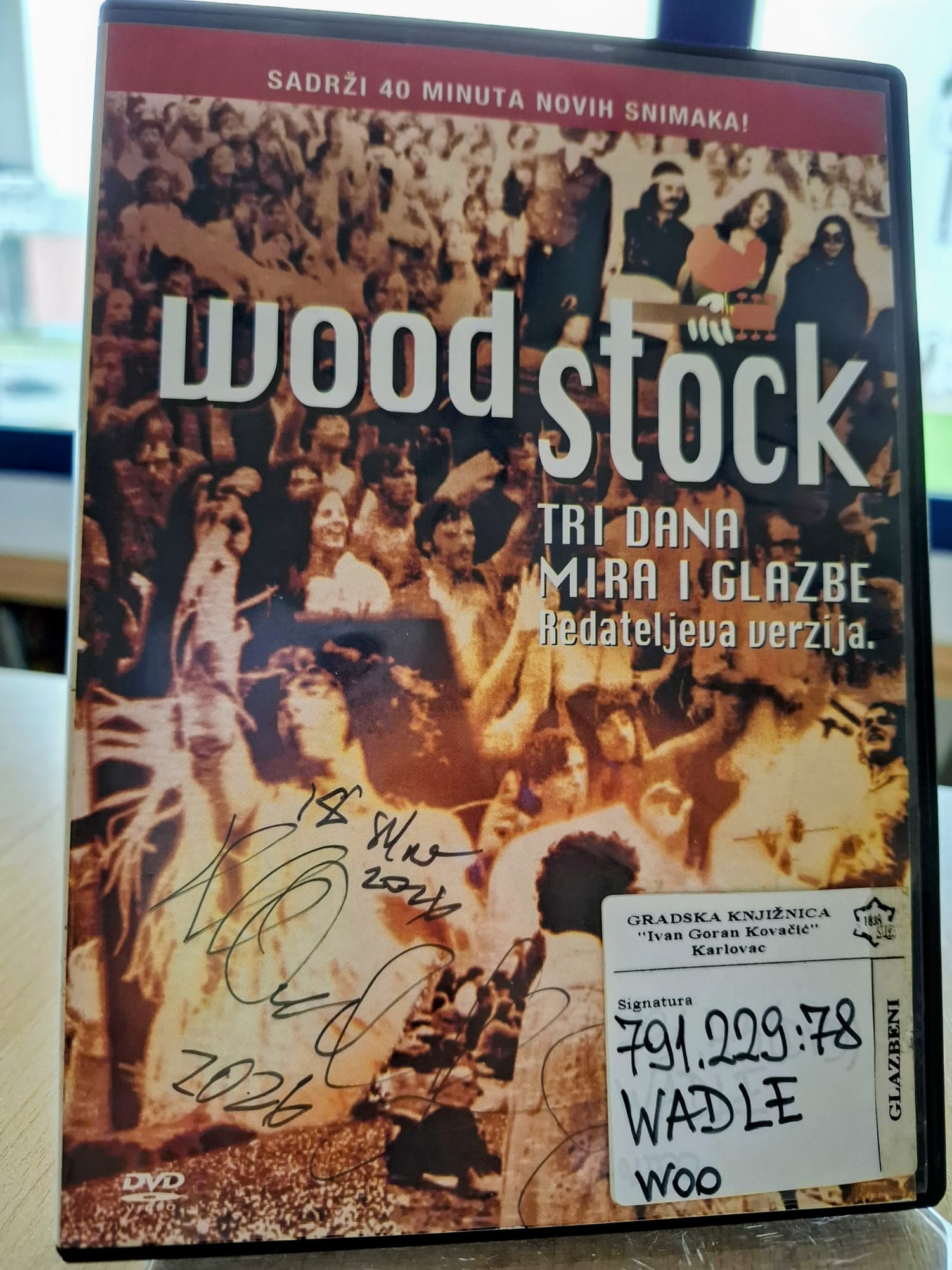
ZAGREB, 20 March (Hina) – A public library in the Croatian city of Karlovac got an unexpected guest on Wednesday when Michael Wadleigh, director of the Oscar-winning 1970 documentary “Woodstock”, stopped by while travelling through Europe.
Wadleigh entered the “American Corner” at the Ivan Goran Kovačić Library to connect his laptop to Wi-Fi, where staff recognised him and later shared news of the visit on social media.
The 86-year-old filmmaker was with his wife Birgit van Munster, a Dutch doctor and environmental activist.
He said they split their time between the Netherlands and Wales, where they run a farm, and travel across Europe for scientific work, adding that they would return home via Slovenia, Austria and Germany.
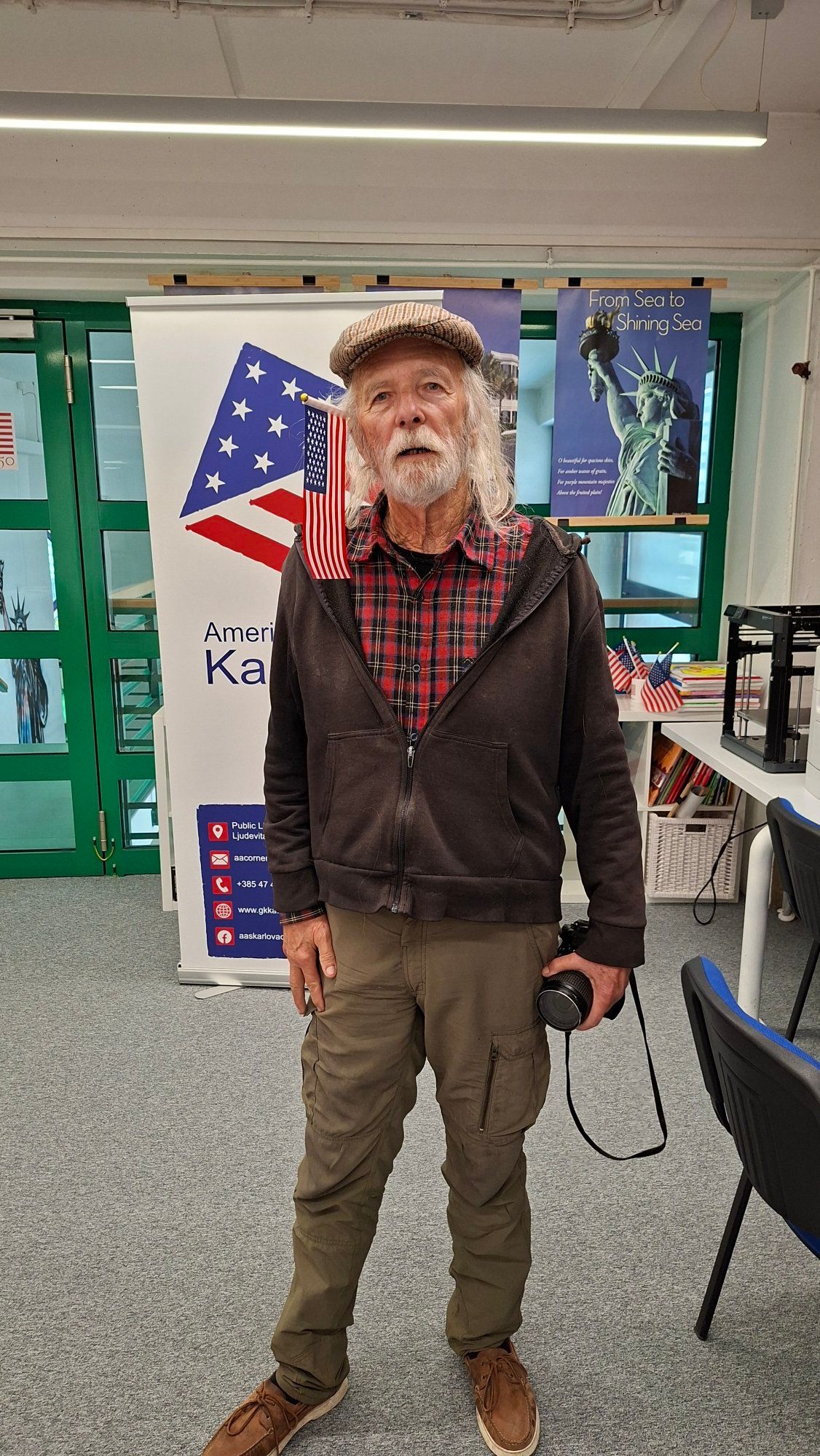
(Photo: Gradska knjižnica Ivan Goran Kovačić Karlovac)
Speaking to Hina about the origins of the 1969 Woodstock festival, Wadleigh said it had been organised by four young men – Michael Lang, Artie Kornfeld, Joel Rosenman and John P. Roberts – who were not motivated by profit, unlike earlier festival organisers, and that this had been what made the project revolutionary.
He said the four had been focused on ecology, a return to the land and nature, even envisioning a kind of cathedral in nature where people would gather freely.
Wadleigh said they had avoided marketing due to lack of funds and instead relied on New York radio disc jockeys, notably Wolfman Jack, who promoted the event on air.
He said word of the festival had spread widely, drawing around three million people, of whom roughly half a million managed to attend between 15 and 18 August 1969, alongside leading artists of the time, many of whom he said had performed for modest fees simply to take part.
Wadleigh said a new Woodstock could be possible, but only if driven by altruism rather than profit, adding that while smaller festivals exist today, there were no artists comparable to Jimi Hendrix or Janis Joplin.
He said Country Joe McDonald, who recently died, had delivered one of the festival’s most memorable performances with the anti-war song “I-Feel-Like-I’m-Fixin’-to-Die”, which he described as the most powerful anti-war song in U.S. history.
Wadleigh questioned who could fill such a role today, asking whether performers like Taylor Swift, whom he noted for her elaborate stage shows – could take on that mantle, while singling out Bruce Springsteen as a contemporary voice of protest.
Recalling how he became involved in the film, Wadleigh said the organisers had approached him seeking a director willing to invest his own money and share their vision, adding that he had been the only filmmaker in New York to accept those terms.
He said financial returns had been uncertain and ultimately limited for both him and the organisers, but that they had nonetheless done an excellent job.
The U.S. Library of Congress later selected the documentary for preservation in the National Film Registry as a culturally, historically and aesthetically significant work.
Wadleigh said he now works as a scientist for major institutions without pay, explaining that his role is to make science accessible, and noting that he had originally studied medicine in New York before turning to filmmaking focused on social issues.
(Photo: Gradska knjižnica Ivan Goran Kovačić Karlovac)
He said the Woodstock festival had represented the peak of the 1960s counterculture, encompassing not just art but politics and economics, adding that he had later returned to science.
On environmental issues, he said the Earth should be seen as humanity’s life-support system and that people are shaped by what they take from it, warning that society often treats the environment as something to exploit rather than protect.
He said nothing essential comes from the Moon or Mars, stressing that humanity must care for the resources it already has.
Wadleigh also voiced opposition to U.S. President Donald Trump and MAGA, describing his policy as isolationist, selfish and at odds with a long-standing tradition of global solidarity dating back to Woodrow Wilson.
He said conflict with Iran represented Trump’s biggest mistake so far, claiming that a billion dollars is being spent daily on warfare and that it will not work.
He also stressed the importance of journalism in the internet age, warning that the decline of critics, reporters and reviewers could have serious consequences, and that dismissing the need for critical evaluation in culture risked undermining public discourse.