
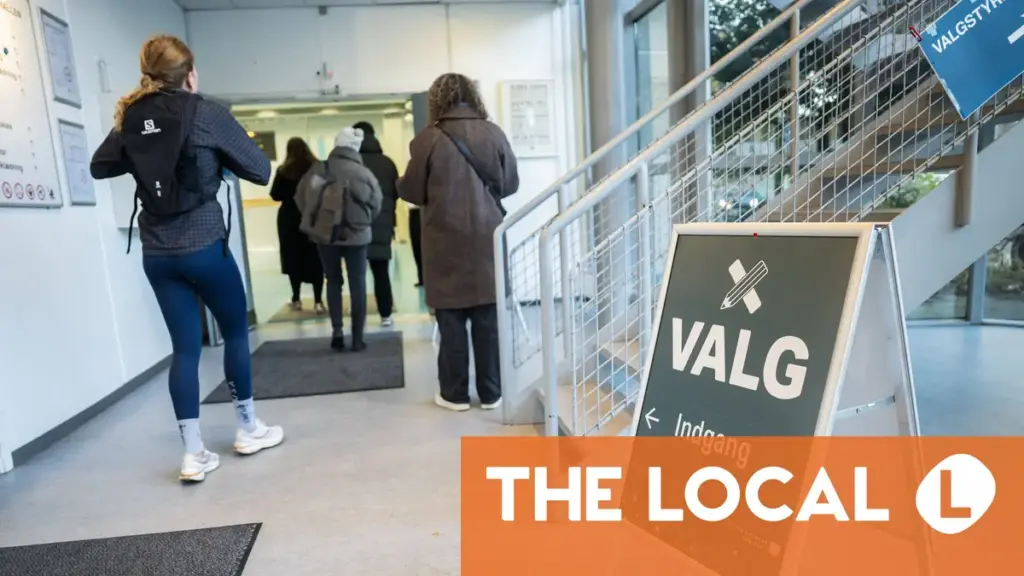
Millions of people in Denmark will go to the polls on Tuesday March 24th to decide on a new government, but what exactly happens on election day? We run through the main events.
8am: Polling stations open. Voter turnout is traditionally high in Denmark. In the both the 2019 and 2022 elections, more than 84 percent of over 4.2 million eligible voters cast their vote, with approximately 700,000 of those votes cast using advance voting ahead of election day.
Danish citizens over the age of 18 who live in Denmark, including foreign born, naturalised Danes, have the right to vote in national elections.
A small number of polling stations on small islands are permitted to open an hour later, at 9am.
8pm: Polling stations close and then counting of votes begins. If voters arrive at 8pm and there is a queue, they will still be able to vote.
8pm: Exit polls are released and discussed by Danish television broadcasters DR and TV2. These are based on interviews with voters shortly after they have left polling booths.
After this point, results will begin to trickle in from polling stations across the country, with media coverage (including The Local) updating information as this comes in.
9:30pm: By around this time, it should be possible to make a fairly firm indication of the overall outcome, with the caveat that the 2026 election could be close enough for a single seat or ‘mandate’ to tip the balance, meaning a confirmed result might not come until later.
Advertisement
Party leaders are called together for a comment when they have all arrived in Christiansborg and spoken to their party colleagues.
12am: The final results are usually known not long after midnight. At the election in 2019, the results were ready at 12.14am and in 2022, the result was confirmed a little after 12:45am.
What happens after election night?
With just a few days to go until the election, the latest poll by Voxmeter for news wire Ritzau is showing almost equal levels of support for two conservative parties, the Liberals (Venstre) and Liberal Alliance.
The two parties are likely to have to work together in government should the ‘blue bloc’ of right-leaning parties gain an overall majority in Tuesday’s election.
Both parties took a 9.4 percent vote share in the poll, which represents a decline for both compared to the beginning of the month, shortly after the election was called.
Advertisement
On the other side of the political divide, Prime Minister Mette Frederiksen’s Social Democrats are polling at 21.5 percent, which would be the worst result for the party in over a century. Much of that loss could be offset by strong polling for the Green Left (Socialistisk Folkeparti, SF), a likely partner for the Social Democrats in a centre-left government.
The ‘red bloc’ of left-leaning parties are able to muster a combined 48.9 percent of the vote in the poll, with the blue bloc at 43.3 percent. As such, neither has an overall majority.
This makes more likely a scenario in which the unaligned centrist Moderate party, led by Foreign Minister Lars Løkke Rasmussen, gets a strong say in the overall outcome.
If the opinion polls are correct, then Tuesday’s results will probably not tell us immediately how the new government will be formed or who the Prime Minister will be. This would be negotiated over the following days and weeks, and much would depend on who the Moderates eventually decide to support as government leader, Frederiksen or Liberal party leader Troels Lund Poulsen.
In 2022, several weeks passed between the election and the eventual agreement which formed the basis of the coalition government which has ruled Denmark since then.