

The modernization and development of Azerbaijan’s energy system
have become key national priorities in recent years. Building on
its long-standing success in the oil and gas sector, the country is
now actively pursuing a transition toward renewable and sustainable
energy sources. Current data indicates that this shift is already
producing tangible results, although the transition remains uneven
across different segments of the renewable energy mix.
According to the State Statistics Committee, in January-February
2026 Azerbaijan generated 141.6 million kWh of electricity from
wind power plants. This represents an increase of 138.2 million
kWh, or 41.6 times more than in the same period of 2025. Such a
sharp rise highlights the accelerating role of wind energy in the
national energy balance. At the same time, solar energy production
stood at 42.7 million kWh during the reporting period, reflecting a
slight decrease of 1.4% compared to the first two months of 2025.
This divergence suggests that while renewable energy is expanding
overall, its growth trajectory varies depending on project
implementation timelines and infrastructure readiness.
In broader terms, Azerbaijan’s electricity, gas, and steam
production, distribution, and supply sector generated 671.6 million
manat worth of output in the first two months of 2026. Meanwhile,
the water supply, waste treatment, and processing sector produced
services valued at 93.4 million manat. These figures demonstrate
that the energy transition is occurring within a wider framework of
infrastructure development and public utility modernization.
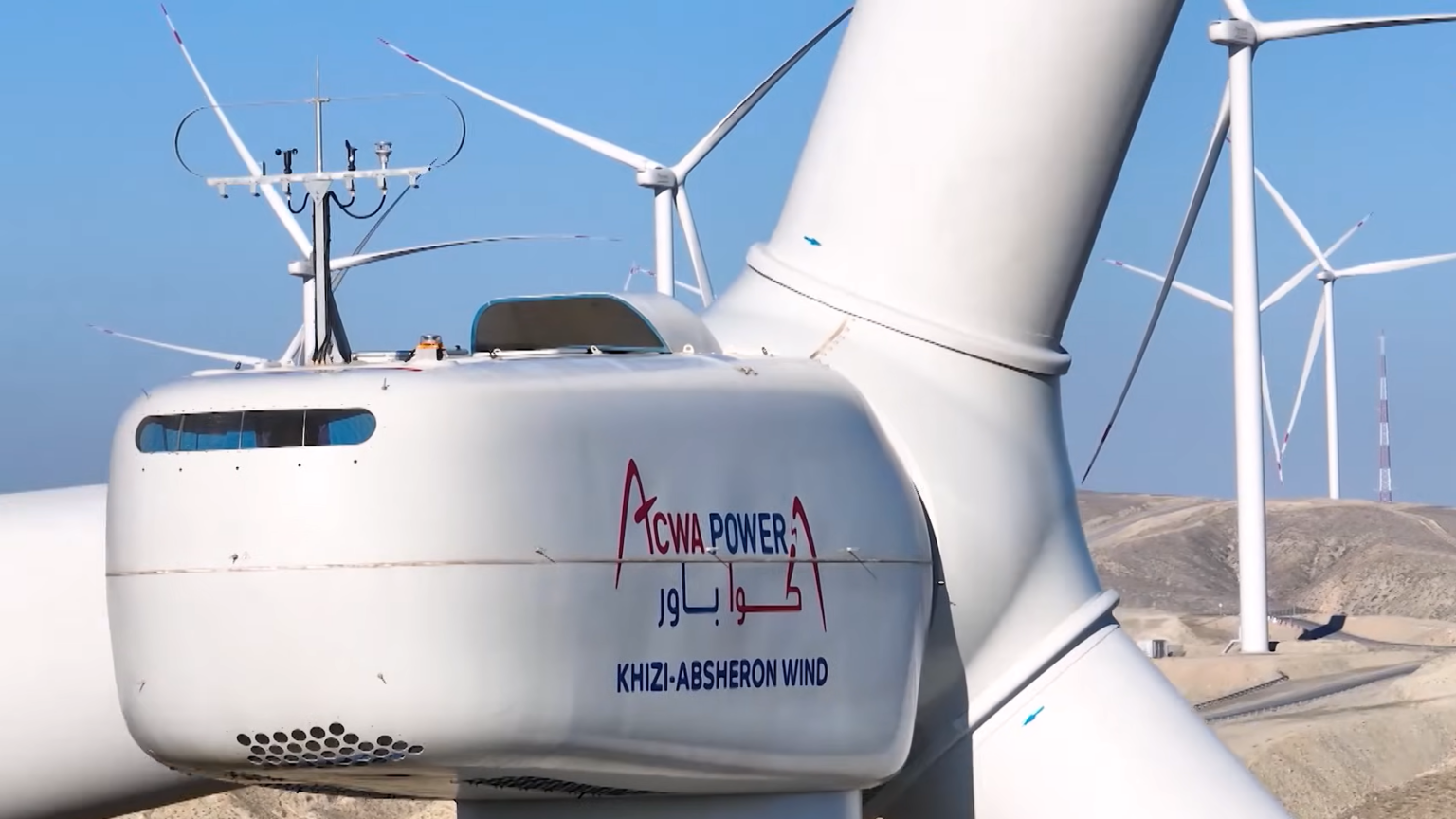
A major driver behind the surge in wind energy production is the
commissioning of the Khizi-Absheron Wind Power Plant, the largest
wind energy project not only in Azerbaijan but also in the wider
region. Implemented in cooperation with ACWA Power and inaugurated
on January 8, 2026, the project marks a significant milestone in
Azerbaijan’s renewable energy strategy.
With an estimated annual generation capacity of 1 billion kWh,
the plant is expected to save approximately 220 million cubic
meters of natural gas each year, prevent more than 400,000 tons of
carbon emissions, and supply electricity to around 300,000
households. The project, valued at approximately $300 million and
financed entirely through foreign investment, also involved
ChinaPower as the general contractor.
Analytically, this project illustrates several important trends:
first, the increasing role of foreign direct investment in
Azerbaijan’s green transition; second, the strategic substitution
of natural gas consumption with renewable generation; and third,
the strengthening of energy security through diversification.
Beyond environmental benefits, such projects enhance Azerbaijan’s
position as a reliable and forward-looking energy partner in the
region.
Historically, Azerbaijan’s renewable energy development began
with more modest initiatives. The Gobustan Hybrid Power Plant,
inaugurated in 2011, was the country’s largest renewable facility
for many years. Combining wind, solar, and biogas technologies, it
is considered one of the world’s first hybrid plants integrating
multiple renewable sources within a single system. Built across 38
hectares, it also serves as an experimental and training center,
contributing to local capacity building in renewable
technologies.
Today, Azerbaijan is expanding its focus beyond wind and solar
energy. With support from World Bank, the country has conducted a
comprehensive assessment of geothermal resources through the report
“Geothermal Resource Assessment for Direct Use Developments in
Azerbaijan.” This study evaluates the country’s geothermal
potential, reviews the legislative framework, and outlines an
action plan for future development. Such diversification indicates
a long-term strategy aimed at maximizing all available renewable
resources.
Hydrogen energy is another emerging priority. Azerbaijan has
developed a “National Hydrogen Strategic Review,” outlining
balanced, accelerated, and ambitious scenarios for green hydrogen
production. These scenarios define potential domestic applications,
export opportunities, and the scale of renewable capacity required.
From an analytical perspective, this reflects Azerbaijan’s
intention not only to decarbonize its domestic energy system but
also to position itself within future global hydrogen markets.
Regionally, Azerbaijan has designated the Karabakh and East
Zangezur economic regions, along with Nakhchivan, as green energy
zones. Comprehensive development concepts and action plans are
already being implemented, focusing on efficient use and expansion
of clean energy. These initiatives are particularly significant as
they align energy development with post-conflict reconstruction and
regional economic revitalization.
Looking ahead, Azerbaijan aims to install up to 6 gigawatts of
renewable energy capacity by 2030 and up to 8 gigawatts by 2033.
This expansion is intended to meet domestic demand, support
electricity exports, and supply emerging sectors such as data
centers. The scale of these targets suggests a structural
transformation of the national energy system, moving from
hydrocarbon dependence toward a more balanced and sustainable
energy mix.
Importantly, surplus electricity generated from these projects
is expected to be exported through several interconnectors
currently under development. These include the Black Sea Submarine
Cable (“Caspian-Black Sea-Europe”), the “Azerbaijan-Turkiye-Europe”
corridor, the “Trans-Caspian” route, and the “East-West” green
energy corridor. These projects are strategically significant, as
they strengthen Azerbaijan’s role in Europe’s energy security by
enabling the transmission of clean electricity across regions.
Azerbaijan’s energy transition reflects a carefully structured
and multi-dimensional strategy. While oil and gas continue to play
a foundational role, the rapid expansion of renewable energy,
supported by foreign investment, regulatory reforms, and
technological diversification, signals a clear shift toward
sustainability.
The country’s ability to integrate large-scale renewable
projects, develop emerging sectors such as hydrogen, and establish
international energy corridors positions it as a key player in the
evolving global energy landscape. If current trends continue,
Azerbaijan is likely to transform from a traditional hydrocarbon
exporter into a regional hub for green energy production and
transmission.