
One of the best-selling books of the post-war era was a fantasy, The Mouse That Roared, by the Irish journalist and novelist Leonard Wibberley.
Based on an imaginary tiny Grand Duchy in the Swiss-French Alps that finds its only export – wine – is being crushed out of markets by California wine giants, it decides to declare war on America. Its army of half a dozen men manages to capture a nuclear weapon and force the mighty US to haul up the white flag.
Made into a 1959 movie starring Peter Sellers, it was seen as a geopolitical fairy tale.
But the Alps today have produced a Mouse that Roars in the shape of Slovenia, the tiny two-million-strong nation squeezed between Italy, Austria and Hungary, and its former Yugoslav comrades in Croatia. Under its current prime minister, Robert Golob, a former energy entrepreneur, Slovenia has been busy taking on the United States and Russia.
When, in 2024, Slovenia took a seat on the UN Security Council on a rotation basis for smaller states, it became the first European state to recognise the right of Palestinians to have a state.
This was a full year before Britain, France, Canada and Australia decided to follow Slovenia’s example.
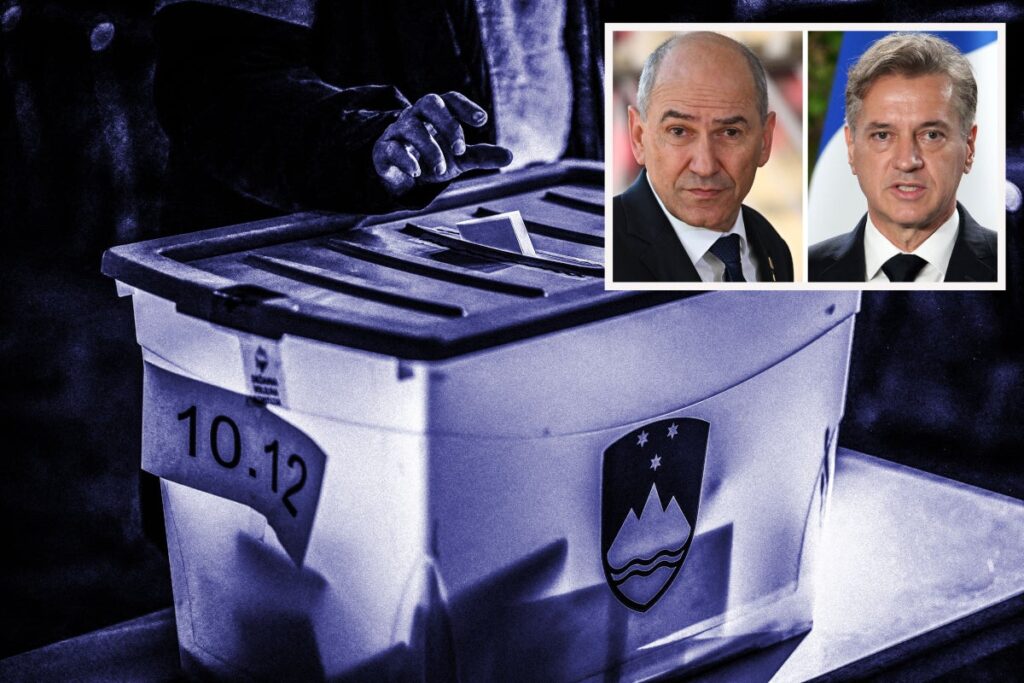
Golob had defeated the pro-Putin, pro-Trump nationalist populist Janez Janša, the former prime minister of Slovenia, a key Trump and Netanyahu ally in Europe, who has been backed by Trump’s Maga movement and the Israeli right in a bitter campaign to win back power in elections due to be held on Sunday.
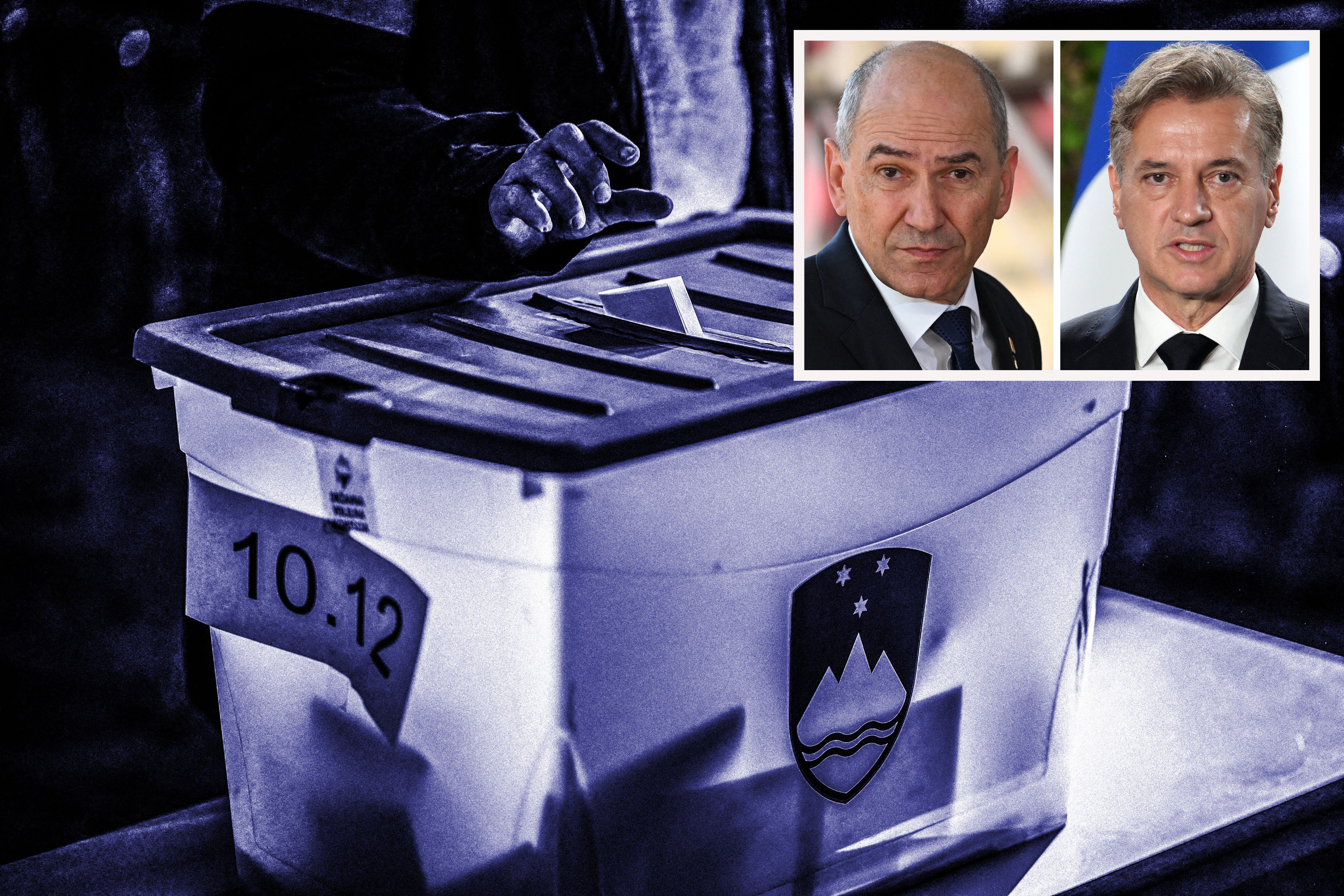
Robert Golob and Janez Janša go head to head in Slovenia’s election, which has big geopolitical impact (AFP/Getty)
Slovenia is not a member of Nato, but, under Golob, the nation has sent €163 million in military aid, including armoured vehicles, as well as financial, technical and humanitarian support to Ukraine.
Despite the boasting and endless photocalls in Kyiv by Boris Johnson in the first years of the Russian invasion of Ukraine, Slovenia has sent 28 battle tanks to take on the Russians, in contrast to 14 British Challenger tanks.
Now Russian puppets in the region, including Milorad Dodik, the former leader of Bosnia’s breakaway Republika Srpska, are spending a fortune in Slovenia urging the Serb minority there to vote out Golob on Sunday.
In addition to Vladimir Putin, Golob and tiny Slovenia have earned the enmity of Donald Trump. Golob refused Trump’s invitation to join the so-called Board of Peace, the Trump-controlled outfit the US leader would like to see grow and supplant the United Nations.
Israeli rightists have sent top operatives to Ljubljana from the notorious Black Cube firm founded by ex Israeli intelligence and IDF officers to “advise” political parties in foreign countries on how to win elections for pro-Netanyahu fellow-travellers like Janša.
When Trump announced he would annex Greenland, Golob dispatched two Slovenian soldiers to the island in a show of symbolic European solidarity with Denmark, a decision again met with mockery by Janša, who, like British Tories and Nigel Farage, thinks that kneeling before Donald Trump in worship of the US president is a dignified posture for a European democracy, big or small.
Foreign policy, however, is often about symbols rather than mobilising armies, as in the 19th or first half of the 20th century.
Why should the world at large care about who runs Slovenia, one of the EU’s tiniest nations, with a population about the same as the West Midlands? Small players on the foreign stage can send signals to much more powerful, self-important nations.
Under Golob, Slovenia has pushed the envelope against Benjamin Netanyahu; the country could go the other way if he loses his bid for a second term. In that case, former prime minister Janez Janša will take over and immediately move to join Trump’s Board of Peace, greasing the wheels of Trump’s stalling Iran war machine.
Much focus has been placed on the fate of Hungary’s prime minister, Viktor Orbán, who faces re-election for a sixth term next month. He is also a Trump and Putin puppet who has used the veto right of every EU member state, big or small, to delay or block consensus partnership decisions taken by fellow EU member nations, including lending support and a European future to Ukraine, thus thwarting Moscow’s desire to effect a latter-day Anschluss between Ukraine and Russia.
The main issues at play in Sunday’s election in Slovenia are the usual ones of jobs, housing, education and rising energy prices, thanks to Netanyahu getting Trump to fight Israel’s war against Iran. For younger and more liberal voters, the Orbán-Trump attacks on media freedom they remember from the Janša years in government are also a factor in deciding how to vote.
Slovenians will vote on the radically different foreign policies of pro-Ukrainian Golob and pro-Trump Janša. Sunday’s election result will be closely watched in Moscow, Tel Aviv and Washington, not only in Brussels.
Denis MacShane is the UK’s former Minister of Europe