
Published on
March 22, 2026
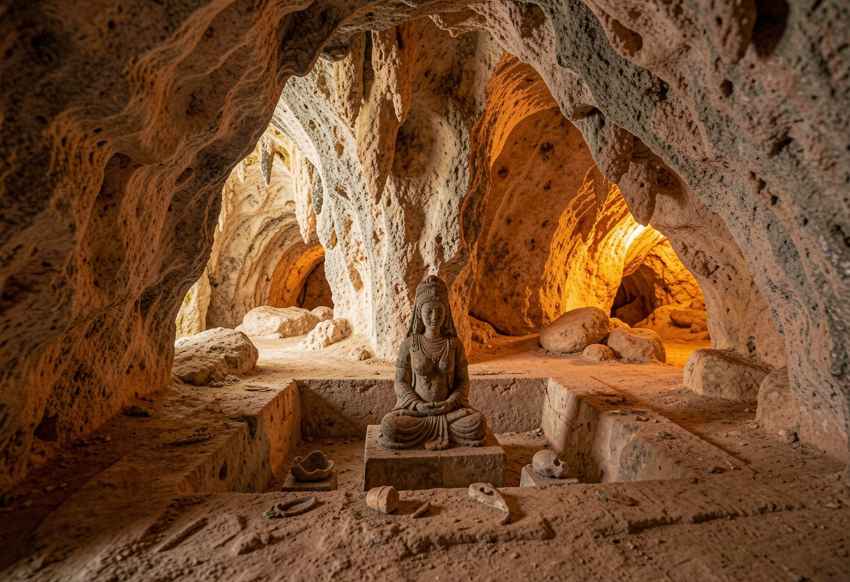
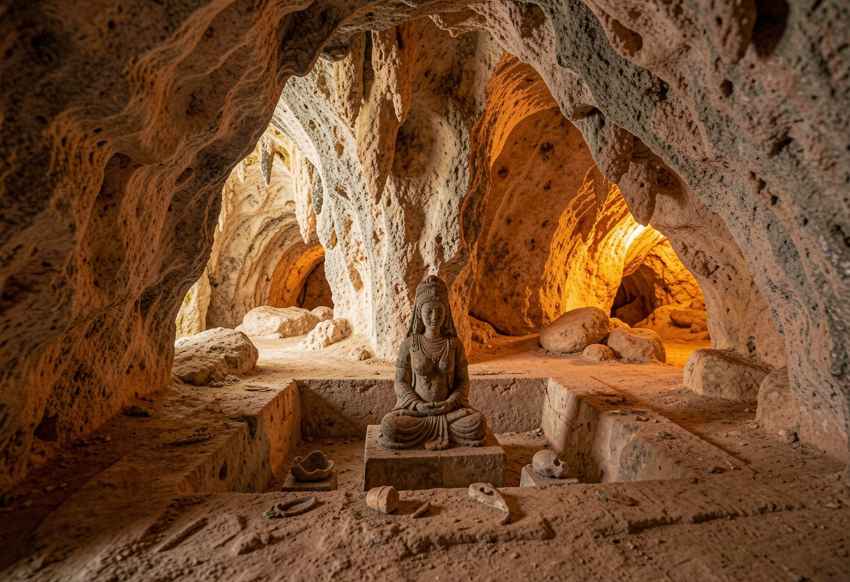
Image generated with Ai
A prehistoric sanctuary deep in the rugged landscapes of Turkey’s northwestern Bilecik province is preparing for a new chapter in its extremely long history. Gedikkaya Hill and its subterranean complex, located just a kilometre southeast of İnhisar district centre, have recently become one of the region’s most significant archaeological discoveries. Evidence of ritualistic behaviour dating back approximately 16,500 years has been discovered, establishing the site as a critical link in our understanding of human spiritual evolution during the transition from the Epipaleolithic to the Neolithic periods.
For millennia, the secrets of Gedikkaya were hidden beneath layers of earth and stone. Only through recent scientific research has the true extent of the site’s antiquity been revealed. The cave is no longer just a geological formation; it is now regarded as a sacred space where early hunter-gatherer societies expressed their developing belief systems. This ancient heritage is currently being used by local governments and academic institutions to create a tourism model that prioritises preservation over profit, ensuring that the Upper Paleolithic’s echoes are not lost to modern times.
The Discovery of the Mother Goddess
The archaeological significance of the site was solidified by the discovery of a ritual pit that offers a rare glimpse into the Epipaleolithic mind. Within this pit, a deliberately shaped stalagmite was recovered by researchers, positioned alongside a seated female figurine. This artefact is considered by experts to be a precursor to the famous mother goddess figures that would later define Neolithic cultures across the Near East. The stone figurine, though stylized and early in its craftsmanship, suggests that the veneration of the feminine or a fertility-based deity was already established in Anatolia long before the rise of settled agricultural communities.
This discovery provides an invaluable timeline for the development of symbolic art and religious practice. The presence of the shaped stalagmite indicates that natural cave formations were not just seen as shelter but were actively modified to serve as totems or focal points for ritual activity. By uncovering these items, a clearer picture of the spiritual life of early Anatolians is being painted, showing a level of complexity and continuity that spans thousands of years.
Advertisement
Advertisement
A Chronicle of Continuous Human Presence
Gedikkaya Cave is not defined by a single moment in time; rather, it is characterized by its remarkable longevity as a site of human interest. Evidence has been gathered showing that the cave was utilized repeatedly across the Epipaleolithic, Neolithic, and Chalcolithic periods. Each layer of soil acts as a page in a history book, documenting how different cultures adapted to the environment and utilized the cave for their specific needs—be they domestic, defensive, or spiritual.
Even as the millennia passed and the great civilizations of the Mediterranean rose and fell, the site remained a point of focus. Sporadic finds from the Hellenistic period suggest that even the Greeks and their contemporaries found reasons to visit this ancient hill. Whether these later visits were for religious pilgrimage or temporary shelter is still being explored, but the enduring magnetic pull of the site is undeniable. It is this multi-layered history that makes the cave a prime candidate for high-level archaeological tourism, as it offers a vertical timeline of human progress.
Advertisement
Advertisement
Protecting a Fragile Legacy from Modern Threats
Despite its ancient resilience, the site has faced its greatest challenges in the modern era. In recent decades, significant damage was inflicted upon the cave’s delicate ecosystem and archaeological strata. Unauthorized excavations by treasure hunters and the mass removal of soil for bat guano—a potent fertilizer—resulted in the loss of precious context for many artefacts. Furthermore, the cave was previously used as a filming location without proper oversight, leading to further degradation of its natural features.
In response to these threats, a series of rescue excavations were commissioned and carried out between 2019 and 2022. These efforts were overseen by the Republic of Türkiye’s Directorate of Cultural Heritage and led by the Bilecik Museum. Scientific guidance was provided throughout this period by Associate Professor Deniz Sarı from Bilecik Şeyh Edebali University. These excavations were not merely about finding artefacts but were a desperate race to stabilize the site and salvage what remained of its historical integrity after years of neglect and exploitation.
Advertisement
Advertisement
The Vision for Sustainable and Living Tourism
Following the successful completion of the rescue phases, a forward-thinking tourism consultancy project has been launched. This initiative is being spearheaded by Bilecik Şeyh Edebali University and is supported by a regional development agency’s technical assistance programme. The primary objective is the integration of Gedikkaya Hill and its cave into a regional tourism circuit without compromising the site’s archaeological value. It is envisioned that a balance can be struck between public curiosity and scientific necessity.
The cornerstone of this plan is the “living excavation site” concept proposed for the area known as İn Cave. Under this model, ongoing scientific research will be conducted in full view of the public, allowing visitors to witness the process of discovery in real-time. This approach transforms the visitor from a passive observer into an engaged participant in the preservation of history. By creating structured walkways and controlled access points, the site’s archaeological integrity is protected while providing an educational experience that highlights the importance of cultural heritage.
A New Path Forward for Bilecik
The transformation of Gedikkaya is more than just a local project; it represents a larger shift in how Turkey manages its vast cultural resources. By emphasising sustainability, the initiative ensures that the economic benefits of tourism are not at the expense of the resource itself. Regional development is aided by job creation and the promotion of Bilecik as a destination for “slow tourism” and “archaeo-tourism,” which cater to a demographic that values authenticity and environmental stewardship.
Professor Sarı and her team’s planning model aims to honour the 16,500-year-old tradition of carving a ritual pit in the cave’s darkness. Gedikkaya’s future is being built on a foundation of respect for the past, ensuring that the Bilecik valley’s mother goddess will continue to watch over it from her stone sanctuary for generations.
