
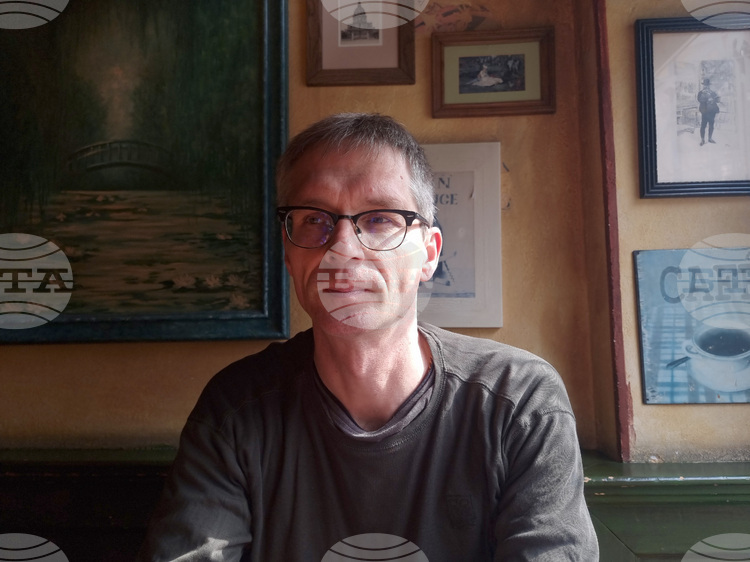
Slovenia is likely to face a critical period in the near future, amid growing concerns about a potential global conflict, and needs a government capable of responding effectively to such challenges, Slovenian journalist Gorazd Recnik of national broadcaster RTV SLO said in an interview with BTA on Monday.
He argued that if the government is too fragmented or driven by too many competing interests, it would not be able to respond adequately to critical events. According to Recnik, Slovenia needs a stable government, but such an outcome appears uncertain given the narrow gap between the two leading parties following Sunday’s parliamentary elections.
With a voter turnout of 69.06% and 99.85% of ballots counted, the Freedom Movement (GS) has secured 28.6% of the vote and 29 seats in the 90-member parliament. The opposition centre-right Slovenian Democratic Party (SDS) received 28.03% of the vote and 28 seats. Also entering parliament are the coalition New Slovenia – Christian Democrats (NSi), the Slovenian People’s Party (SLS), and Fokus, with 9.31% and 9 seats, followed by the Social Democrats (SD) and The Democrats (DEM), with 6.7% and 6 seats each, Resni.ca with 5.55% and 5 seats, and the coalition of The Left and Vesna – Green Party with 5.52% and 5 seats.
At this stage, no party, even in coalition with its usual partners, has reached the required minimum of 46 seats needed to form a government. The two leading parties are expected to begin negotiations with other formations that have passed the 4% threshold.
Recnik said the situation remains highly unpredictable, as it is still unclear who will receive the mandate to form a government, especially with votes from abroad yet to be fully counted. He added that the positioning of new parties such as The Democrats and Resni.ca remains uncertain, complicating coalition talks.
He noted that although some parties had ruled out cooperation with the SDS during the campaign, it remains to be seen whether those commitments will hold.
Reцnik pointed out that parties often revise their positions after election results become clear, giving the example of Vesna, which had previously rejected cooperation with SDS but has since signalled readiness to negotiate for key ministries.
Even if one of the leading parties manages to form a government, questions remain about its stability, he added.
According to him, the programmes of New Slovenia and The Democrats lean towards the right and would be natural partners for the SDS. However, personal relations between party leaders could complicate such a coalition, particularly given that The Democrats were founded by former SDS member Anze Logar.
Recnik said the new parliamentary party Resni.ca is unlikely to enter into a coalition with either of the main parties, describing it as broadly anti-establishment.
Given the narrow margin between the two leading parties, votes from abroad could still shift the ranking. However, he noted that President Natasa Pirc Musar, who is responsible for assigning the mandate, is likely to entrust it to the candidate best positioned to form a government.
He also commented on calls by SDS leader Janez Jansa for a recount or even repeat elections, citing concerns over the vote count and the close result.
Recnik also commented on reports of alleged foreign interference in the elections, noting that the issue had influenced both the campaign and the outcome. He said right-wing voters tend to be more consistent, while left-leaning voters are generally more critical and were mobilised in response, contributing to stronger support for the Freedom Movement and other left-leaning parties.