
National projects of strategic importance should always be judged on a simple principle: Which proposal delivers the greatest long-term benefit for the Maltese public?
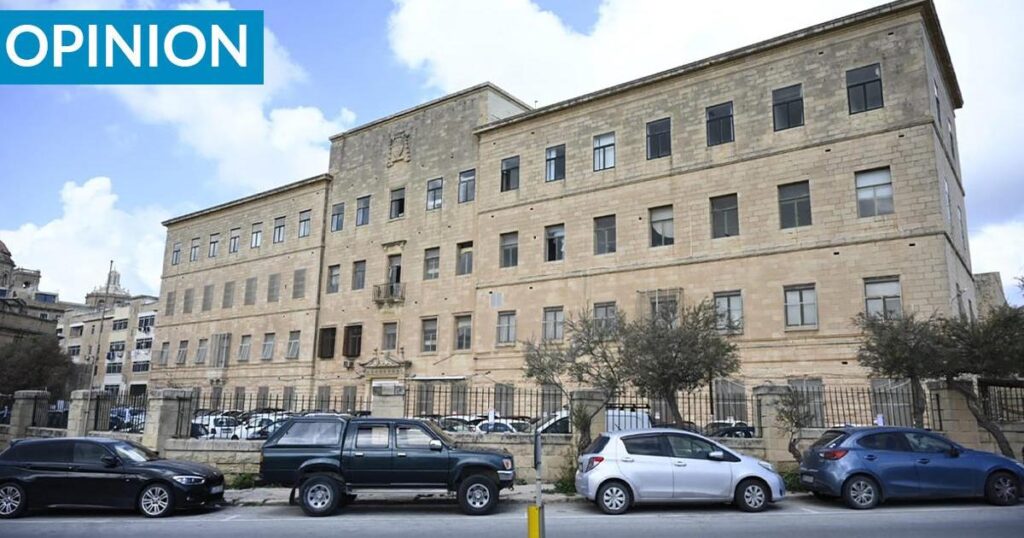
The Evans Building concession was one such opportunity. A 65-year decision that would shape Valletta’s cultural landscape, generate millions for the country, and restore a historically rich yet long neglected corner of our capital city. For our consortium, Valletta Luxury Projects (VLP), it was a chance to create not just a hotel, but a regeneration engine for Lower Valletta.
Yet this opportunity has now slipped away due to a procedural technicality. Not because of the quality of our project, not because of its financial superiority, and certainly not because the competing proposals offered more value to Malta. They did not. Not even close.
The public deserves clarity on what happened. This was the loss of more than €100 million caused by an incorrect procedural interpretation.
During the evaluation process, VLP was asked to correct an arithmetic discrepancy, a clerical issue that did not change the substance of our offer, the concession terms, or the ranking of bids. Such clarifications are standard practice in procurement. They ensure accuracy, not advantage.
Yet the Public Contracts Review Board (PCRB) ruled that the Evaluation Committee should not have requested this correction, rendering our entire bid non-compliant after it had already been evaluated and declared the winner. The PCRB clearly stated in their decree that it was taking this decision despite it being clear that VLP’s bid was of €78 million, €37 million more than the second placed offer.
Over 65 years, once CPI adjustments are applied, this translates to over €100 million more revenue for the Maltese taxpayer.
This interpretation didn’t reflect the materiality of the issue. It didn’t reflect fairness. And it certainly didn’t reflect the national interest.
That is the magnitude of the opportunity lost, decades worth of investment into schools, healthcare, infrastructure, heritage, and community facilities.
It is difficult to understand how a procedural debate over a harmless arithmetic correction can justify sacrificing such immense public value.
Financial value is only one dimension. The true tragedy lies in what Valletta itself has now lost. This was a project built around regeneration, heritage, and community.
Our proposal was not simply about building an exceptional hotel. It was about reviving lower Valletta as a living, breathing cultural district, a part of the city long overshadowed and underserved.
Our commitments included:
1. Rebuilding the Nibbia Chapel – a national landmark lost in World War 2. We committed to exposing, conserving and artistically reconstructing the remains of the Nibbia Chapel destroyed during the war. Our design would have restored its cultural presence through a lightweight steel interpretation, elegant, educational, and respectful of its memory.
2. Revealing the Anatomical Theatre. Through sensitive design, landscaped interpretation, and guided pathways, our project would have brought this forgotten structure back into public consciousness, creating a historical experience unique in Malta.
Are we prioritising process over public value?- Simon De Cesare
3. Creation of a dedicated annual CSR fund for Lower Valletta. VLP committed 1% of the hotel’s annual revenue, totalling over €15-20 million during the concession, to local community and heritage projects.
A number of projects were identified and stated within the bid including:
– Restoration and upkeep of the St Elmo ditch.
– Support for the local primary school.
– Accessibility and mobility projects for elderly residents.
– A sponsored electric bus route for Lower Valletta.
– Street furniture, cultural programming, and public-space enhancements.
– Ongoing artist support, sustainability initiatives, and community events.
These were not aspirational bullet points. They were contractual, costed, and integrated into the fabric of our concession.
4. A hotel designed to honour its archaeological setting. Our design carefully preserved and showcased the site’s historic layers. From the Anatomical Theatre to the Fosos built by the Knights, while at the same time converting the Evans Building into a sustainable, A rated, net zero energy property run by Minor Hotels Group, one of the world’s leading luxury operators through their luxury Anantara brand.
Malta must ask itself a hard question. Are we prioritising process over public value?
When a technical interpretation overrides…
– €100 million in national revenue;
– The restoration of one of Valletta’s most meaningful heritage sites;
– A multi-million-euro CSR commitment to local residents;
– A project designed by leading architects, funded by respected local investors, and operated by a global luxury brand;
… then something is fundamentally misaligned.
International partners watch these decisions. Investors watch them. Cultural institutions watch them. And so do the communities who would have directly benefited from this project’s ripple effects.
Evans Building was a chance to uplift an entire district. To regenerate Lower Valletta. To restore architecture lost to history. To deliver meaningful, reliable revenue to Malta for 65 years. To build a landmark that honoured the past while elevating the future.
This decision did not choose that path.
And while we fully respect Malta’s institutions and the appeals process, it is our responsibility to highlight that this was not the outcome that delivered the greatest good for the country.
VLP strongly disagrees with the decision of the PCRB not only for all the reasons set out above but also because the interpretation is incorrect at law and we will be defending our position in the appeal courts.

Simon De Cesare is CEO of Eden Leisure Group and is writing on behalf of the Valletta Luxury Projects (Eden Leisure Group and Iniala Hotels).