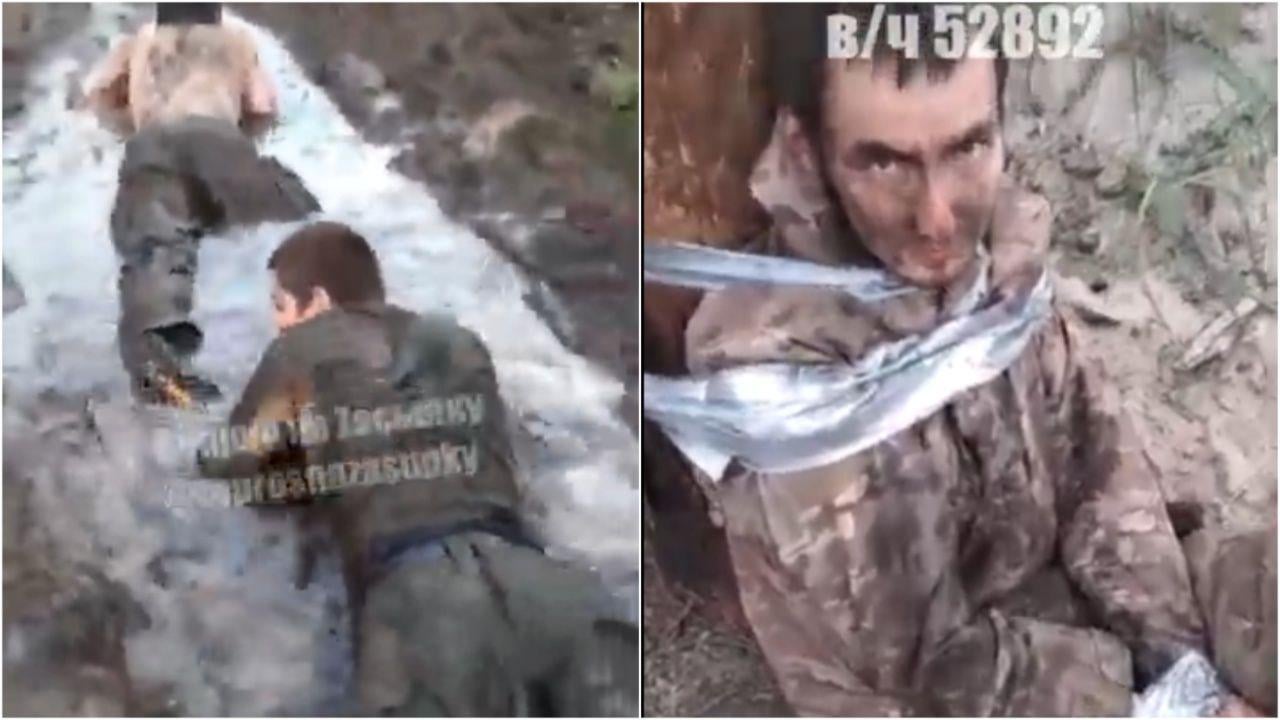
Utterly depraved: Russian commanders regularly ‘torture and kill their own soldiers’
https://tvpworld.com/92233524/russian-officers-torture-and-kill-their-own-soldiers
Posted by dat_9600gt_user

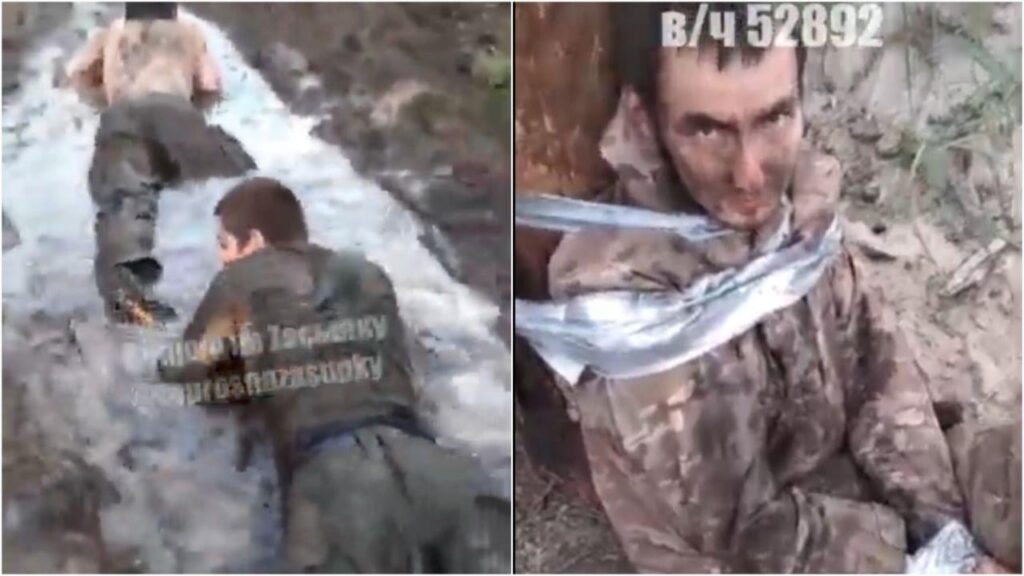
Utterly depraved: Russian commanders regularly ‘torture and kill their own soldiers’
https://tvpworld.com/92233524/russian-officers-torture-and-kill-their-own-soldiers
Posted by dat_9600gt_user
23 Comments
Ruzzians being Ruzzians. Nothing new.
Another Russian monday
Sometimes I question everything.
Good.
>“The Russian army reflects the society from which it’s drawn. And that’s a society in which violence, extortion, and corruption are endemic.
Another reason why borders with russia should be completely closed, even to civilians.
I’m sure all the konfederacja / Braun voters will agree with me – you don’t want violent immigrants being let in, right?
[deleted]
who believes in russian propaganda strong army best army ends up tied to a tree by comrades, that is life in state like gulag
I ain’t stopping them
That’s a Special Education Operation
“electrocution”
Just so people know electrocution is not when you’re shocked. It’s when you kill someone with electricity. (at least it should be used this way.)
Depraved, but also not my problem. They can start a revolution, if they don’t want to end like this.
Also, everyone who votes for pro Putin parties across Europe should know this reality.
Now imagine what these animals will do to civilians on occupied lands. Or don’t imagine and just read hundreds reports from UN about it https://www.abc.net.au/news/2025-09-24/russia-systematically-torturing-ukrainian-civilians-un-says/105809316
> Utterly depraved: Russian commanders regularly ‘torture and kill
Oh no
> their own soldiers’
Oh yes, firsthalfmeme.jpg
Joking aside, we know for a fact that whatever they do to their own they do tenfold to Ukrainians, the sick fuckers. Small consolation.
Orc commanders do the work for the Ukrainians. Can’t be mad.
Daily mail slop
Asewome news.
They are fed from the top down. Need to cut the head off. Publicly. Violently.
Beatings will continue until morale improves
These are orcs, my lord, this is how they operate
**RUSSIA** – “*NATO wants to invade us and take Russia!”*
**The rest of the world** – “*Who the f@#k wants to be a Russian?”*
Less work for the Ukrainians then.
This culture dates back to the 1700s at least. In the 1700s battles were fought pretty much entirely by lining up a wall of muskets and firing at each other until one sise ran away because frankly fuck that shit.
And so a philosophy emerged that soldiers had to be more afraid of their officers than they were of a wall of bullets. And this idea was endemic everywhere. Russian troops were famously near unbreakable during the 7 years war, which isn’t purely grounded in the cruelty of their officers, but it certainly played a role.
The idea persists as nations move to conscript armies, ala ww1, because while battles are no longer dictated purely by “bravery,” conscripts have a nasty habit of wanting to do literally anything but fight.
But post ww1, most armies begin moving to a volunteer structure, where troops want to be there because they believe in the cause, and so in most armies, this culture fades, even if conscription is later instated.
But for those like russia, which have always been conscript armies, it never had the chance to. This isn’t anything uniquely reflective of russia, persay, but is a feature of armies that rely on forcing unwilling people to fight
However the war ends the russian society will more fucked up than before.