
- by croatiaweek
- March 24, 2026
- in
(Photo: Croatian Post)
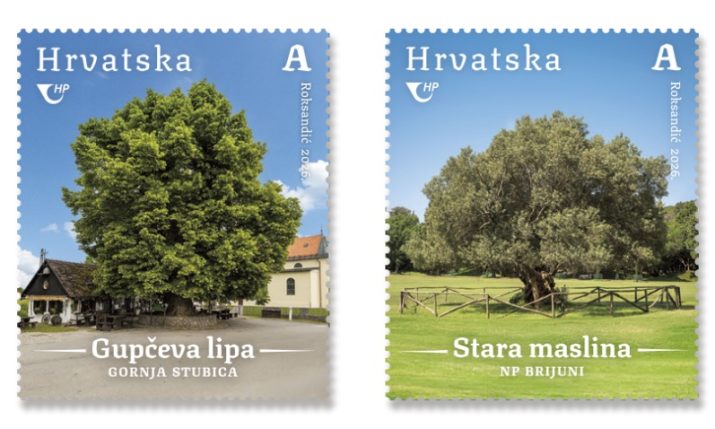
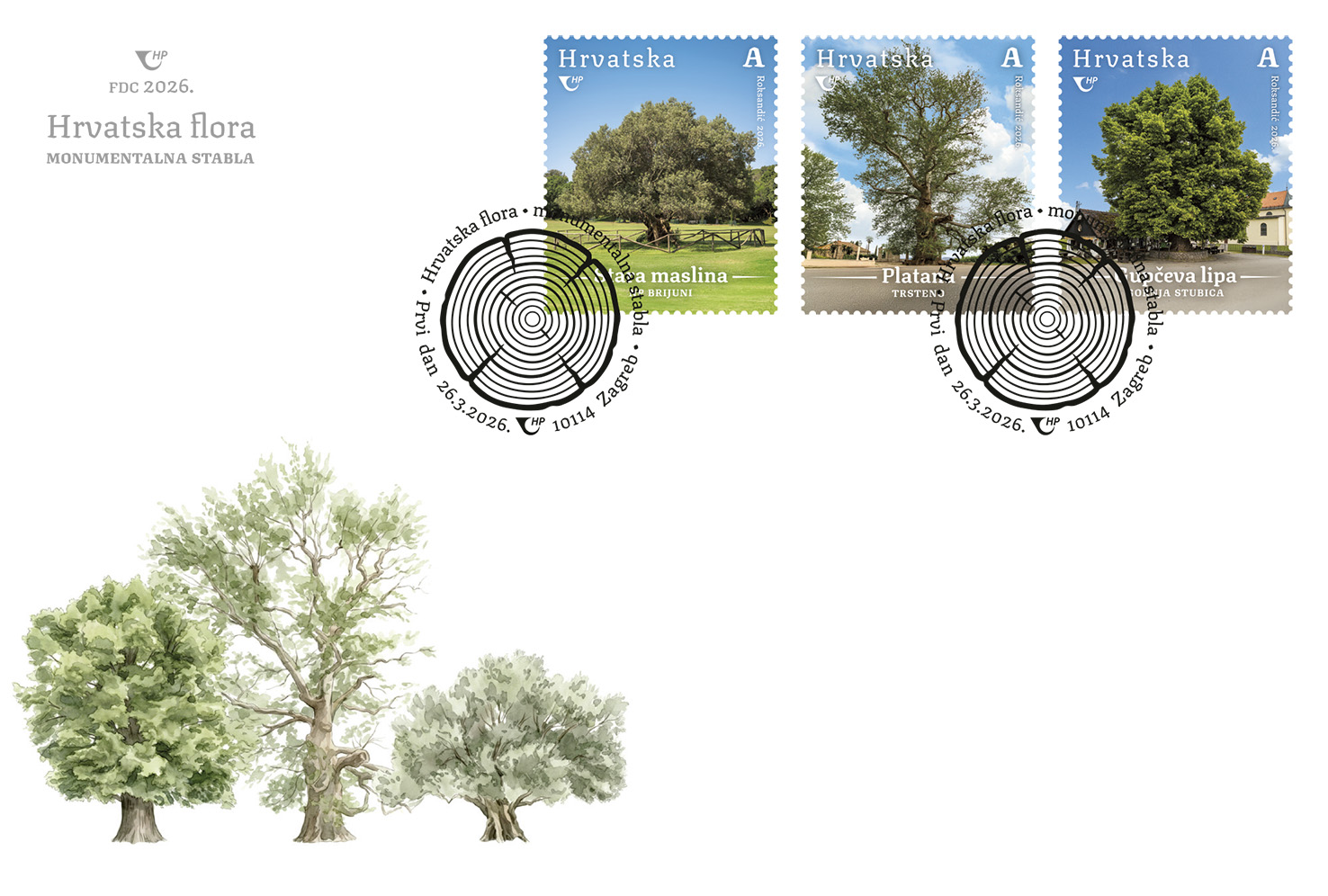
Croatia Post has unveiled a new set of commemorative stamps in its long-running “Croatian Flora” series, celebrating three of the country’s most remarkable and historic trees.
The latest edition highlights Gubec’s linden tree in Gornja Stubica, the ancient olive tree on the island of Brijuni, and the monumental plane tree in Trsteno near Dubrovnik. The stamps were designed by Zagreb-based designer Dean Roksandić.
Gubec’s linden – witness to a historic uprising
(Photo: Croatian Post)
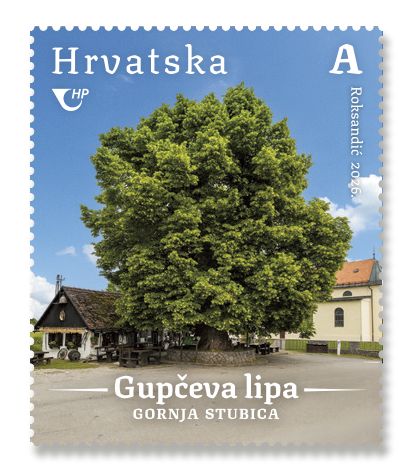
The famous Gubec’s linden tree in Gornja Stubica is protected as a natural monument and is estimated to be more than 450 years old.
According to tradition, the tree was the gathering point where Matija Gubec assembled rebels during the Peasants’ Revolt of 1573, marking the beginning of their fight for justice and rights.
Originally around 30 metres tall, the tree’s height was reduced to about nine metres following severe storm damage in 1945, when a lightning strike hollowed its trunk and strong winds reshaped its crown.
In recent years, efforts have been made to preserve the tree’s genetic heritage. Through cooperation between experts and civil society, around 60 young saplings cloned from the original linden have been produced as part of a conservation project.
Brijuni’s ancient olive – a living relic of the Roman era
(Photo: Croatian Post)
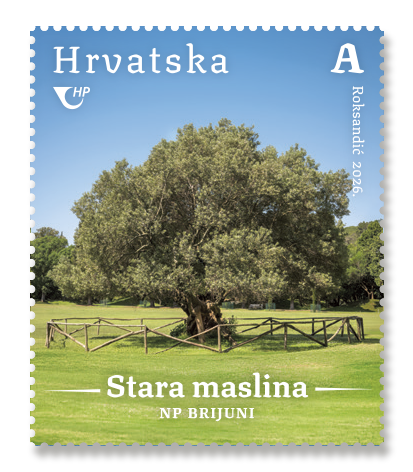
Another tree featured in the series is the old olive tree on Brijuni, one of the oldest olive trees in the Mediterranean.
Standing six metres high with a 26-metre diameter crown, the tree is estimated to be over 1,600 years old, dating back to the Roman Empire. It is the last surviving witness of what was once an extensive olive grove on the island.
Despite its age, the tree continues to bear fruit each year. Every October it produces around 30 kilograms of olives, which are processed into approximately five litres of extra virgin olive oil.
Its long history is reflected in its structure. A powerful storm in the 1970s caused the trunk to split into two sections, leaving a visible mark that remains today.
Trsteno’s giant plane tree
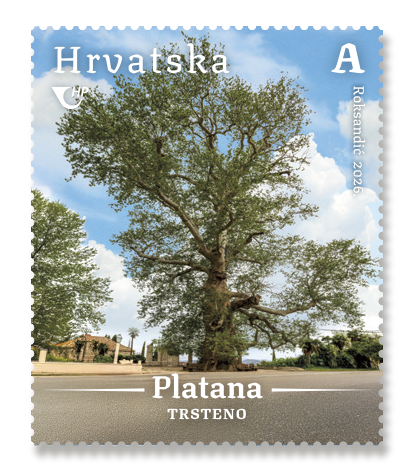
(Photo: Croatian Post)
The third tree honoured in the stamp series is the plane tree in the square of Trsteno, near Dubrovnik.
Standing 12.8 metres tall, it is protected as a monument of park architecture and is estimated to be more than 500 years old.
Legend says the plane trees in Trsteno were planted in the early 15th century by Captain Florio Jakob Antunov, known as Indian. Impressed by the beauty of plane trees along the Bosphorus during his travels, he brought five saplings of the Asian plane tree back to Trsteno and planted them near a freshwater spring.
Today, only two of the original trees remain – the plane tree in the village square and another in a private garden. Their survival is largely attributed to the favourable climate, the nearby water source and generations of local residents who carefully protected them.
Both are considered among the largest plane trees in Croatia and Europe.
The stamps will officially enter circulation on 26 March 2026.