
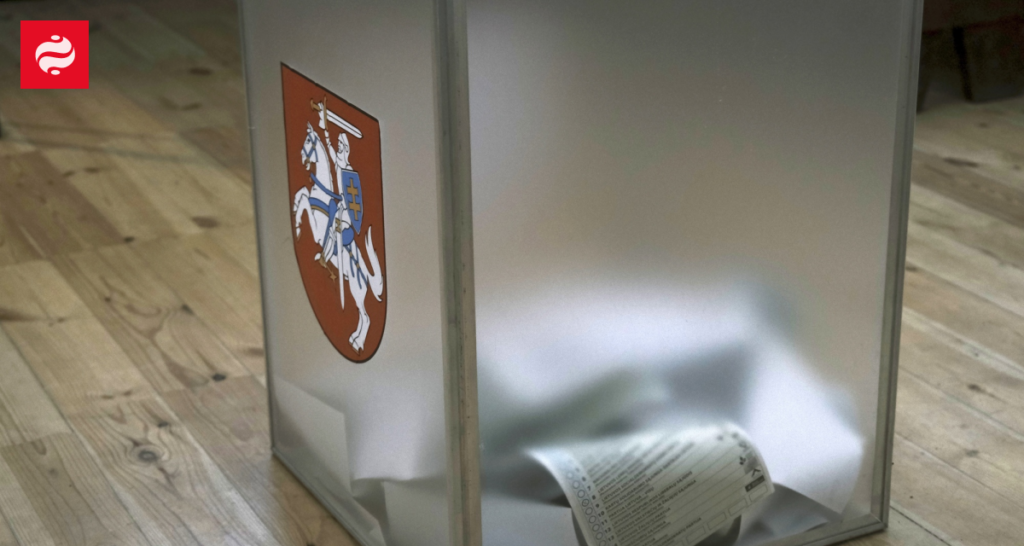
The opposition has proposed amendments that would prohibit citizens of the Russian Federation and Belarus permanently residing in Lithuania from voting or running for office in local elections

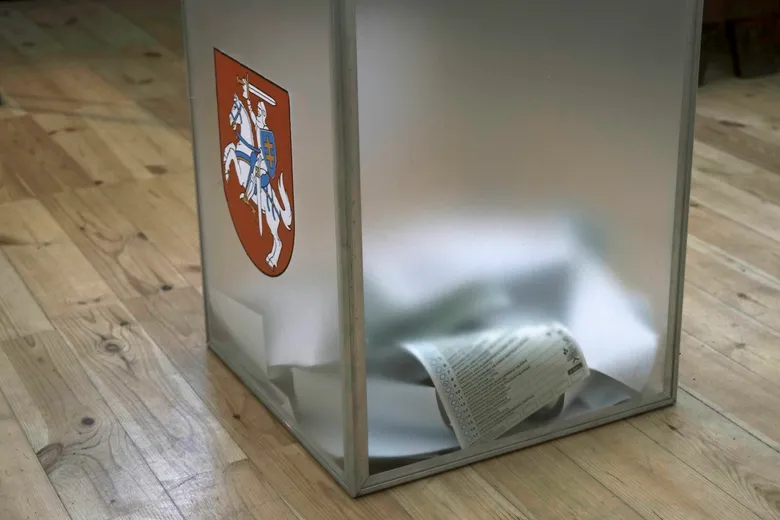 Elections in Lithuania (Photo: Valda Kalnina/EPA)
On Tuesday, March 24, the Lithuanian parliament rejected the opposition’s proposal to amend the Constitution to prohibit Russian and Belarusian citizens permanently residing in the country from voting or running for office in local elections. This was reported by the media LRT.
The amendment was not adopted, as 28 MPs voted in favor, another 28 voted against, and 14 abstained.
One of the authors of the initiative, MP Dalia Asaviciute-Gružauskienė, said that the proposal was prompted by Russia’s full-scale invasion of Ukraine in 2022 and fears of foreign interference in democratic processes.
“We see that Russia is not only waging a conventional war in Ukraine, but is also actively interfering in the elections. Threat assessments conducted by the Department of State Security emphasize that hostile states are using their diaspora to influence our democratic processes,” the MP explained.
She added that during the municipal elections in Lithuania in 2023, about 21,650 foreign nationals had residence permits. Of these, 2476 were citizens of the European Union, and almost 17,000 were citizens of non-EU countries. Among them were 8,800 Russians and more than 3,000 Belarusians.
The MP emphasized that less than 4,300 foreign citizens exercised their right to vote in the last municipal elections and stressed that national security issues should be given priority.
The proposed changes included amendments to both the Constitution and the Electoral Code. According to the plan, only Lithuanian citizens or citizens of countries that meet Lithuania’s “European and transatlantic integration criteria” would be eligible to vote and run for municipal elections.
Currently, Lithuanian law allows permanent residents of a municipality, including foreign nationals with a residence permit, to vote and run for office in local elections.
Why it matters. Russia has been actively interfering in elections in various countries, including European states, using political, financial, and informational influence to destabilize, support pro-Russian forces, or influence the outcome. Methods include cyberattacks, spreading disinformation, and financing certain political figures. In particular, there is evidence of interference in Romania and Hungary.
- January 6, 2026 Department of Migration of Lithuania reported that he might consider revoking the residence permit of Navalny’s associate Volkov. The outrage was caused by the published correspondence with the Russian, in which he rejoices in the murder of RDC commander Kapustin which turned out to be staged by the GUR, and criticizes Ukrainian officials.
- The Lithuanian Prime Minister believes statements of the Russian “oppositionist” against Ukrainian officials are unacceptable. In her opinion, Volkov should not stay in Lithuania.
- Eventually, Volkov was allowed to stay in Lithuania after his scandalous statements about Ukrainian officials and the military.