
All 11 International Labor Organization indicators for forced labor identified in testimonies by North Koreans working Russia
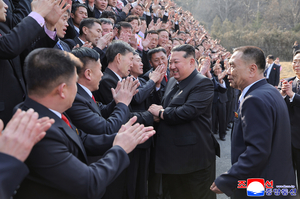
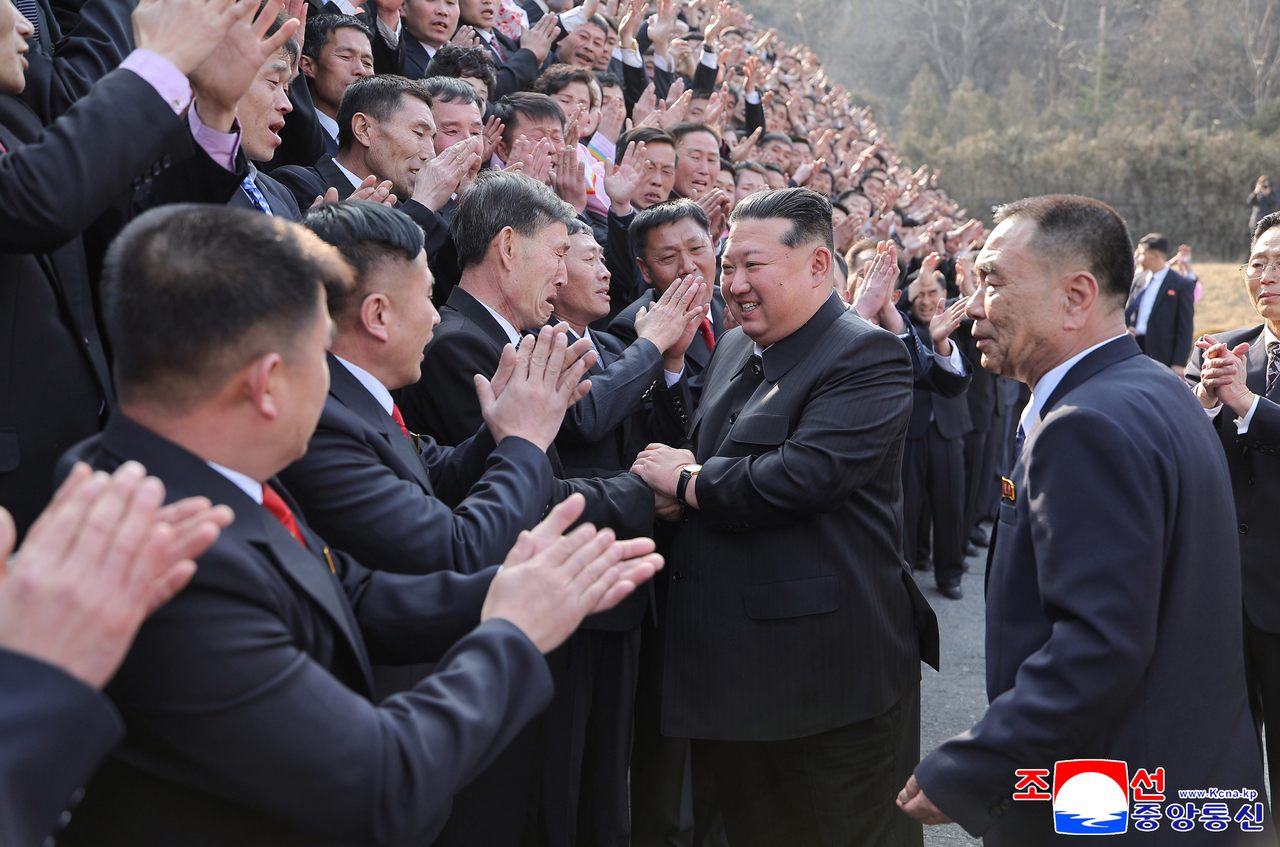 North Korean Supreme Leader Kim Jong-un (second from right) shakes hands with mine workers in the South Pyongan Province on March 15. (Yonhap)
 North Korean workers deployed to Russia are subjected to grueling work shifts, constant surveillance and severe wage deductions, with some left taking home as little as $10 a month, according to a report released Wednesday by a human rights group.
The Netherlands-based Global Rights Compliance, citing interviews with 21 North Korean laborers at construction sites in Russia, said workers typically labored around 14 hours a day for up to 364 days a year.
“I felt like they thought our lives were worth no more than insects,” one 50-year-old worker said in an interview with GRC.
The use of North Korean overseas labor violates United Nations sanctions, which prohibit member states from issuing work permits to North Korean nationals and require the repatriation of those earning income abroad. Despite this, a UN report in 2024 estimated that more than 10,000 North Koreans were working in about 40 countries.
GRC said Pyongyang continues to send workers overseas to generate foreign currency, bringing in hundreds of millions of dollars annually, according to UN estimates.
Harsh conditions and surveillance
Workers described harsh living conditions, including makeshift dormitories converted from shipping containers, often without heating and shared by up to 20 people sleeping on plywood bunks. Some said the facilities were infested with cockroaches and bedbugs.
Access to basic hygiene was limited, with some workers reporting they were allowed to shower only once or twice a year. Workdays regularly exceeded 12 hours and could stretch to 16, with few or no rest days.
Workers also reported constant monitoring by supervisors and fellow laborers.
“Spies report people who browse the internet or watch foreign films,” another worker said, adding that those caught faced punishment, including being sent back to North Korea for interrogation.
“I can’t shake the feeling of being watched,” said a 64-year-old worker. “That psychological anxiety is the hardest part.”
The report also documented cases of physical abuse and threats against workers’ families in North Korea. One worker said he was beaten so severely he could not work for two weeks. Even injured workers were expected to continue working, another said: “You have to treat yourself.”
The rights group said the conditions meet the International Labour Organization’s definition of forced labor.
Pay deduction and coercion
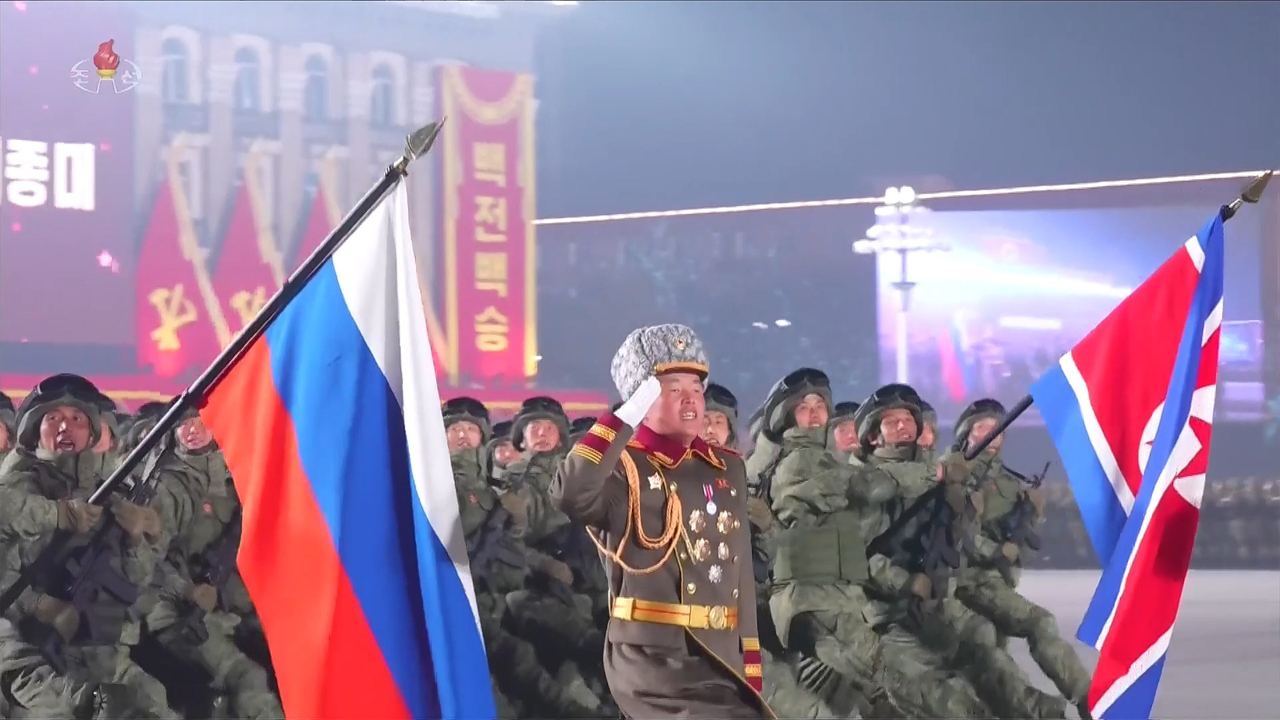 North Korean soldiers who fought in Ukraine fly the North Korean flag (right) and the Russian flag as they march during a military parade in Pyongyang on Feb. 26. (Yonhap)
 Despite the conditions, many workers sought overseas assignments in hopes of supporting their families.
But the report said exploitation begins before departure. Workers often pay bribes to secure overseas postings, only to face mandatory monthly quotas ranging from $400 to $750 once abroad. While the average monthly wage was about $800, deductions for travel, food and state-imposed quotas left some workers with as little as $10, the report said.
Workers were required to meet quotas “by whatever means possible,” with unpaid balances carried over, pushing some into risky or exploitative side jobs.
Failure to meet quotas could prevent workers from being sent abroad again, while officials sometimes visited families in North Korea to demand unpaid amounts, occasionally using violence.
Workers’ movements were tightly controlled, with restricted phone access, monitored communications and confiscated passports. Many said they did not even know the name of their employer, obscuring accountability and helping companies evade sanctions.
Selection for overseas work often prioritized those with families, increasing leverage over them if they failed to comply.
The report said many workers were deployed to meet labor shortages in Russia amid the war in Ukraine.
Global Rights Compliance called on governments and international organizations to strengthen oversight and protections for workers.
“The ultimate goal is the abolition of state-led forced labor,” said Kim Ye-ji, a North Korea adviser to the group. “But workers need immediate relief, including reasonable hours, guaranteed wages and safe ways to leave exploitative conditions without punishment.”
seungku99@heraldcorp.com