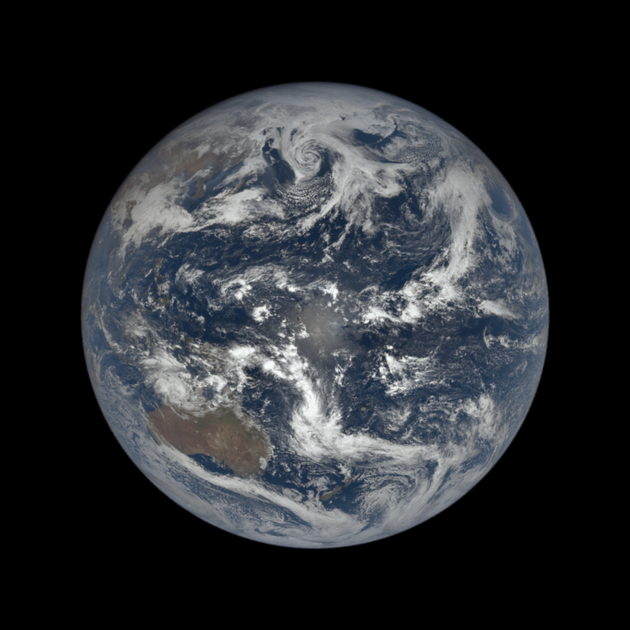
Rocks found in Western Australia indicate that sections of the Earth’s crust were already undergoing shifts long before the first continents emerged. These early movements played a significant role in the formation of continents, oceans, and the environment conducive to life, something unique to our planet among those in our solar system, which also helps us understand how other planets like Mars and Venus evolve.
Tushe on
I find that very difficult to believe, and prove.
ShadowBracken on
It’s the only planet we know of. Not ‘The Only Planet’.
BackItUpWithLinks on
> How unique is Earth? It’s the only planet **in our solar system** with active plate tectonics, and new evidence shows it started 3.5 billion years ago
FTFY
GMAN7007 on
From what we can observe it’s unique. That being said with how many galaxies and planets there are I doubt it’s unique at all. There could be billions of planets that are near identical to earth with how many planets are in the observable universe. Now think about all of the planets we can’t see.
Nulovka on
Doesn’t Io have plate tectonics? It has lots of volcanoes.
danathome on
It’s so unique that it’s the only planet we know about with life.
DigBetter7850 on
I guess it is very rare. It also have a very big moon. Continents above water. Liquid water. Atmospere. Powerful magnetic field.
IceMysterious3056 on
Have we looked into billions of other planets to say “only planet” with active plate tectonics? I suppose within our solar system, it makes sense.
Fritzo2162 on
Interesting note on plate tectonics- It’s thought to be essential for any civilization to become advanced. Heavy metals sink toward the core when a planet is being formed. Without a process to bring these heavy metals to the surface, an emerging civilization would not have the materials needed to create advanced technology…they would literally be stuck in a perpetual stone age.
sirbruce on
> Earth is the only planet in the solar system known to have active tectonic plates.
This is old dogma that we now know is no longer correct. We now have evidence of recent (millions of years) active tectonics on both Mars and Venus.
PickingPies on
Fun fact. There are 3 times 10 to the power of 23 planets in the universe. That’s a 3 followed by 23 zeroes.
But, if life to appear would require 24 independent ingredients or conditions that only has 10% chance of happening in a planet, there would be on average less than 1 planet with life in the observable universe.
It would only require 12 independent ingredients with less than 1% chance of happening in a due planet.
It would require 78 independent ingredients or conditions with a 50% of happening. This implies that, if in order for life to appear, each planet had to throw 78 coins and life appears if all of them land on heads, then, on average, there will be less than 1 planet with life per observable universe.
Destination_Centauri on
So… I have to say that this is a REALLY weird and highly annoying title by this blogger!
Sorry!
Don’t mean to criticize too much in life, but I can’t help it in this case. It’s a very triggering title because obviously we all know that there are countless trillions of terrestrial planets in the universe, and we’ve only just begun our exploration.
So that choice of title is… just… so… idiotic and weird for a space exploration fan?
I don’t get it.
—————————
ANYWAYS…
Now that said… there is actually an argument to be made that Earth might possibly be extremely unique in the entire universe!
It’s called:
“The Rare Earth” hypothesis.
A good example of that topic being more properly explored is the futurist and physics major, Isaac Arthur, once did a fairly deep dive episode on this topic, on his [Youtube Channel](https://www.youtube.com/@isaacarthurSFIA/videos).
By the end of that video by Isaac, when he did a rough back-of-the-napkin calculation of the odds… He estimated that there should only be 1 or 2 Earths, per known Universe dimensions, that would replicate our planet’s formation!
So… if life actually does require a huge portion of many of the conditions that formed Earth he covered… then… that means there should only be 1 or 2 planets in the entire friggin observable Universe that have a modern-advanced civilization like humanity has at present!?
Those calculations involve things like, sure plate tectonics, but also a wide array of other factors like an unusually large stabilizing moon nearby (to calm down and regulate axial tilt oscillations, etc…)
——————————–
Now note: even Isaac himself doesn’t just blindly accept that result, and neither do I!
It was a mostly fun calculation exercise, which just shows how rare Earth type life might be, but he acknowledges that Earth type life could also be all over the place!
The point being: we don’t know, yet.
So in the end: if you’re going to write a title like this blogger did, then you’re going to have to do a lot better and deeper dive analysis (like Isaac Arthur did) than just saying:
“Plate tectonics!”
Like ya, no, sorry:
Plate tectonics is NOT, alone, the answer to the Fermi Paradox! Come on.
Punka2D on
Yes it’s the active tetonics that make her distinctive.
ChipsAhoy2022 on
Quite bold to claim when the only other rocky planet we can actually reach with boots on the ground to test this is Mars.
And rest of the exp-planets are blurred blobs on an image (or numbers in a dataset) to tell this definitively
Infarlock on
I mean we can exclude the gas giants since they’re gassy
We probably don’t know much regarding tectonic plates on the other 3 planets (Maybe on Mars?)
And don’t forget about the moons in our solar system, which aren’t planets though. Not to mention exo planets which we will never step on in the next million years anyway (Please don’t roast this comment 100,000 years from now)
mthenry54 on
The only planet that we know of that has plate tectonics. Given how many exoplanets that we’ve spotted so far & how many are likely to be out there, there’s bound to be more planets with active plate tectonics.
iammaffyou on
How would, or could, scientists find a way to know if there are active plate tectonics on another planet?
Markinarkanon on
A pedantic title defense: there are only 8 bodies in the universe that we define as “planets,” which are celestial bodies of a certain size that orbit the sun. Bodies that orbit other stars are known as exoplanets. This blogger leveraged this fact to give you a clickbait title that is *technically* correct but sounds wildly shortsighted and self-centered.

19 Comments
Rocks found in Western Australia indicate that sections of the Earth’s crust were already undergoing shifts long before the first continents emerged. These early movements played a significant role in the formation of continents, oceans, and the environment conducive to life, something unique to our planet among those in our solar system, which also helps us understand how other planets like Mars and Venus evolve.
I find that very difficult to believe, and prove.
It’s the only planet we know of. Not ‘The Only Planet’.
> How unique is Earth? It’s the only planet **in our solar system** with active plate tectonics, and new evidence shows it started 3.5 billion years ago
FTFY
From what we can observe it’s unique. That being said with how many galaxies and planets there are I doubt it’s unique at all. There could be billions of planets that are near identical to earth with how many planets are in the observable universe. Now think about all of the planets we can’t see.
Doesn’t Io have plate tectonics? It has lots of volcanoes.
It’s so unique that it’s the only planet we know about with life.
I guess it is very rare. It also have a very big moon. Continents above water. Liquid water. Atmospere. Powerful magnetic field.
Have we looked into billions of other planets to say “only planet” with active plate tectonics? I suppose within our solar system, it makes sense.
Interesting note on plate tectonics- It’s thought to be essential for any civilization to become advanced. Heavy metals sink toward the core when a planet is being formed. Without a process to bring these heavy metals to the surface, an emerging civilization would not have the materials needed to create advanced technology…they would literally be stuck in a perpetual stone age.
> Earth is the only planet in the solar system known to have active tectonic plates.
This is old dogma that we now know is no longer correct. We now have evidence of recent (millions of years) active tectonics on both Mars and Venus.
Fun fact. There are 3 times 10 to the power of 23 planets in the universe. That’s a 3 followed by 23 zeroes.
But, if life to appear would require 24 independent ingredients or conditions that only has 10% chance of happening in a planet, there would be on average less than 1 planet with life in the observable universe.
It would only require 12 independent ingredients with less than 1% chance of happening in a due planet.
It would require 78 independent ingredients or conditions with a 50% of happening. This implies that, if in order for life to appear, each planet had to throw 78 coins and life appears if all of them land on heads, then, on average, there will be less than 1 planet with life per observable universe.
So… I have to say that this is a REALLY weird and highly annoying title by this blogger!
Sorry!
Don’t mean to criticize too much in life, but I can’t help it in this case. It’s a very triggering title because obviously we all know that there are countless trillions of terrestrial planets in the universe, and we’ve only just begun our exploration.
So that choice of title is… just… so… idiotic and weird for a space exploration fan?
I don’t get it.
—————————
ANYWAYS…
Now that said… there is actually an argument to be made that Earth might possibly be extremely unique in the entire universe!
It’s called:
“The Rare Earth” hypothesis.
A good example of that topic being more properly explored is the futurist and physics major, Isaac Arthur, once did a fairly deep dive episode on this topic, on his [Youtube Channel](https://www.youtube.com/@isaacarthurSFIA/videos).
By the end of that video by Isaac, when he did a rough back-of-the-napkin calculation of the odds… He estimated that there should only be 1 or 2 Earths, per known Universe dimensions, that would replicate our planet’s formation!
So… if life actually does require a huge portion of many of the conditions that formed Earth he covered… then… that means there should only be 1 or 2 planets in the entire friggin observable Universe that have a modern-advanced civilization like humanity has at present!?
Those calculations involve things like, sure plate tectonics, but also a wide array of other factors like an unusually large stabilizing moon nearby (to calm down and regulate axial tilt oscillations, etc…)
——————————–
Now note: even Isaac himself doesn’t just blindly accept that result, and neither do I!
It was a mostly fun calculation exercise, which just shows how rare Earth type life might be, but he acknowledges that Earth type life could also be all over the place!
The point being: we don’t know, yet.
So in the end: if you’re going to write a title like this blogger did, then you’re going to have to do a lot better and deeper dive analysis (like Isaac Arthur did) than just saying:
“Plate tectonics!”
Like ya, no, sorry:
Plate tectonics is NOT, alone, the answer to the Fermi Paradox! Come on.
Yes it’s the active tetonics that make her distinctive.
Quite bold to claim when the only other rocky planet we can actually reach with boots on the ground to test this is Mars.
And rest of the exp-planets are blurred blobs on an image (or numbers in a dataset) to tell this definitively
I mean we can exclude the gas giants since they’re gassy
We probably don’t know much regarding tectonic plates on the other 3 planets (Maybe on Mars?)
And don’t forget about the moons in our solar system, which aren’t planets though. Not to mention exo planets which we will never step on in the next million years anyway (Please don’t roast this comment 100,000 years from now)
The only planet that we know of that has plate tectonics. Given how many exoplanets that we’ve spotted so far & how many are likely to be out there, there’s bound to be more planets with active plate tectonics.
How would, or could, scientists find a way to know if there are active plate tectonics on another planet?
A pedantic title defense: there are only 8 bodies in the universe that we define as “planets,” which are celestial bodies of a certain size that orbit the sun. Bodies that orbit other stars are known as exoplanets. This blogger leveraged this fact to give you a clickbait title that is *technically* correct but sounds wildly shortsighted and self-centered.