
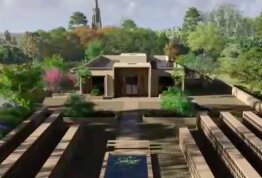
 A render of the proposed crematorium at Tal-Ħorr, Paola, located less than 26 metres from the Addolorata cemetery
The Planning Authority board on Thursday postponed a decision on what would become the country’s first standalone crematorium, after members expressed serious reservations about emissions, environmental impact and the appropriateness of deferring critical assessments to a later stage.
The hearing, which drew objections from three local councils and sustained skepticism from board members themselves, was adjourned to 23 April.
The applicant, Active Group Limited, has been asked to arrange an online presentation by its Spanish engineering consultant on the emissions study submitted to the Environment and Resources Authority (ERA).
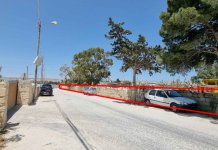
The site in question, a 7,800 square metre plot at Tal-Ħorr, Paola, just 26 metres from the perimeter of the Addolorata Cemetery, sits on agricultural land designated as outside the development zone (ODZ).
The proposed complex features a ground-floor public area with a multi-purpose ceremony hall, reception, viewing room and the cremation chamber itself. Below, a basement level houses a mortuary, cold room, and two columbariums for storing ashes, alongside essential infrastructure including water reservoirs and a garage. Under the crematorium policy approved in September 2024, the facility is limited to a footprint of 500 square metres and a height of 7.7 metres.
While the Agriculture Advisory Committee initially objected to the loss of land, it eventually cleared the project after an agronomist’s report concluded the site has low agricultural value. The committee further acknowledged the national interest of such infrastructure, noting that crematoria often require rural locations to maintain necessary buffer distances from residential zones.
The proposed complex, designed to handle up to 25 cremations weekly (potentially catering to 30% of all funerals in Malta within a decade), would include a ground-floor crematorium with a footprint of 500 square metres, ancillary facilities, and two levels of underground parking and logistics.
The Paola and Santa Luċija local councils voiced firm opposition during today’s meeting. The Paola mayor, Jason Silvio, argued that his locality had already shouldered a disproportionate environmental burden. “The previous power station, the abattoir, the prisons, the new health centre, all are concentrated in this area,” he said, adding that the council was united against the proposal not out of opposition to the applicant, but because the cumulative impact on residents had become intolerable. “No more emissions,” he said.
Santa Luċija council raised additional concerns, noting that the site falls within a designated strategic open gap and lies less than 200 metres from the Serenity Garden and a nearby school. The council also flagged proximity to an archaeologically sensitive area and questioned the lack of clarity regarding fuel types and fumes.
Policy and controversy
The application is being steered by Robert Musumeci, a lawyer and architect widely known for his role in shaping planning policy and representing high-profile development projects.
Musumeci argued that the application was in line with the crematorium policy approved by the authority in September 2024 and was a project of national strategic importance.
“A strategic open gap does not mean no development can be made,” he said. “Development is allowed because this project is not one of heavily urbanised landscape.”

He insisted the project was not industrial in nature, noting that crematoria were regulated by a specific ad hoc policy that set criteria, locations and operational requirements.
Asked whether he had been involved in drafting the crematorium policy, Musumeci responded angrily, denying any involvement. “Absolutely no. I categorically had nothing to do with any subsidiary policy on crematoria,” he said, repeating that he had never, does not and will never have anything to do with subsidiary policies.
The exchange drew an attempt by the board chairman Emanuel Camilleri to shield Musumeci, who was told there was no need to answer as the matter was unrelated to the decision.
Emanuel Camilleri made several interventions during the hearing. He noted that he had lived in Australia for 30 years and had never heard of problems with emissions from crematoria during his time there.
At one point, the chairman remarked that the discussion brought to mind “Holocaust movies of emissions from concentration camps” and suggested it would be better for experts to give a presentation on the emissions studies.
The board’s decision is particularly heavy given the competitive landscape. With the PA having previously shot down proposals to limit cremation to a single state-owned facility, this private bid is currently racing against a pending application in Siġġiewi, located near the historic Ta’ Brija Cemetery.
Given that current projections suggest one facility could satisfy the majority of Malta’s demand, the Paola decision could effectively determine the sole provider for the next decade.
The applicant was pressed to clarify what assurances he could give on fuels, combustion impacts and emissions levels, which objectors argued would be on an industrial scale. He said the facility would use the latest technology with “negligible emissions” and would fully meet ERA requirements, though he added that he did not have the details of the submitted report at hand.
The PA’s architect noted that because the application was at outline stage, ERA would not have gone into specifics such as fuel types, combustion processes and pollution levels. However, the chairman quickly interjected that ERA had not objected. The board architect responded that while ERA had not objected, such details would need to be addressed as reserved matters at a later stage.
Objectors insisted that emissions impact must be discussed and analysed at the outline stage, not deferred.
Moreover, several board members called for a postponement, arguing the applicant should be given time to present the emissions studies to the board. One board member noted that reserved matters should encompass not only emissions but also combustion details, light pollution and fuel storage, and that a dispersion model must be considered before any outline approval was granted.
The hearing was adjourned to allow the Spanish engineer to present the emissions study. unanswered. Cremation was legalised in Malta in 2019, with standalone facilities permitted under the Cremation Act of 2022. Families currently seeking cremation must arrange services abroad, typically in Sicily or the UK, at a cost of around €4,500.

