
If you wanted evidence that horseracing in Denmark might be on the up, you only need to look at the results at Meydan on January 30.
First up, the Soren Jensen-trained Taifuu was a surprise winner of a conditions race for three-year-old fillies, outpointing a runner of Charlie Appleby’s, while Great Wish, from the acclaimed Danish stable of Bent Olsen, then caused an even bigger shock when landing a Listed sprint.
That the country can make a splash on a world stage should not be such a turn-up given Donovan, the hero of the 1889 Derby and St Leger, was out of the Danish-bred mare Mowerina, who lends her name to their 1,000 Guineas.
“She gave me a great deal of pleasure and it was extraordinary, a great thrill,” Jensen says of Taifuu, whose dam, grandam and great grandam were also bred in Denmark. “It was very good for Danish racing and Scandinavian breeding to show we can compete.”
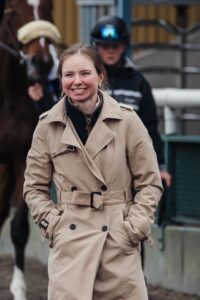 Jensen and Olsen are among the old school Danish trainers whereas enthusiastic Swedish native Kajsa Lindsjo (left) only started training there last year.
“Before Taifuu’s race, the commentator was saying how much she and the other Scandinavian horses had to prove, so it was nice to see her win the way she did,” she says. “It was a very big thing.”
Danes are seen as natural horsemen whose impact on the sport might be bigger than initially suspected.
Kevin Stott, a talented Group 1-winning jockey in Britain, Ireland and New Zealand, is a well-known name from an admired racing family, while William Buick’s mother Maria is also Danish.
Thore Hammer Hansen has been champion jockey in Germany, where he was born, for the last two seasons, but his father Lennart reached the top level as a rider and is Danish too, as is the Norwegian-based Niels Petersen, a multiple scorer at Group level as a trainer who has also tasted success in Dubai.
Dano-Mast, sold as a yearling from Britain in 1997, has claims to the title of Denmark’s greatest horse after he went on to win the Prix Dollar in 2002 and finish a fine third in the same year’s Hong Kong Cup.
He was second in the Danish Derby in 1999 while the nation also has an Oaks, which is run over the conventional distance as is their 2,000 Guineas and 1,000 Guineas, while the 1m6f St Leger is the longest race in Denmark, which has borrowed plenty of elements from Britain, including a preference for competing on turf.
Klampenborg, on the outskirts of Copenhagen, is the main track and hosts 20 racedays (mostly on Saturdays) from April to November, including the Classics, although meetings – organised alongside the activity of trotting – also take place at the provincial circuits of Odense, Aarhus and Aalborg.
Around 230 races are scheduled each year and are contested by approximately 250 horses in training, which are split between 14 professional trainers and a handful of amateurs, although inter-country runners from Sweden and Norway are frequent and vice-versa.
The sport is funded through gambling on a pari-mutuel basis and with betting operators
Cards tend to feature nine or ten races and include plenty of handicaps, which can easily get the maximum field of 15, although conditions contests for two and three-year olds attract fewer runners.
The sport is funded through gambling on a pari-mutuel basis and with betting operators, although yield is said to be going the wrong way. There is, however, a passion for punting among Danes and a deal by Swedish giant Aktiebolaget Trav och Galopp (AGT) to acquire the parent company of Bet25, a major player in the Danish market, in 2019 could yet revive things.
Breeding is not on a massive scale with about 115 foals born each year. The ex-Marco Botti-trained Mill Reef winner Moohaajim, a former Rathbarry Stud resident, is seen as a sire going places, while Flemming Velin has been active in recruiting former Coolmore horses Courage Under Fire, Wentworth and Giuseppe Piazzi to stand in Denmark, where a yearling sale occurs every year for horses bred in Scandinavia or imported as foals.
It is worth noting the 2,000 Guineas and Derby, which is the most valuable event in the calendar with prize-money of around £116,000, and St Leger are restricted to those reared in Denmark, Norway or Sweden. The 1,000 Guineas and Oaks do not feature such caveats because of the attraction of strengthening the local gene pool with foreign blood.
Only one bona fide Pattern race exists in the Danish programme, the Scandinavian Open Championship, which is staged in May. It is a Group 3 over a mile and a half for three-year-olds and above, although it does not boast the prestige of the Derby, and, according to the Racing Post, was worth just over £27,000 to the winner last year; the site details the Lady Herries-trained Harbour Dues earned nearly £60,000 when he prevailed under Pat Eddery before a Melbourne Cup fourth in 1997.
Denmark has a great chance of building on that momentum
It is held at Klampenborg, which opened in 1910, although traces of the industry date back to the 18th century and Dansk Galop, the domestic racing authority, was established in 1859. However, 2014 was a pivotal year in its history as it is when new, forward-thinking owners took over the country’s main venue.
“The atmosphere at Klampenborg is as close as you can get to the UK,” says Lindsjo, a former apprentice who spent three and a half years working for Ed Walker.
“On the opening day of the season, there are almost 5,000 people and it’s just handicaps – no big races. If you sell a horse and want people to commit to the sport, you need to be able to give them the whole thing, not just having a horse in training. It should be entertaining. If you go to Jagersro in Sweden there are never more than 100 people – it’s like going to Wolverhampton on a Thursday night!
“Since I’ve been in Denmark, my owners have invested more because they like the idea of going to the races and it being fun.”
Klampenborg, where most trainers are based, might be blessed with its scenic surroundings and setting, but officials have not relied on that alone, starting syndicates among other initiatives.
“They committed to turning it around and now it’s a big thing for people to go to the races,” adds Lindsjo, who has horses for former Lambourn trainer Mikael Magnusson.
Ten years ago, a taxi driver wouldn’t even know where Klampenborg was; now he would
Her views are echoed by Jensen, one of Denmark’s most successful trainers along with Olsen, and Filip Zwicky, who admits he might possess a biased view having grown up close to the track and worked there as a press officer.
He is also a journalist, ex-jockeys’ agent and Goffs’ Scandinavian representative, while owning and breeding horses provide him with a complete view of the industry.
“It’s getting more and more popular,” he says proudly. “Ten years ago, a taxi driver wouldn’t even know where Klampenborg was; now he would.”
Zwicky describes the efforts of Klampenborg executives as “marvellous”, highlighting their use of social media to attract the next generation of racegoers and potentially owners.
Jensen has not benefited from that yet and Lindsjo reckons “we’re slowly getting there in terms of those people becoming owners”, but Zwicky sees positives and recognises the ownership landscape has changed from the “counts, barons and royalty”.
He points out Denmark, Norway and Sweden all “need each other”, yet says: “Nobody would argue that Denmark is the country with the momentum at the moment. The wins in Dubai showed that.
“My hopes are the sport survives because the economy is not easy, but I think Denmark has a great chance of building on that momentum. The most important thing is people committing to it and investing, and winning in Dubai is the type of thing that makes people dream, which is crucial.
“We’re in a very nice place.”
‘We’ve silenced the haters over the whip’
Jump racing has not been a thing in Denmark for a while and neither has the whip in the last few years, although its absence has not had the negative impact some advocates feared.
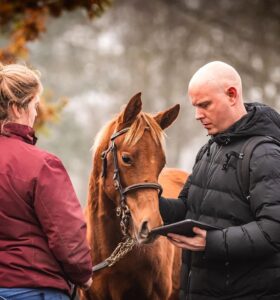 According to Filip Zwicky (right), it was a lack of interest and difficulty sourcing horses and jockeys that derailed jump racing, but banning the whip was due to “welfare”.
“The jockeys can carry it for safety in two-year-old races and if horses are green and hang, a rider can use it in certain places,” he explains.
“I was one of the people who said, when they banned it, we might as well kill everything. We weren’t going to breed the fastest horses and wouldn’t know how good they would be because you can’t use the whip. I know the Swedish racing authority has done quite a bit of research on it and they’ve found the horses aren’t running slower – the fractions are the same without the whip.
“For welfare reasons and how people watch the sport, I’m sure it was the right thing to do because racing has gone brilliantly without it. It just took time for people to adjust.”
Not afraid to admit he has had a change of heart, Zwicky adds: “I thought it would destroy the sport, but it hasn’t. The other good thing is you’ve silenced the haters. There’d be people at the racecourses with signs saying we beat the horses, but we can say to them now that we’re not hitting horses.”