

- Brief introduction
- Public support for the war is waning in the United States
- Japan, caught between Washington and Tehran
- Iran turns the Strait of Hormuz into a “toll booth”
- Trump extends deadline for attacking Iranian power plants until 6 April
- Financial markets plummet amid war uncertainty
- The IOC bans transgender women from competing in women’s events
- Media rack
- Editorial
Brief introduction
The war in the Middle East enters its twenty-seventh day with a deeply ambiguous negotiating dynamic, dominated by contradictory messages emanating from Washington and Tehran in equal measure.
President Trump has extended for a second time—now until Monday 6 April—his ultimatum not to attack Iranian energy facilities, claiming that talks are “going very well”, whilst Tehran simultaneously denies that any negotiations are taking place and turns the Strait of Hormuz into a lucrative toll booth charged in yuan. The financial markets, which do not tolerate uncertainty, have responded with their biggest fall since the start of the conflict: the S&P 500 lost 1.74 per cent and the NASDAQ around 2.4 per cent.
Public support for the war is waning in the United States, Japan is performing its usual balancing act between Atlantic loyalty and its own strategic interests, and the International Olympic Committee has taken a historic — and sensible — decision regarding the women’s category in elite sport. Six news items which, taken together, paint a picture of a world in which strategic clarity is in short supply at the same rate as the price of oil is rising.
Public support for the war is waning in the United States
Facts
The latest Pew Research Center survey, conducted between 16 and 22 March 2026 among a sample of 3,524 American adults, reveals that 59 per cent of respondents believe the decision to launch a military strike against Iran was wrong, compared with 38 per cent who support it. Forty-five per cent believe the operation is not going well, whilst only twenty-five per cent consider it successful. The partisan divide is vast: ninety per cent of Democrats disapprove of Trump’s handling of the situation, compared to sixty-nine per cent of Republicans who support it.
The mid-March Emerson poll shows 47 per cent opposition compared to 40 per cent support. The Economist/YouGov poll is even harsher: only 33 per cent support the war, whilst 56 per cent oppose it, and 61 per cent prioritise ending the conflict ‘as soon as possible’ over achieving all the stated objectives. A particularly worrying figure for the moderate wing of the Republican Party is that only 52 per cent of Republican-leaning independents approve of the handling of the conflict, compared to 45 per cent who disapprove.
Implications
Internal political erosion is putting formidable pressure on the Trump administration, particularly with the mid-term elections looming. The official narrative that victory is already assured — “in a sense, we’ve already won,” Trump himself declared in his interview with Fox News — clashes head-on with public opinion, which perceives a war without clear objectives, with tangible economic costs at the petrol pump, and with thirteen American military casualties already confirmed. Independent voters, the true litmus test of any election result in the United States, are turning away from the presidential position at a rate that should be causing concern among Republican strategists. The absence of a solid plan for the day after — the major shortcoming of this entire operation — is becoming prime political ammunition for the Democratic opposition, which has so far not forced a vote on war powers in Congress, but is keeping that option in reserve.
Outlook and scenarios
The trend points to growing pressure on Trump to speed up any negotiated agreement, even if sub-optimal, before the political cost becomes unsustainable. The most likely scenario is that the Administration will intensify its narrative of success — however much the facts on the ground contradict it — whilst seeking an ‘off-ramp’ (honourable exit) that allows it to present some kind of agreement as a decisive victory. The alternative scenario—a military escalation aimed at forcing the opening of the Strait before the political toll becomes irreversible—cannot be ruled out, but it would be risky on every level: military, legal, economic and diplomatic.
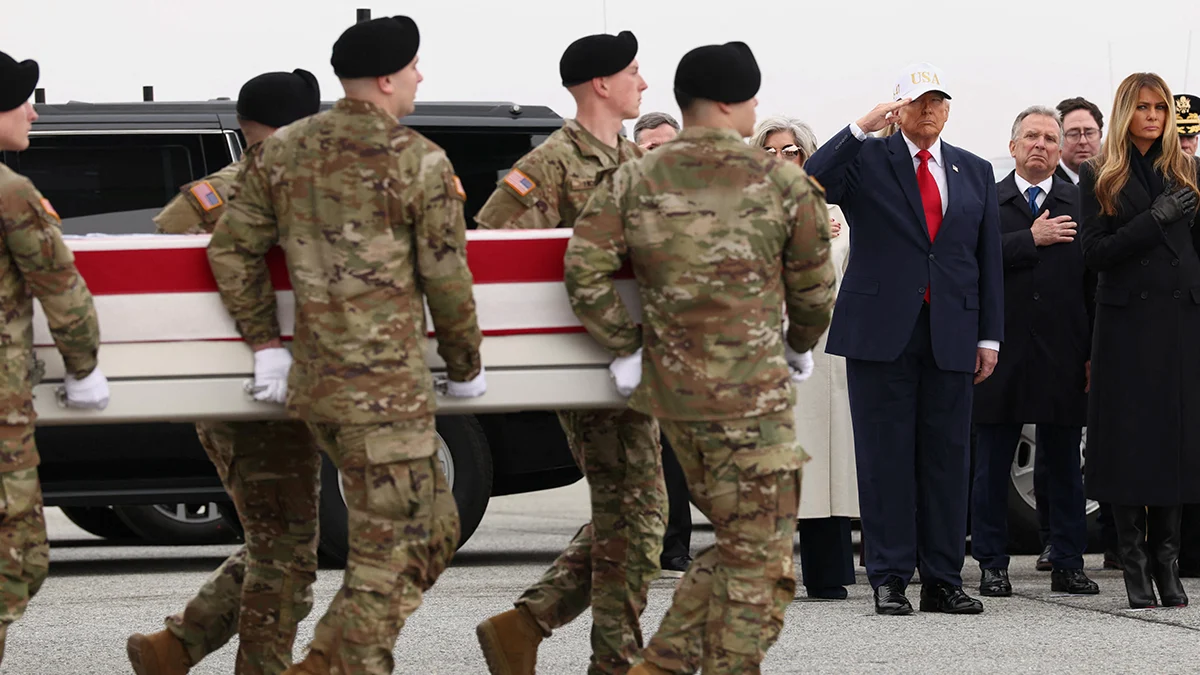
Donald Trump; Melania Trump; JD Vance; Susie Wiles; US Attorney General Pam Bondi; and Steve Witkoff take part in a ceremony to hand over the remains of six US Army soldiers from the 103rd Support Command who died in Kuwait – REUTERS/KEVIN LAMARQUE
Japan, caught between Washington and Tehran
Facts
Japan, which imports more than ninety per cent of its crude oil from the Middle East, is facing its worst energy crisis in decades. Since hostilities began on 28 February, the Japanese government has released 80 million barrels from its strategic reserves—equivalent to 45 days of domestic consumption—as part of the International Energy Agency’s (IEA) coordinated operation to release a total of 400 million barrels. Prime Minister Sanae Takaichi met with Trump on 19 March at the White House, where she stated that she believed “only you, Donald, can bring about world peace”, although she refused to commit Maritime Self-Defence Force vessels to the active conflict zone, citing legal constraints arising from Article 9 of the Japanese Constitution.
The Iranian Foreign Minister, after meeting with his Japanese counterpart, urged Tokyo to “stand up firmly” to Washington and Tel Aviv. On 18 March, the RSIS in Singapore published an analysis — “Japan’s Balancing Act in the Iran War” — highlighting Tokyo’s strategic dilemmas, whilst the CSIS in Washington provided a detailed breakdown of Japan’s energy situation: 254 days’ worth of national reserves, 100 days’ worth of mandatory private reserves, and four million tonnes of liquefied natural gas (LNG) in storage.
Implications
The Japanese dilemma illustrates with crystal clarity the risk of a war without sufficient prior diplomatic planning: the United States’ allies are forced to take sides in a conflict they did not ask for, bearing the energy and economic costs themselves, and facing Trump’s veiled threat that countries which “do not contribute” do not deserve American protection. The RSIS warns that the conflict signals “deeper dilemmas for Japan as it seeks to reconcile loyalty to the alliance with diplomatic independence”. The CSIS highlights that the war is accelerating Japan’s internal debate on nuclear energy — Japan has fifteen reactors in operation, with three ready to be restarted — and on structural energy dependence on the Persian Gulf. Currency instability — the yen fell to its lowest level in twenty months, with the Finance Minister warning of possible intervention — adds domestic economic pressure that Prime Minister Takaichi cannot ignore.
Outlook and scenarios
Tokyo will continue its policy of “calculated ambiguity”: rhetorically supporting Washington whilst avoiding direct military commitments. The possibility of Takaichi authorising the deployment of minesweepers in the region constitutes a political and constitutional red line; crossing it would open up a domestic debate with unpredictable consequences. Japan’s real leverage lies in its ability to coordinate the management of oil reserves in East Asia and in its usefulness as a discreet intermediary with Tehran, thanks to diplomatic relations carefully maintained over decades. As the Japan Times points out, Japan is also emerging as an “energy security anchor” in the Indo-Pacific, whilst Washington keeps its gaze fixed on the Gulf.
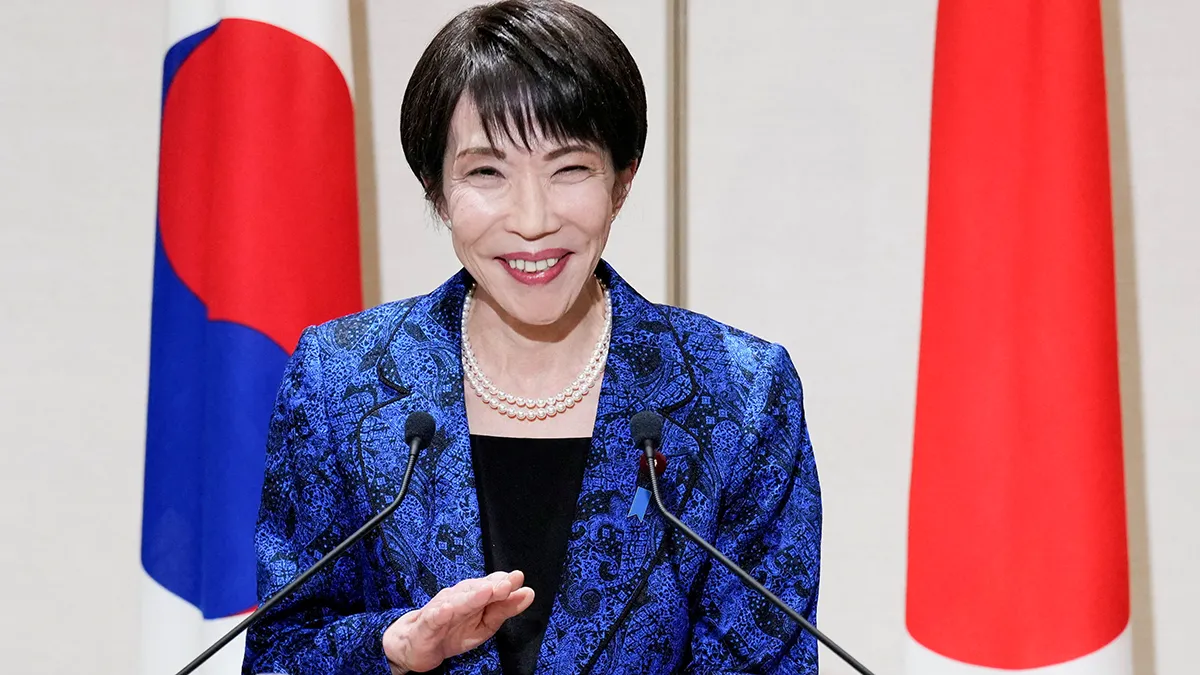
Japanese Prime Minister Sanae Takaichi – PHOTO/ EUGENE HOSHIKO
Iran turns the Strait of Hormuz into a “toll booth”
Facts
Tehran’s jihadist oligarchy has transformed the Strait of Hormuz into what Lloyd’s List Intelligence — the leading authority on maritime intelligence — calls a “Tehran Toll Booth”: Iran charges fees of up to two million dollars per vessel to authorise transit through its territorial waters, with payments required in Chinese yuan. According to Lloyd’s List data confirmed by Bloomberg, between ten and twenty ships have already transited this corridor since mid-March, representing between ten and twenty per cent of all traffic through the strait since the start of the war.
The Iranian Parliament is pushing forward legislation to make these fees permanent. On 26 March, Iranian Foreign Minister Abbas Araghchi announced that ships from five countries — China, Russia, India, Iraq and Pakistan — would be allowed to transit freely. On the same day, Israel announced the elimination of Rear Admiral Alireza Tangsiri, commander of the Islamic Revolutionary Guard Corps (IRGC) Navy and directly responsible for the operations to block the strait, as well as the head of naval intelligence, Rear Admiral Behnam Rezaei. Iran did not immediately confirm the casualties.
Implications
What Iran has discovered — as the Foreign Policy analysis brilliantly points out — is that the Strait of Hormuz is its “real nuclear option”, cheaper, more immediate and more devastating than any atomic device. The jihadist oligarchy has turned its asymmetric control of the planet’s most strategic maritime corridor into a source of revenue, an instrument of diplomatic pressure — by selecting who may pass and who may not — and a demonstration of de facto sovereignty over international waters that flagrantly violates the law of the sea. Payment in yuan is no minor detail: it is a strategic statement targeting the dollar system and a deliberate nod to Beijing. The elimination of Tangsiri, for its part, will have to demonstrate whether it truly affects the operational capacity of the IRGC — which has spent forty years decentralising its command structure precisely to withstand this kind of targeted elimination — or whether it is, as so often before, a symbolic blow with limited tactical impact.
Outlooks and scenarios
The most worrying scenario, accurately highlighted by the FDD, is that the “toll booth” becomes the new permanent state of the Strait even after a possible ceasefire: a militarily weakened Iran will have every rational incentive to retain this instrument of extortion and power projection. It is urgent that the Trump Administration—with European support, which has so far been conspicuous by its absence—devise a strategy for the full reopening of the Strait that does not depend solely on Iranian goodwill. Academic Richard Haass’s proposal for an “Open for All or Closed to All” policy, which would establish a defensive line in the Gulf of Oman to prevent Iranian vessels from reaching their final destinations until Tehran unconditionally reopens the Strait, deserves urgent attention.
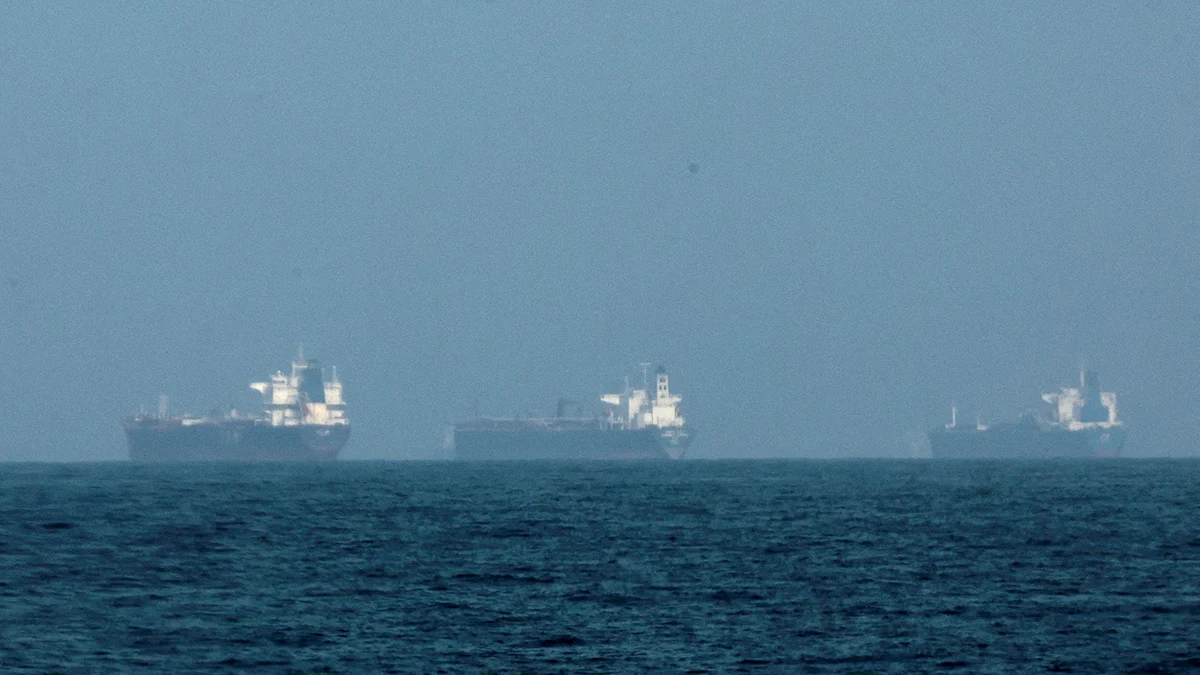
Oil tankers off the coast of Fujairah, whilst Iran threatens to fire on ships passing through the Strait of Hormuz, amid the conflict between the United States and Israel with Iran, in Fujairah, United Arab Emirates – REUTERS/ AMR ALFIKY
Trump extends deadline for attacking Iranian power plants until 6 April
Facts
On Thursday 26 March, President Trump posted a message on his Truth Social platform stating that he was extending “the period for the destruction of power plants” until Monday 6 April at 8.00 pm Eastern Time, “at the request of the Iranian government”. This is the second extension since Saturday 22 March, when he threatened to “obliterate” (razor) Iranian power stations if Tehran did not reopen the Strait of Hormuz within 48 hours. The first extension was for five days, granted on Monday 23 March “following very good and productive talks” which Iran denied having held.
At Thursday’s cabinet meeting, Special Envoy Steve Witkoff confirmed that the United States had delivered to Iran—via Pakistan as an intermediary—a fifteen-point peace plan, and that Pakistan, Egypt and Turkey had additionally offered to act as mediators. Trump stated in an interview with Fox News that Iran had requested a one-week extension, but he granted ten days “because they gave me ships” — referring to the ten oil tankers which, according to Trump, Iran allowed to pass through the strait as a “gift”. Iran publicly rejected the American proposal and presented its own counter-proposal of five conditions, which includes recognition of “Iranian sovereignty over the Strait of Hormuz” — a condition unacceptable to any US administration. Envoy Witkoff acknowledged to the cabinet that Iran has “repeatedly rejected everything we have asked for” in the negotiations.
Implications
The second extension confirms that Trump’s ultimatum regarding the power plants has all the hallmarks of what is known in negotiation strategy as a “discount signal”: a threat that is repeated without being carried out loses its deterrent effect exponentially with each new extension. The jihadist oligarchy in Tehran has understood this mechanism perfectly and exploits it skilfully. By refusing any direct negotiations whilst admitting — through intermediaries — that it is “reviewing” the American proposal, Tehran maintains pressure on the oil market, legitimises its position in the eyes of its domestic public and forces Washington to reveal its hand.
Iran’s condition regarding recognition of its sovereignty over the Strait is, of course, unacceptable, but its inclusion serves to raise the bar for any agreement and buy time. The threat to attack civilian power stations also raises a serious legal and moral objection: international experts in humanitarian law have pointed out that it would constitute a war crime under the Geneva Conventions, something the Administration is well aware of and which structurally undermines the credibility of the ultimatum.
Outlook and scenarios
The most likely scenario before 6 April is a third extension or, alternatively, a controlled and surgical escalation aimed at regaining deterrent credibility without targeting civilian infrastructure — for example, a more intense attack on IRGC facilities or on the Strait’s mining infrastructure. Turkey’s involvement as a mediator is strategically significant, but it introduces Ankara’s own interests into the equation — a variable that Rubio and Witkoff should manage with extreme care. In any case, 6 April is the next date of peak tension, and the markets are already pricing this in.
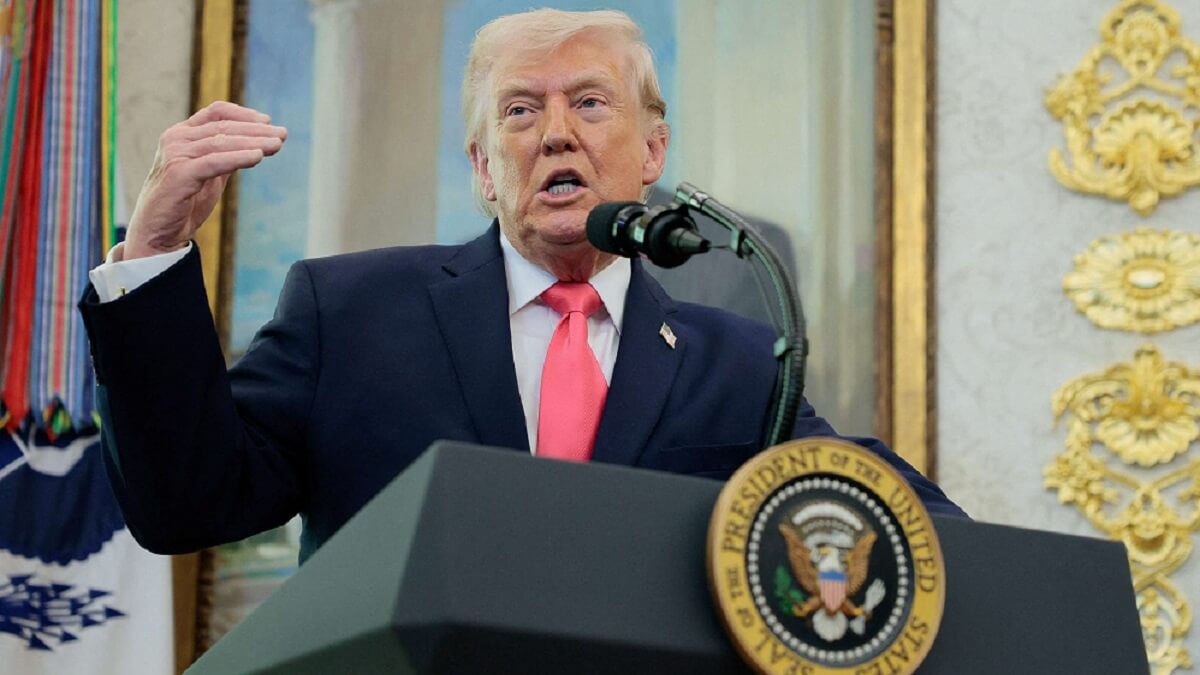
Donald Trump, President of the United States, sets out a 15-point plan to end the war in Iran – PHOTO/REUTERS/EVAN VUCCI
Financial markets plummet amid war uncertainty
Facts
On Thursday 26 March, the main US stock indices recorded their biggest fall since the start of the Iran conflict: the S&P 500 fell by 1.74 per cent—its biggest daily loss since early 2026—while the NASDAQ lost around 2.4 per cent. Asian markets also fell in the early stages of the session. Brent crude traded at around $107 per barrel — having briefly approached $108 — although it eased slightly following the announcement of Trump’s extension. In March, Brent has recorded its largest monthly rise in the recent history of the oil market, having reached $126 at the height of the conflict since 28 February. Iran is keeping approximately eight million barrels per day off the market, which the OECD — which maintained its global growth forecast at around 2.9 per cent for 2026 but downgraded its outlook for Europe — already considers a systemic risk factor. The price of petrol is approaching nine dollars per gallon in California.
Implications
Financial volatility is the starkest expression of the real cost of a poorly planned war. The markets are discounting with surgical precision what official rhetoric attempts to conceal: the lack of a credible exit strategy and the contradictory messages between Trump and the Iranian negotiators are generating a geopolitical risk premium that is penalising the entire global economy. The price of petrol — the most immediate political barometer for the average American citizen — is both the most visible cost and the most powerful argument for those in Congress demanding an urgent negotiated exit. Europe, which has not sent a single ship to the Gulf, is suffering the energy consequences without having had a say in the original decision: the OECD has already downgraded its outlook for the continent, and the LNG shock—for which Asia is competing fiercely—is hitting southern European countries particularly hard.
Outlooks and scenarios
As long as the Strait of Hormuz remains under de facto Iranian control, energy markets will maintain a structural risk premium that will not yield to mere words. A negotiated reopening before 6 April would trigger an immediate and significant rally in the markets; a further escalation would push Brent towards $120 or even $130. Europe, which Secretary Rubio harshly criticised at the G7 foreign ministers’ meeting held in Vaux-de-Cernay — “the war in Ukraine is not America’s war, but we are contributing more than anyone else” — would pay the highest price in relative terms if the conflict drags on.
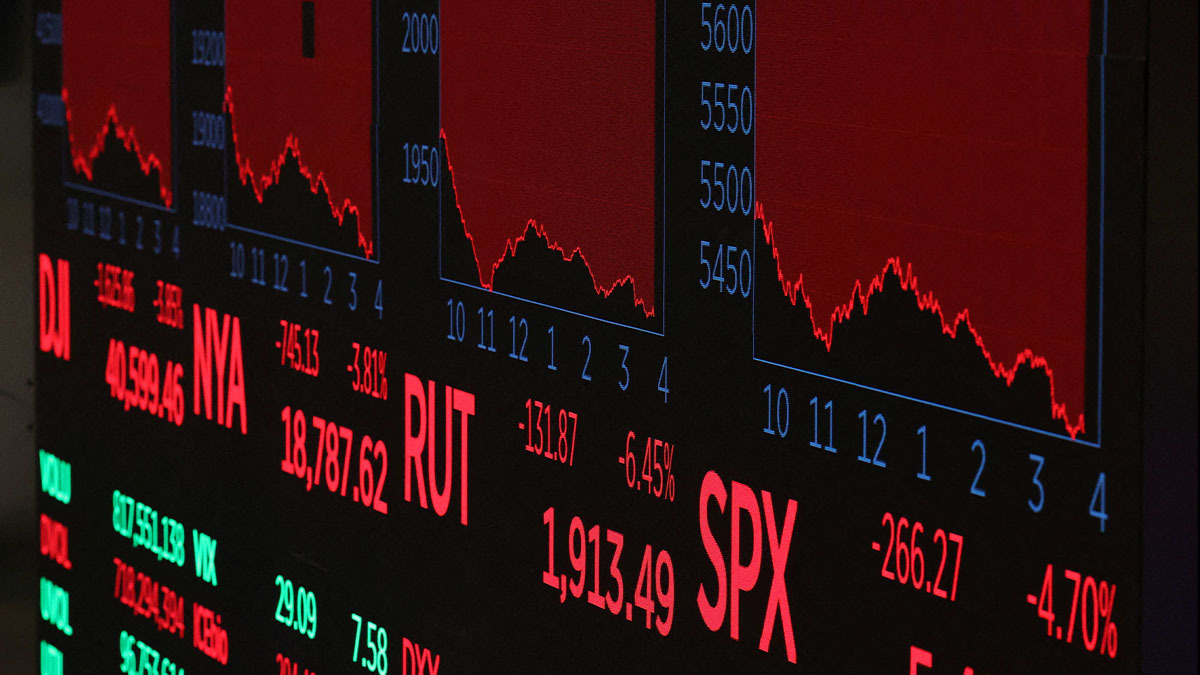
A screen displays the stock market indices of the New York Stock Exchange (NYSE) in New York City, USA, on 3 April 2025 – REUTERS/BRENDAN McDERMID
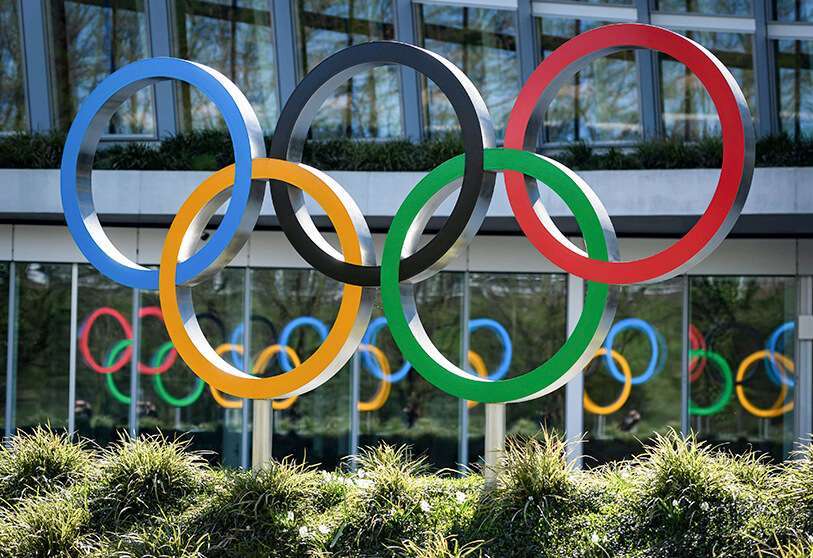
The IOC bans transgender women from competing in women’s events
Facts
On Thursday 26 March, the International Olympic Committee (IOC) announced from Lausanne a new eligibility policy for women’s events at the Olympic Games, effective from the 2028 Los Angeles Games. The rule stipulates that participation in any women’s event is restricted to biological women, determined by a one-time genetic test: the SRY (Sex-Determining Region Y) gene test, which detects the onset of male sexual development in the womb. IOC President Kirsty Coventry stated that “the decision protects the fairness, safety and integrity” of women’s sport, adding that “it is absolutely clear that it would not be fair for biological men to compete in the women’s category”.
The policy is not retroactive and does not affect recreational or grassroots sport. Several international federations — including World Athletics, the International Ski Federation and the International Boxing Federation — had already adopted this same criterion previously. The decision was the result of a review initiated in September 2024 and included consultations with specialists in sports science, endocrinology, gender medicine, ethics and law. The test is carried out using a saliva sample, a cheek swab or a blood sample, and is valid for life unless there is evidence of an error in the result.
Implications
The IOC’s decision is of historic importance that transcends the sporting sphere: it represents the formal enshrinement, by the world’s highest Olympic body, of the principle that biological sex is an objective fact that cannot be reduced to subjective gender identity for the purposes of elite sporting competition. President Coventry is correct in stating that the performance differences associated with male sexual development objectively affect all sports that rely on strength, power and endurance. The attempt by some pressure groups to portray this rule as a “thirty-year setback for women’s equality” is, at best, a conceptual confusion and, at worst, political manipulation: protecting the women’s category is protecting women, not attacking them. The IOC is careful to point out that athletes with a positive SRY test result may continue to compete in the men’s category, in open or mixed categories, and in any other format for which they meet the requirements.
Outlook and scenarios
The IOC’s decision will spark intense legal and activist debate over the next two years leading up to Los Angeles 2028. Some national federations — particularly in Western Europe and the progressive Anglo-Saxon world — may attempt to challenge it. Most likely, however, the rule will be consolidated: the precedent set by World Athletics, legislative trends in the United States and the United Kingdom, and the overwhelming scientific evidence regarding the performance advantage associated with male development all point in the same direction. The IOC has, for once, acted with the courage that the defence of women’s sport required.
The Economist
Publishes an analysis of “wavering support” for the war in the United States, citing the collapse of support among independents and growing pessimism about the conflict’s objectives. It also analyses Japan’s “balancing act” regarding the war, highlighting the tension between energy dependence on the Gulf and Atlantic loyalty.
Reuters
Reports on Trump’s second extension regarding Iranian power plants until 6 April, detailing Pakistan’s role as an intermediary and the fifteen-point framework presented by Witkoff.
Financial Times
Analyses how Iran is “cashing in” on the Strait of Hormuz, turning its asymmetric control of the corridor into a major source of revenue and diplomatic leverage.
Bloomberg
Reports on Trump’s extension and explains in depth the mechanism of Iran’s blockade of the Strait, with updated maritime traffic data. It confirms the “toll booth” mechanism with data from Lloyd’s List.
CNBC
It details the performance of the financial markets — the S&P 500 down 1.74 per cent, Brent at $108 — and reports on Trump’s cabinet statement regarding the “ten oil tankers” that Iran allowed to pass as a “gift” to the United States.
Axios
Reveals that the US fifteen-point proposal was delivered via Pakistan and that Turkey, Egypt and Pakistan have offered to act as mediators. A source close to the negotiations notes that Iran “is seeking an honourable way out” but that “the main problem has been mistrust and Iranian suspicion that the US is deceiving them again”.
CBS News
Reports on statements by Secretary of State Marco Rubio harshly criticising NATO for its inaction regarding the blockade of the Strait, and British intelligence regarding “Putin’s hidden hand” in Iran’s war effort — training and intelligence provided by Russia to Iran prior to the start of the war.
Al Jazeera
Provides detailed coverage of Iran’s announcement of a selective opening of the Strait to ships from five countries, charging in yuan, and criticises the US proposal to attack civilian facilities as a potential war crime under international humanitarian law.
Foreign Policy
Publishes an in-depth analysis entitled “Controlling the Strait of Hormuz is Iran’s Real Nuclear Option”, arguing that control of the strait is, for the regime, a cheaper and more devastating weapon than the atomic bomb, and that this lesson will endure long after any ceasefire.
CSIS (Center for Strategic and International Studies)
Publishes an in-depth analysis of the implications of the Iranian crisis for Japan, detailing strategic reserves, alliance pressures and the nuclear energy debate. It recommends that Washington work with Tokyo to turn Japan into an “anchor of energy security” in East Asia.
RSIS — S. Rajaratnam School of International Studies (Singapore)
Publishes “Japan’s Balancing Act in the Iran War”, analysing Tokyo’s dilemma between Atlantic loyalty and diplomatic independence, and warning that the conflict signals “deeper dilemmas” for Japanese foreign policy.
FDD — Foundation for Defense of Democracies
Analyses the “Tehran toll booth” and proposes sanctions against Chinese financial intermediaries processing payments in yuan as an urgent countermeasure, whilst also backing the “Open for All or Closed to All” proposal.
CFR — Council on Foreign Relations
Publishes an analysis by academic Sheila A. Smith on Prime Minister Takaichi’s dilemma in Washington, highlighting Japan’s constitutional constraints and the risk that the Washington-Tokyo alliance faces “one of the most severe crises in its history”.
Pew Research Center
Publishes the largest-sample survey on American public opinion regarding the war — 3,524 adults, conducted between 16 and 22 March —: 59 per cent believe that attacking Iran was the wrong decision.
NPR / PBS News / Marist Poll
Fifty-six per cent oppose US military action, with only thirty-six per cent approving of Trump’s handling of the situation and fifty-nine per cent of independents disapproving of his management of the conflict.
Time / CNN / Washington Post / NPR
They provide extensive coverage of the IOC’s decision on transgender women, the reactions of human rights groups and activists, and the implications for the 2028 Los Angeles Olympic Games.
Japan Times
On 26 March, it published an analysis of how the war in Iran is redefining Japan’s role in Indo-Pacific security and the Taiwan issue, with Japan emerging as a ‘bridge’ between Euro-Atlantic and Indo-Pacific security.
Irish Times
It offers the most comprehensive and up-to-date coverage of the conflict, including the news that NATO was criticised by Trump for “doing absolutely nothing”, the casualty toll — over 1,900 in Iran, over 1,100 in Lebanon, 18 in Israel and 13 American military personnel — and the UAE’s interception of 15 ballistic missiles and 11 drones on Thursday 26 March.
Editorial
There are wars won on the battlefield and wars lost at the negotiating table even before the dust has settled. Operation Epic Fury has been underway for twenty-seven days and the signs of a Pyrrhic victory loom with every new extension, with every watered-down ultimatum, with every contradictory message emanating simultaneously from the White House and the Iranian embassy in Geneva. Trump is right that the jihadist oligarchy in Tehran is an existential threat to the stability of the Middle East and to the international order that has guaranteed relative peace in recent decades. He is wrong—or at least has been so far—in the execution of a strategy that seems to have been designed with the tactical equanimity of a tweet and the strategic depth of a Saturday afternoon.
The Iranian “toll booth” in the Strait of Hormuz is the most eloquent demonstration that the jihadist oligarchy in Tehran has learnt something that Washington took too long to grasp: the sea cannot be conquered solely with missiles and bombers. Forty years of preparing for the asymmetric domination of the planet’s most vital maritime corridor have produced a weapon which, as Foreign Policy’s analysis accurately points out, is “cheaper, faster and in many ways more devastating than the atomic bomb”. Payment in yuan is not a financial whim: it is a strategic statement aimed directly at the heart of the dollar system and a deliberate nod to Beijing. The fact that the Iranian Parliament is legislating to make these rates permanent should be a deafening alarm bell for the State Department and the Pentagon — and at the same time, the World Bank has announced accelerated financial support for client countries most affected by the energy impact of the war, indicating that the international community already assumes this conflict will not be resolved in a matter of days.
The behaviour of American public opinion should come as no surprise to anyone who has studied the history of US military interventions since the Second World War. The Pew poll is devastating: fifty-nine per cent of citizens consider the decision to attack to be wrong, forty-five per cent believe the operation is not going well, and there is a gap among independents that Trump cannot afford to lose in the run-up to the November mid-term elections. The ‘rally around the flag’ that usually follows the start of any conflict has evaporated with unusual speed, and the reason is as simple as it is painful: Americans are seeing petrol prices rise relentlessly, they see no clarity regarding the war’s objectives, and they are faced with thirteen military casualties that no one was able to explain convincingly to them before the first bomb fell on 28 February. This is not unpatriotic; it is the natural reaction of a people whom no one consulted before starting a war without a credible plan to win it or, above all, to manage it once won.
Japan teaches us something important amidst all this noise: that even the most loyal ally, the most disciplined, the most willing to bend over backwards to meet Washington’s demands — with the exception of the Europeans themselves at their best — has its own constitutional limits, its own energy priorities, and its own channels of communication with Tehran that can be valuable if allowed to operate. Prime Minister Takaichi has acted with more level-headedness than her public statements in the Oval Office — “only you, Donald, can bring about world peace” — might suggest. She has protected the alliance without committing Japanese troops to a conflict that Japanese international law does not permit her to wage, she has kept the diplomatic channel with Iran open, and she has contributed materially to the stabilisation of the global energy market through oil reserves. This is exactly what an intelligent ally should do in these circumstances.
The mediocre European political class, by contrast, continues to be conspicuous by its absence, with the consistency of those who have made strategic irrelevance their hallmark. Marco Rubio, at the G7 foreign ministers’ meeting held in Vaux-de-Cernay, was not exaggerating when he criticised NATO for failing to send a single ship to the Gulf: “Ukraine is not America’s war, but we are contributing more than anyone else,” he said. Europe is suffering an energy crisis — the OECD has already downgraded its outlook for the continent — but Europe has not contributed a single steel rivet to the protection of the energy routes on which its industry and well-being depend. This chronic inability to take its own security, defence and destiny seriously is the European Union’s enduring strategic embarrassment in the 21st century — a continent that delegates the protection of its vital interests to others and then laments when those others make decisions without consulting it.
Finally, a note of common sense amidst so much geopolitical turbulence: the IOC’s decision to restrict the women’s category to biological women through SRY gene testing is correct, courageous and necessary. President Coventry has had the courage to state what scientific evidence has been demonstrating for years — that male sexual development confers objective and irreducible performance advantages in all events that depend on strength, power and endurance — and has acted accordingly. Those who present this rule as an attack on women’s rights are making a fundamental conceptual error that must be pointed out in no uncertain terms: protecting the integrity and fairness of women’s competition is, precisely and without any ambiguity whatsoever, protecting women. The IOC has reiterated that elite sport, with its obsession with thousandths of a second and millimetres, cannot be a testing ground for ideological experimentation: it is a space where biology matters, where the rules must be the same for everyone, and where fairness cannot be sacrificed on the altar of any narrative, however well-intentioned it may appear.