
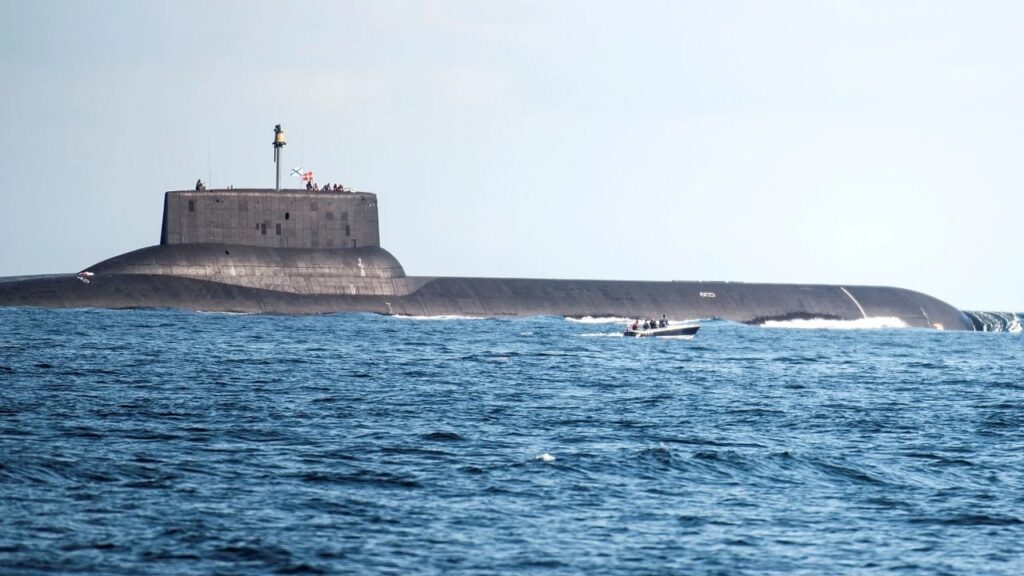
The Soviet Union’s Typhoon-class submarines (Project 941 Akula) were the largest submarines ever built, designed during the Cold War to carry 20 R-39 nuclear missiles and act as a mobile, Arctic-capable, last-resort weapon.
Six were built, characterized by their massive 48,000-ton displacement, catamaran-style design, and luxurious crew amenities like a pool.
The Soviet Typhoon-class submarine was a formidable but ultimately unsustainable Cold War nuclear deterrent; it carried immense destructive power in its 20 R-39 and RSM-56 Bulava ballistic missiles.
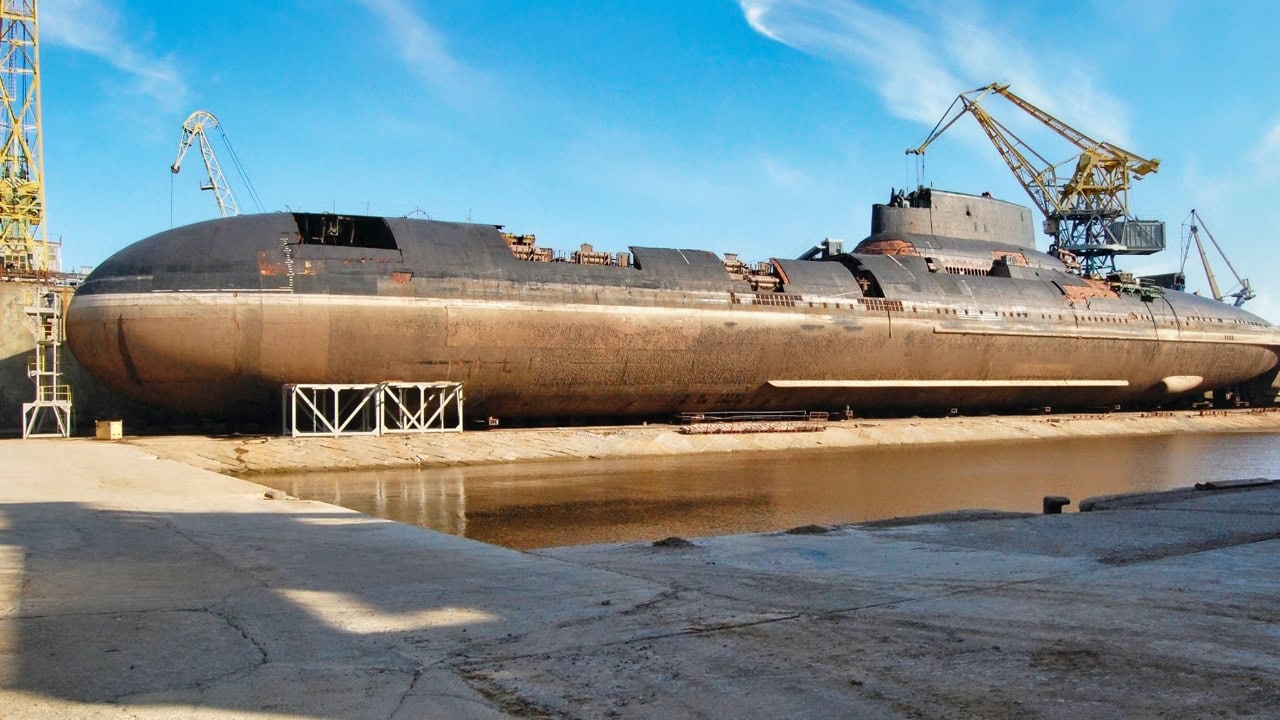
Typhoon-Class Submarine. Image Credit: U.S. Military/Facebook.
Made famous by the book and Hollywood film, “The Hunt For The Red October,” while its size, ice-breaking capabilities, and missile capacity were impressive, economic pressures and the obsolescence of its missiles led to the class’s early retirement, with its successors, the Borei class, marking a return to more practical designs.
The first and last Typhoon-class submarine, the Dmitry Donskoy (TK-208), was retired in February 2023, as reported by the state-run Russian news outlet Tass. It was the end of an era.
“The Dmitry Donskoy submarine cruiser has been decommissioned from the Russian Navy. It will await utilization at a naval base in Severodvinsk together with two other units of this project,” Tass reported.
In March 2025, it was reported that the submarine would be retired and serve as a museum ship in Saint Petersburg.
The Dmitry Donskoy Submarine Cruiser, Typhoon Class:
“Project 941 Akula (Shark in Russian),” codenamed by NATO as “Typhoon,” was created to meet the challenge of operating under the ice thousands of miles from its targets and to release 200 warheads and decoys on demand.
Russian submarines are sometimes called cruiser submarines because some models were designed for long-range, independent missions—a role comparable to surface cruisers. In the Russian naming system, the prefix ‘K’ stands for kreyserskaya, meaning “cruiser.”
Russia (and the former Soviet Union) classifies certain submarines as cruisers because of their intended operational role, which is comparable to that of surface cruisers: remaining at sea for extended periods, operating independently in distant waters, and performing commerce raiding or scouting missions.
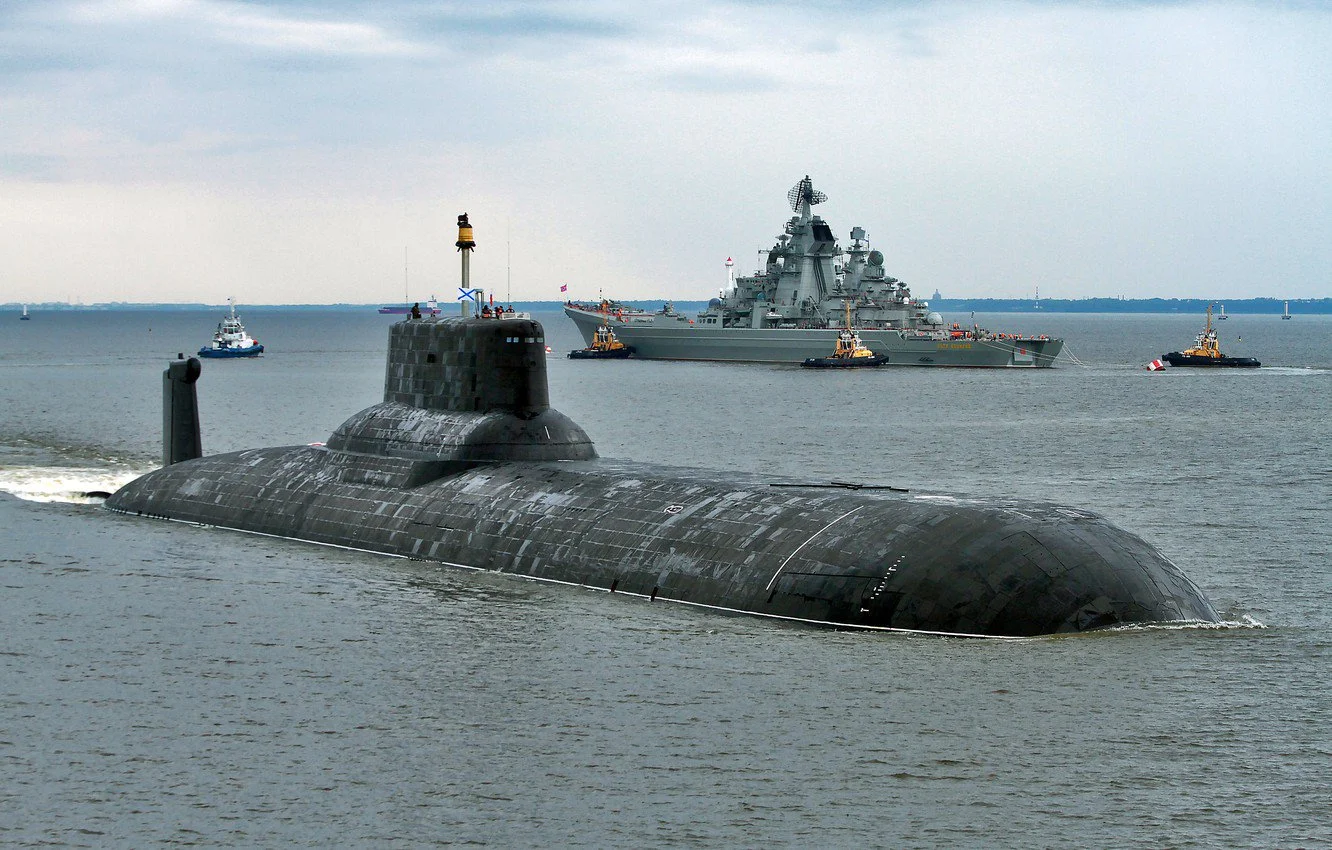
Typhoon-Class Submarine. Image Credit: Russian State Media.
The Soviet Union reacted to the United States’ construction of the huge Ohio class of submarines, which carried 24 Polaris missile tubes and later Trident II missiles, by building a mammoth ballistic missile submarine that was the largest ever built.
It was 574 feet long, nearly the size of two American football fields, with a width of 75 and a half feet. While on the surface, it had a draught of 12 feet. It had an enormous displacement of 48,000 tons, nearly equal to the German WWII battleship Bismarck.
Named in honor of a 14th-century Russian prince, the Dmitry Donskoy was laid down by the Sevmash Shipyard in 1976 and launched on September 29, 1980. The submarine was commissioned into the Soviet Navy on December 29, 1981. It joined the Northern Fleet in 1982.
The NATO codename Typhoon was believed to have been linked to a speech by Russian Premier Leonid Brezhnev in 1974, when telling Communist Party members of a new ballistic missile submarine in response to the US Ohio-class submarines.
The Soviets planned to build a dozen Project 941 Akula submarines. However, that number was reduced to just ten due to its enormous cost, twice as much as a Delta IV. Eventually, only six would be laid down, launched, and commissioned from 1981 to 1989.
The planned seventh through the tenth were never laid down, and following the collapse of the Soviet Union, the hull structures prepared for the seventh and the remaining three remained at a preliminary stage of construction and were eventually recycled for other projects.
The construction of the “9-story” submarines generated orders for more than 1,000 companies in the Soviet Union, and at Sevmash alone, 1,219 companies participated in the drawings and detailed installation.
The Typhoon-Class Featured Multiple Pressure Hulls:
The Typhoon-class submarine featured an internal “catamaran” configuration, consisting of two main pressure hulls arranged in parallel. This unique multi-hull design was wrapped in a single, non-pressurized outer “light” hull, which provided the vessel’s streamlined exterior.
Typhoon-class submarines featured five pressure hulls, simplifying internal design while making the boat much wider than a normal submarine. In the main body of the sub, two long pressure hulls lie parallel with a third, smaller pressure hull above them (just below the sail), and two other pressure hulls for torpedoes and steering gear.
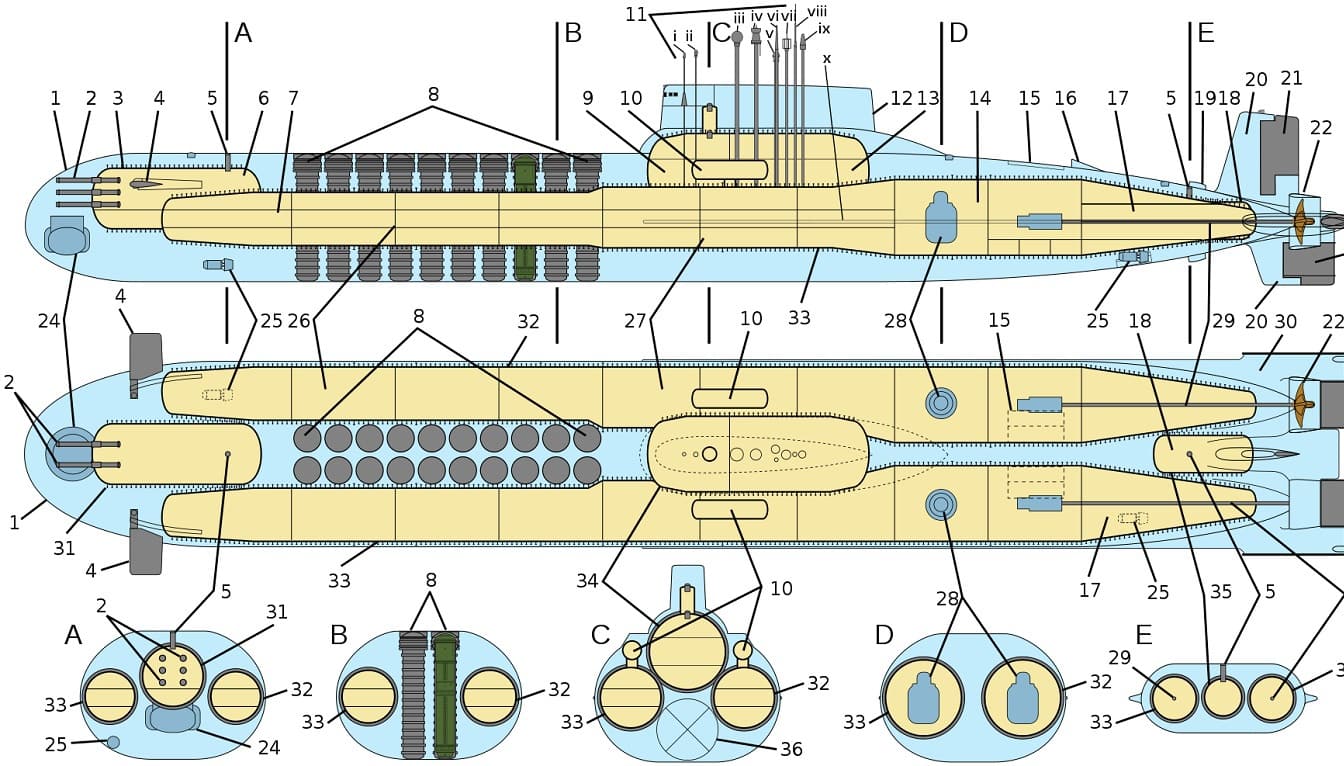
Typhoon-class Submarine. Image Credit: Creative Commons.
This also dramatically increases the crew’s survivability – even if one pressure hull is breached, the crew members in the other are safe, with less potential for flooding.
Typhoon-Class Submarine Armament:
Their primary weapons system consisted of 20 R-39 (NATO: SS-N-20) submarine-launched ballistic missiles (SLBMs), each with up to 10 multiple independently targetable reentry vehicle (MIRV) nuclear warheads, each with a yield of 100 to 200 kilotons. Technically, Typhoons were able to deploy their long-range nuclear missiles while moored at their docks.
The Cold War Soviet R-39 was the largest SLBM ever built, measuring 12 meters long and 2 meters in diameter. The missiles’ range was between 8,250 and 8,400 kilometers, or just under 5,220 miles.
The Typhoon class later tested the Bulava-class ballistic missiles. The RSM-56 Bulava (NATO: SS-N-32) is an intercontinental-range, submarine-launched, solid propellant ballistic missile. Development of the program began in the 1990s, with official production contracts going into effect in the 2007-2008 timeframe.
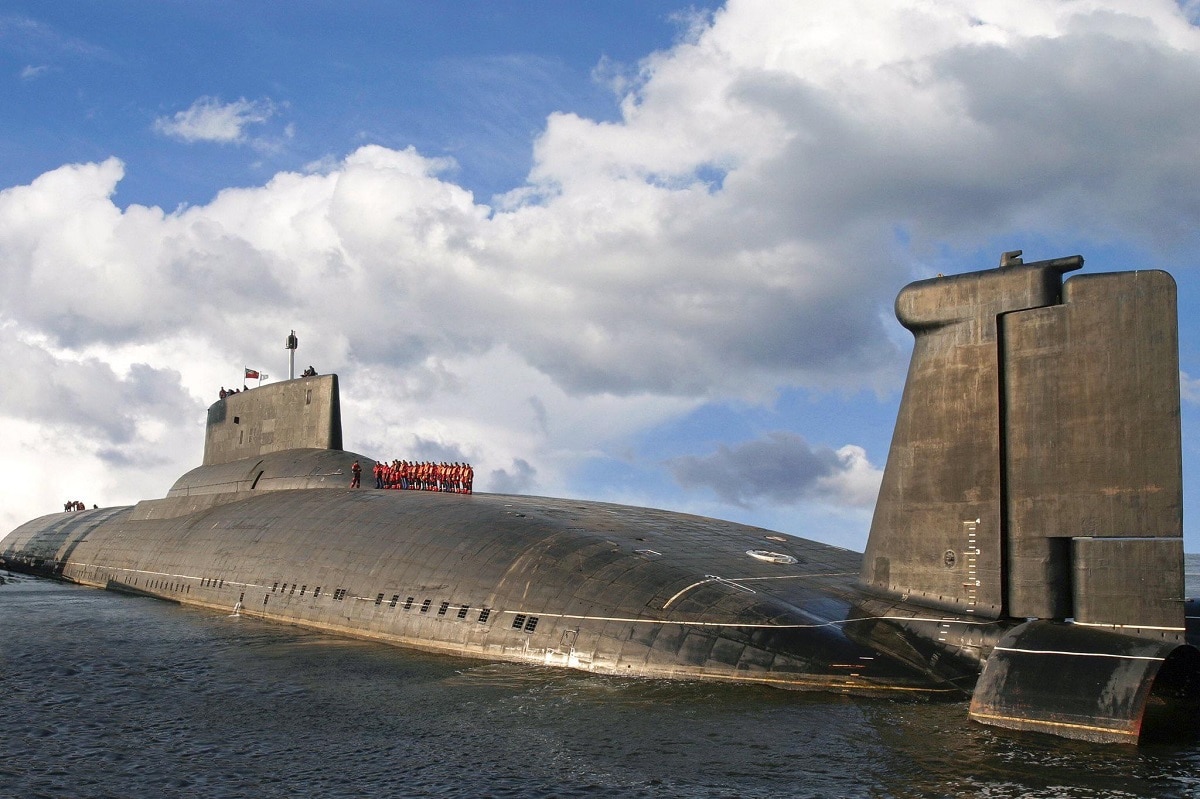
Image: Creative Commons. Typhoon-class Submarine
The Typhoon class featured six torpedo tubes designed to handle RPK-2 (SS-N-15) missiles or Type 53 torpedoes.
For air defense, the Typhoon-Class carried the 9K38 Igla. The 9K38 Igla (Russian for “needle”, NATO reporting name SA-18 Grouse) is a Soviet/Russian man-portable infrared homing surface-to-air missile (SAM) system.
A simplified, earlier version is known as the 9K310 Igla-1 (NATO: SA-16 Gimlet), and the latest variant is the 9K338 Igla-S (SA-24 Grinch).
Nuclear Powerplant For the Typhoon-Class Submarines:
The OK-650 reactor is the nuclear fission reactor used to power the Soviet Navy’s Project 941 Akula (Typhoon) class submarines. Each Typhoon submarine had two of these nuclear reactors.
This pressurized water reactor (PWR) uses 20-45 percent enriched uranium-235 fuel to produce 190 MW of thermal power.
The main nuclear power plant is split between the two hulls. Their shaft capacity is equivalent to 50,000 hp each, for a total of 100,000 hp, as much as a US Navy supercarrier.
The engine compartments also comprise two steam turbine units in each pressure hull, significantly increasing survivability if one unit were out of action; the other would take over.
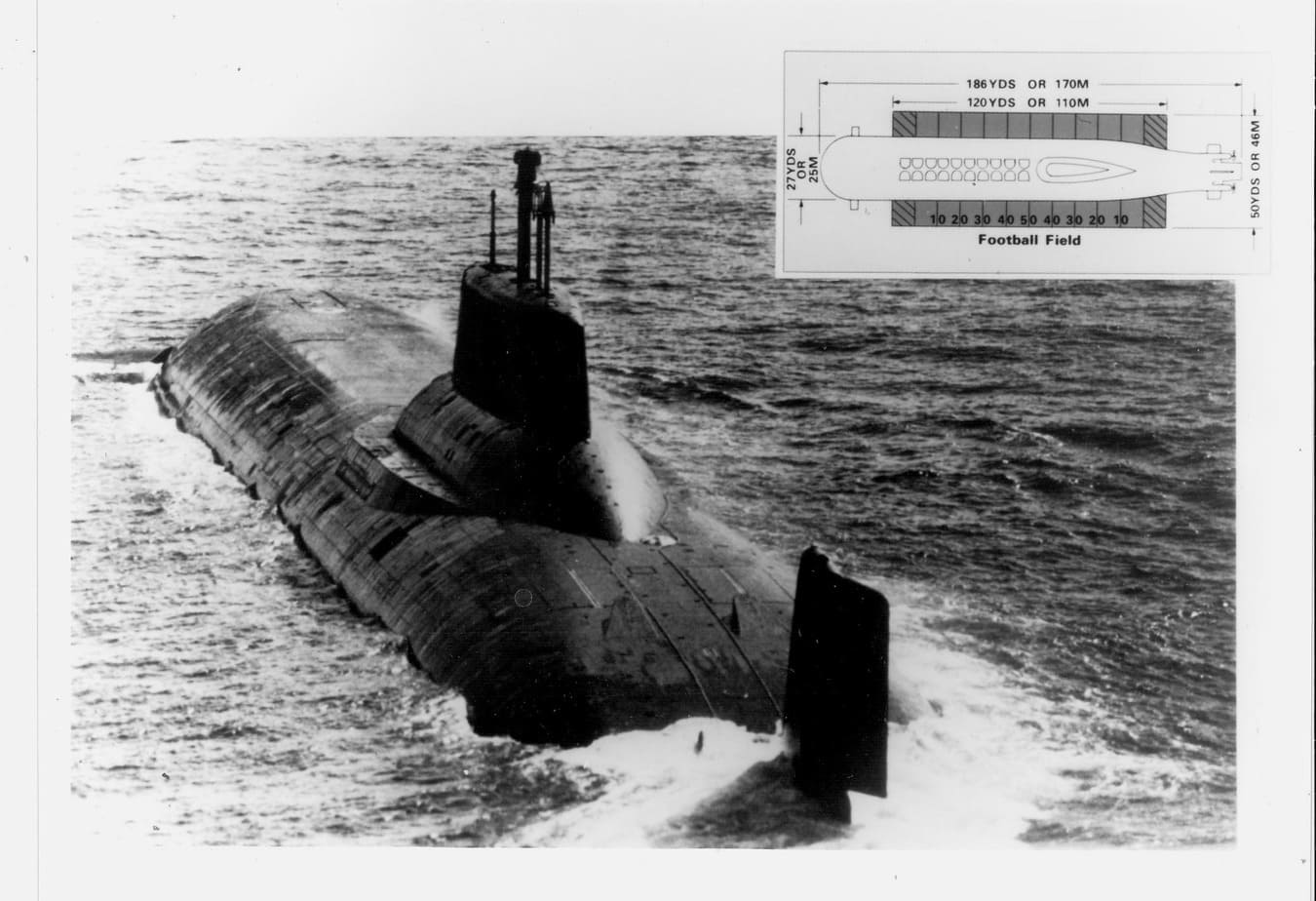
Soviet Typhoon-class ballistic missile submarine, with inset of an American football field graphic to convey a sense of the enormous size of the vessel.
The powerplant is sound-insulated using a two-cascade system, a rubber-cord pneumatic shock-absorption ensemble. The shaft ends with a low-speed, low-noise, seven-bladed fixed-pitch propeller installed in ring fairings (fenestrons) for extra silencing.
Developed during the 1970s, these reactors were designed to minimize accidents and malfunctions. Monitoring subsystems, designed for rapid leak detection, were included, along with newer-generation emergency cooling systems for the main reactor core.
The reactor is now also used to power the new Project 955 Borei submarines. OKBM Afrikantov developed it.
These reactors powered the massive Typhoon-Class missile boat to 22 knots on the surface and 27 knots submerged.
The Typhoon-class carried a crew of 160. Living conditions were plush for a submarine with even a swimming pool and sauna for the crew’s comfort. They could stay submerged for 120 days.
The Soviets built six Typhoons; a seventh was started but never finished. All of the Typhoons are now retired. They were a legacy of the Cold War. While engineering marvels, they were noisier than the US Ohio-Class missile submarines.
MORE – Russia Has Built 30 Su-57 Stealth Fighters: The F-35 is 1,300 Strong and Adding More by the Day
MORE – The U.S. Navy’s New $15,000,000,000 Columbia-Class Nuclear Submarine Is Way Behind Schedule
About the Author: Steve Balestrieri
Steve Balestrieri is a National Security Columnist. He served as a US Army Special Forces NCO and Warrant Officer. In addition to writing on defense, he covers the NFL for PatsFans.com and is a member of the Pro Football Writers of America (PFWA). His work was regularly featured in many military publications.