
Published on
March 30, 2026
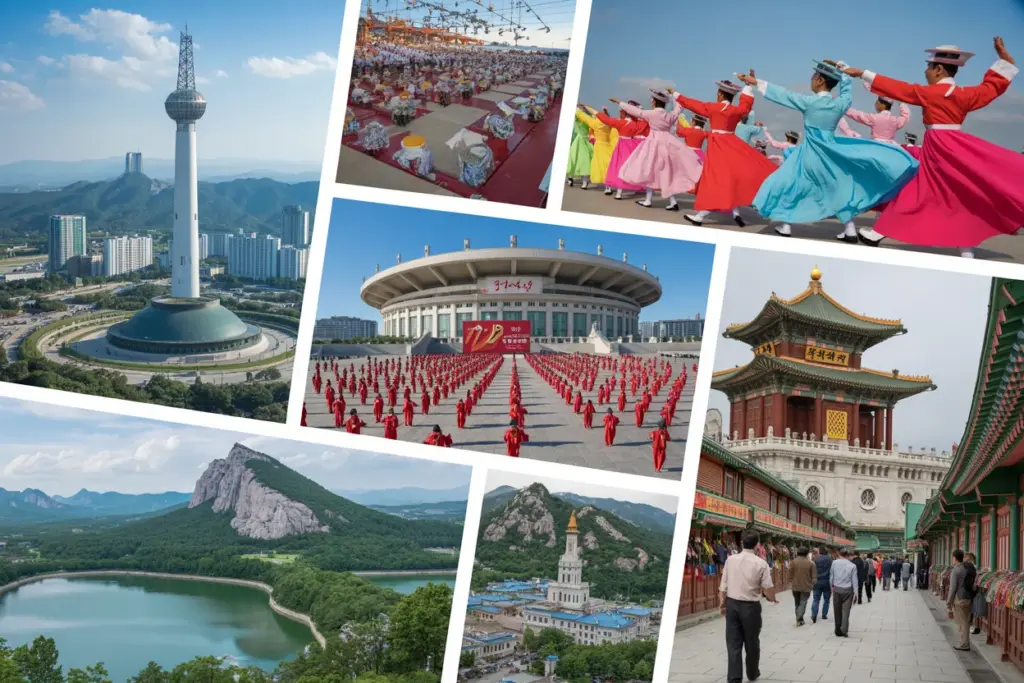
Image generated with Ai
In the shifting geopolitical landscape of 2026, a significant transformation is being observed at the edge of the Hermit Kingdom. North Korea’s gradual reopening to China has officially commenced, marking a pivotal departure from the absolute isolation maintained since the onset of the Covid-19 pandemic. It is reported by international observers that daily passenger train services between the Chinese border city of Dandong and the North Korean capital of Pyongyang were restored on March 12, 2026. This move is seen as a strategic effort to revitalize cross-border travel and reinforce the historical bonds between the two nations.
Despite the resumption of rail links, the continued restrictions on tourism remain a defining characteristic of this new era. While cargo shipments and diplomatic exchanges have intensified, the issuance of tourism visas for Chinese citizens has not yet resumed. Consequently, the ability to cross the Yalu River is currently limited to those traveling for specific work or study purposes. The limited access for Chinese visitors serves as a reminder of the cautious pace at which Pyongyang is navigating its return to the global stage.
Is This the World’s Most Secretive Commute?
The restoration of the international passenger train service is regarded as a milestone in the normalization of bilateral relations. According to official schedules from China Railway, the K27 service from Beijing to Pyongyang now operates four times per week, while a dedicated daily service connects Dandong with Sinuiju. It is noted that the first trains departing in mid-March were fully booked, primarily by government officials, North Korean students returning from abroad, and authorized business representatives.
For the North Korean workers in Dandong, the reopening of the border brings a mixture of hope and uncertainty. Thousands of these individuals have remained in China for over six years, prevented from returning home by the 2020 border closure. While some express a desire to reunite with their families in Pyongyang, reports from human rights organizations suggest that many workers endure highly controlled environments where significant portions of their earnings are redirected to the state. The visibility of these workers in the textile and seafood industries of Dandong remains a complex element of the local economy.
Forbidden Views: Secrets Revealed Across the Yalu River!
With direct entry into the country still barred for the general public, the city of Dandong has transformed into a primary vantage point for curious onlookers. Tourists and locals in Dandong are frequently observed gathering along the riverfront to peer into the North Korean city of Sinuiju. Through binoculars, the daily routines of North Korean citizens, including children playing near the shoreline and soldiers patrolling the riverbanks, can be glimpsed with surprising clarity.
Because direct tourism into North Korea remains unavailable, a niche industry has flourished on the Chinese side of the border. Local travel agencies are offering alternative tours along the border, providing boat trips that sail within meters of the North Korean territory. These excursions allow visitors to witness the stark contrast between the neon-lit high-rises of Dandong and the more utilitarian, socialist-era architecture of Sinuiju. For many, these “border peeping” tours are the only available method to experience the atmosphere of the reclusive state.
Advertisement
Advertisement
The Billion-Dollar Lifeline Keeping a Nation Alive!
The economic relationship between the two neighbors is anchored by the cross-border trade between Dandong and Sinuiju, which serves as a critical lifeline for North Korea’s economy. It is estimated by the China Tourism Academy and customs data that trade volumes surged to $2.7 billion in 2025, approaching levels not seen since before the global health crisis. Despite the weight of UN sanctions, the flow of essential goods, including grain, fertilizers, and machinery, continues to move across the “Sino-Korean Friendship Bridge.”
This trade corridor is essential for the survival of the North Korean domestic market. The “Regional Development 20×10 Policy,” a ten-year plan recently announced by the North Korean leadership to build modern factories in rural provinces, is heavily dependent on the steady arrival of Chinese raw materials. While the international community monitors these developments closely, the Dandong-Sinuiju link remains the primary artery through which the North Korean state sustains its internal stability.
Advertisement
Advertisement
Stranded in Paradise? The Heartbreaking Stories of the Border!
The human dimension of the border reopening is perhaps best illustrated by the perspectives of travelers, local residents, and North Korean workers. Personal stories often highlight the emotional toll of the prolonged closure. One North Korean waitress at a state-run restaurant in Dandong shared that her six-year stay in China had become a period of “living in limbo,” characterized by a deep longing for home tempered by the fear of what awaits upon her eventual return.
On the other side of the fence, Chinese tourists from distant provinces express a fascination with the “time capsule” quality of the North Korean landscape. For many, the desire to visit is driven by a nostalgic curiosity regarding a social structure that resembles China’s own past. However, the current reality of the border is one of heavy surveillance and high-tech security measures. It is observed that North Korea has significantly fortified its side of the frontier with new fences, guard towers, and electronic monitoring systems, suggesting that even as transport resumes, the regime’s control over its population remains absolute.
Will the Gates Ever Truly Open?
As 2026 progresses, the world remains focused on whether the gradual reopening will eventually lead to a full restoration of international tourism. Rumors of a 2026 Pyongyang Marathon being opened to foreigners were initially circulated, but the event was reportedly cancelled by authorities without a detailed explanation. This pattern of “two steps forward, one step back” continues to define Pyongyang’s engagement with the outside world.
The synthesis of technological modernization on the Chinese side and the rigid traditionalism on the North Korean side creates a unique and often jarring border experience. For the residents of Dandong, the sight of a passenger train crossing the bridge is no longer a rarity, but a sign that the gears of diplomacy are slowly turning. Whether this leads to a more transparent and accessible North Korea remains to be seen, but for now, the Yalu River serves as a silent witness to a nation tentatively emerging from its self-imposed shell.
Advertisement
Advertisement
