
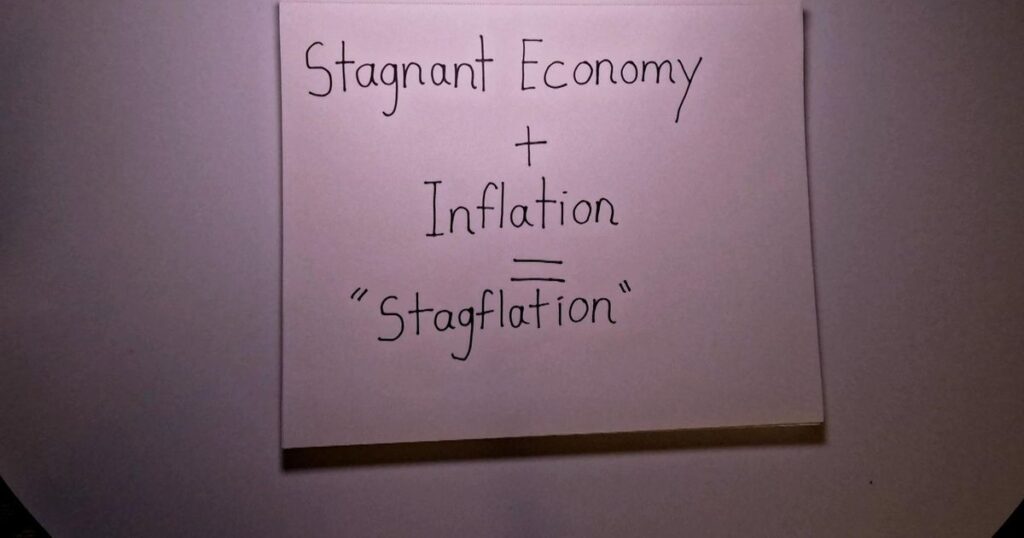
Several high profile economists in recent weeks have floated the idea of “Stagflation” that has since been picked up by outlets such as Business Insider and CNBC.
Local economists in central North Carolina aren’t very bullish, but acknowledge there is some foundation for the concerns.
What is stagflation?
“It’s a very uncomfortable position, says Gerald Cohen, chief economist of the Kenan Institute of Private Enterprise
The rarely seen economic condition occurs when inflation is both high and the economy is stagnant at the same time.
As it happens, it creates a policy trap in which:
- If the Federal Reserve targets unemployment by easing policy, inflation worsens.
- If it targets inflation by tightening policy, unemployment rises.
Why the war in Iran matters
According to banking institutions like Fidelity, “a substantial shortage or rise in demand of an essential good could spur high inflation as well as an economic downturn.”
In the weeks since the conflict began, gas has risen more than a dollar in North Carolina alone, paralleling national trends.
Economist Nouriel Roubini, who is known for predicting the 2008 financial crisis, said an escalation of war with Iran would increase the risk of the United States returning to this economic period.
Important to keep in mind is that the last noted instance of stagflation was the 1970s.
Forbes Dixon, an Economics instructor at Wake Tech Community College, rebutted this idea, saying there were several things factors in the time period that exacerbated these conditions:
- Supply shocks from massive oil embargoes
- Loose policy and an overly expansive monetary policy
- Regulatory failure with price controls
Cohen acknowledged the basis of major gas price disruptions, however, also offered how the United States is far more energy independent than it was during the last period of stagflation.
Increased energy dependence shields the United States.
“We’re much less sensitive overall,” Cohen said. “On net, we’re an oil exporter, which, as opposed to the 80s, we were dependent on foreign oil.”